Tea Sage Relief
Herbal, Warm & Comforting
About this recipe
Sage Relief Tea is a herbal infusion, warm and enveloping, designed for those moments when a warm drink seems to provide immediate comfort. Sage has a strong flavor, a slightly resinous aroma, and a more adult personality than many mild herbs. It does not disappear in the cup: it appears clearly, leaving a dry, fragrant, and persistent finish. Therefore, the recipe works best when prepared with careful measurement, controlled time, and optional accompaniments used delicately. Honey and lemon serve as sensory adjustments, not as therapeutic promises. It is common to associate warm drinks with honey, lemon, and herbs with throat care. This association may make sense in the realm of comfort: the warmth of the cup, hydration, the aroma, and the slightly soft texture of honey can make the moment more pleasant. But the recipe should not promise to relieve cough, clinical solution sore throat, professional care inflammation, or resolve respiratory symptoms. If there is fever, intense pain, shortness of breath, worsening, persistent symptoms, or any significant signs, the drink does not replace professional evaluation. The role of tea is culinary and sensory: to offer a warm, aromatic, and well-prepared pause. Sage requires respect because it is intense. One teaspoon for 250 ml of water is sufficient. Very concentrated infusions, excessive use, or prolonged daily consumption do not align with a safe approach. The water should be hot, but the heat must be turned off before adding the herb. Covering preserves the aromas and allows for balanced extraction. Straining well is also important to leave the texture cleaner and avoid small fragments continuing to bitter in the cup. The recipe profile especially combines with cold nights, rainy days, reading, resting, or that break when one wants something more serious than a floral tea, but lighter than a root or bark decoction. Lemon brightens the flavor; honey rounds it out; sage sustains the personality. When the three elements appear in balance, the drink becomes comforting without sounding clinical. The result is an honest cup of well-being: aromatic, warm, prudent, and with a safe language for premium content.
Summary
Sage infusion with a strong herbal flavor, optional honey and lemon, designed for a warm, aromatic, and comforting cup.
Flavor profile
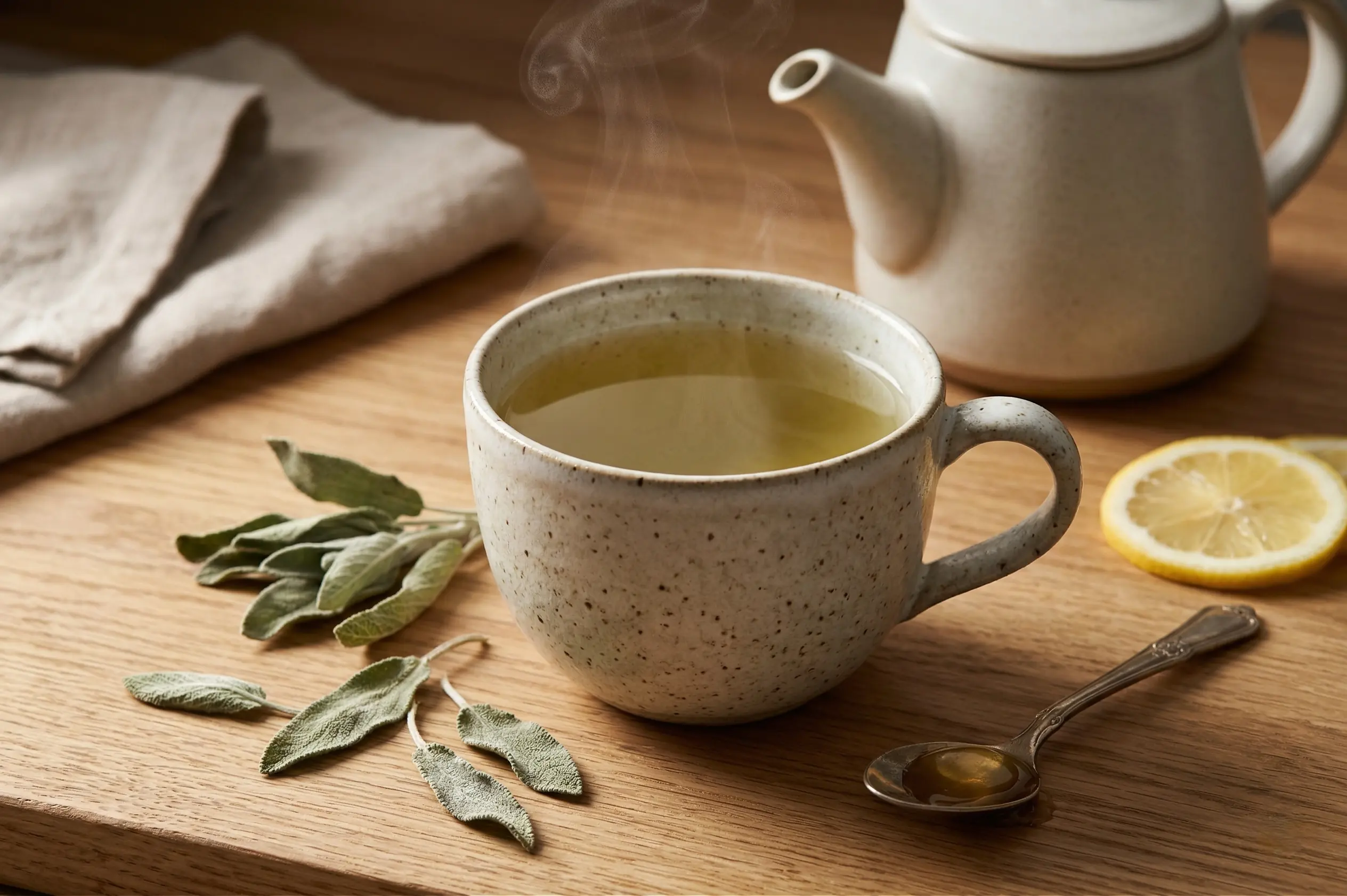
The flavor is herbal, slightly resinous, dry, and strong, with a medium body and persistent finish. Sage brings a deep aromatic sensation, almost culinary, that can remind one of kitchen herbs and dried leaves. Honey softens the dryness and makes the texture rounder, while lemon adds light acidity and freshness, as long as used in small amounts.
When to prepare
Pairs well with cold nights, late afternoons, rainy days, or moments of pause when a warm and aromatic drink seems welcome. It can be taken after talking a lot, in a resting routine, or during quiet reading, always as sensory comfort, not as professional care for cough or pain. Avoid continuous consumption for many days and prefer occasional use. If there are persistent symptoms, fever, or worsening, the appropriate moment is to seek professional guidance.
Use notes
Sage can create a warm and aromatic drink for moments when the throat seeks sensory comfort, especially when combined with honey or lemon in small amounts. However, this comfort should not be confused with professional care for cough, inflammation, infection, sore throat, or any respiratory condition. The infusion can contribute to hydration, warmth, and a sense of care on cold days, enhancing the herbal aroma and the ritual of slow drinking. Due to its strong flavor and moderate use, it should not be consumed excessively or for long periods without guidance. Pregnant or breastfeeding individuals, those with a history of seizures, chronic diseases, or medication use should seek professional evaluation. The drink does not replace diagnosis, medications, professional care, or medical care in case of persistent symptoms.
Ingredients
- 1 teaspoon of dried sage
- 250 ml of hot water
- 1 teaspoon of honey (optional)
- 1 thin slice of lemon (optional)
Preparation
- 1. Heat the water until just before boiling.
- 2. Turn off the heat.
- 3. Add the sage and cover for 7 to 9 minutes.
- 4. Strain and let cool slightly.
- 5. Sweeten with honey or mix in lemon if desired.
Preparation tips
Do not boil the sage directly. Heat the water, turn off the heat, and add the herb with the cup covered. The time of 7 to 9 minutes is usually sufficient to extract aroma without making the drink aggressive. Strain well before adding honey or lemon. If using honey, wait for the tea to cool slightly to better preserve the flavor and avoid excessive sweetness. If using lemon, add a thin slice or a few drops, as too much acidity can dominate the sage and discomfort those with reflux. For a lighter infusion, use half a teaspoon. Avoid preparing too concentrated or consuming several cups in the same day.
Variations
For a milder version, reduce the sage by half and keep the honey optional, creating a less dry cup. For a more citrus version, use only a strip of well-washed lemon peel during the infusion instead of juice, leaving the aroma more elegant and less acidic. For a sweeter and softer profile, add a thin slice of apple while covering. On hot days, it is possible to prepare a light infusion, strain, cool, and serve with ice, although sage usually works better warm. Avoid mixing with other very intense herbs, such as excessive rosemary, to avoid creating a bitter and heavy drink.
Enjoy your tea
Care and observations
For adult use only. Avoid in pregnant and breastfeeding women without professional guidance. Do not use excessively or daily for prolonged periods. Individuals with a history of seizures or epilepsy, chronic diseases, sensitive hormonal conditions, use of hormonal medications, sedatives, anticonvulsants, or ongoing medications should consult a healthcare professional before regular consumption. Sage can be intense for some people and may cause discomfort if used concentrated. Discontinue use in case of gastric irritation, dizziness, allergy, malaise, or any unusual reaction. Honey should not be given to children under 1 year.