Tea Jabuticaba Ruby
Deep Purple Antioxidant
About this recipe
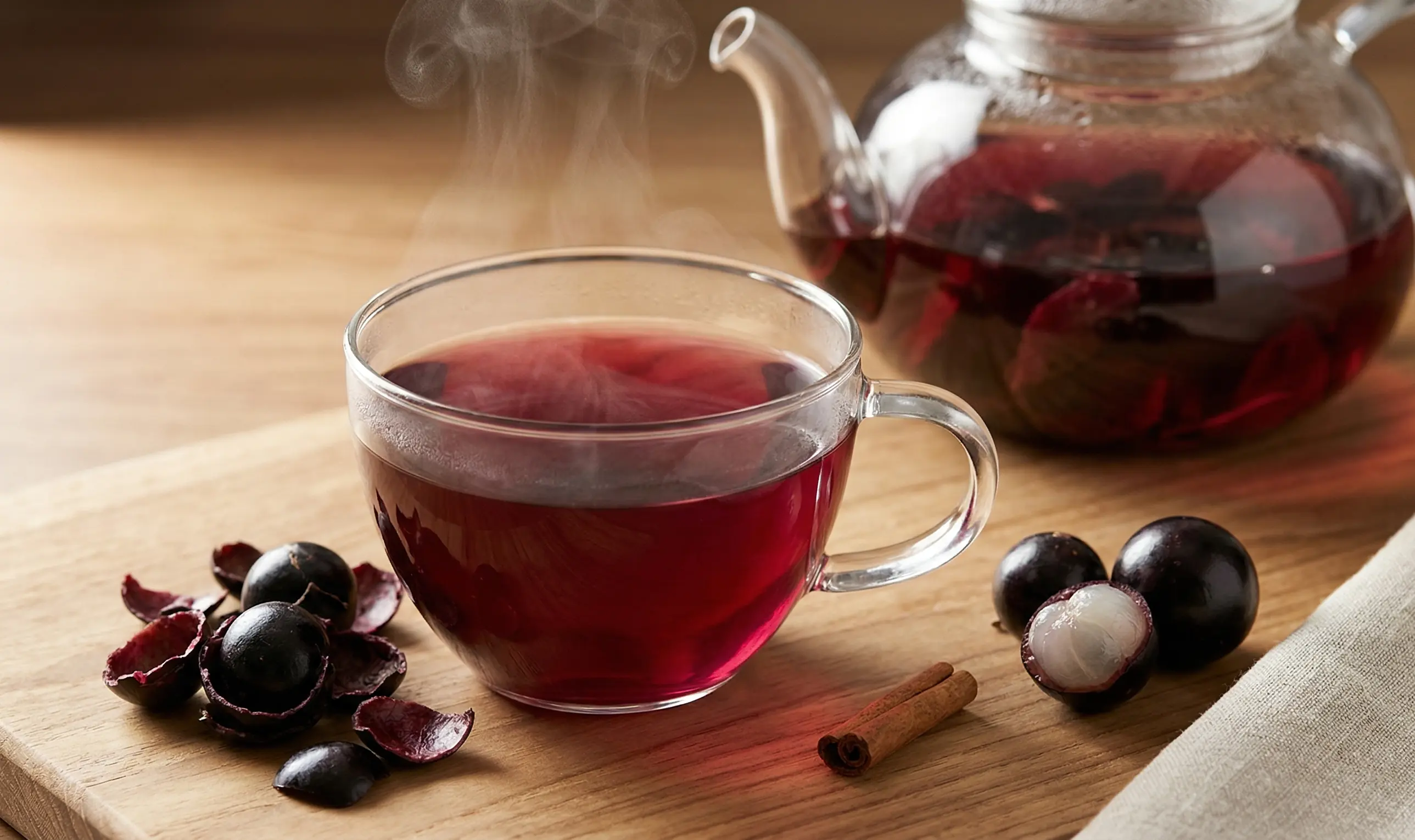
Jabuticaba Ruby Tea has the charm of recipes that seem to come from a family kitchen, but with the finish of an editorial drink. It arises from a simple and beautiful idea: to make use of the jabuticaba peels, where a significant part of the purple color that makes the fruit so striking is concentrated. When brought to the fire with water, these peels release a deep ruby hue, between light wine and violet, creating a visually elegant, aromatic cup full of personality. It is a recipe for culinary reuse, but not looking improvised; on the contrary, when made with care, it seems designed to be served at a calm table, with natural light and time to appreciate the aroma. The proposal here is not to turn jabuticaba into a health promise. Although the fruit's peel is known for its intense color and for containing plant compounds associated with natural pigments, this tea should be professional care as a drink of pleasure, hydration, and emotional memory. It does not guarantee to strengthen care routine, improve personal care as professional care, or replace fresh fruits, balanced diet, or any professional guidance. The interest of the recipe lies in the meeting of flavor, color, aroma, and responsible use of the ingredient. The cup delivers a sensory experience: cooked fruit, light astringency, natural sweet finish, and, if cinnamon is used, a discreet warmth at the end. Since it uses peels, the hygiene step is essential. The jabuticabas must be very well washed, preferably from reliable sources, without excess residues or signs of deterioration. The drink also requires attention to cooking time. If the peels stay on the fire too long, the infusion can gain strong astringency and a bitterness that detracts from the elegance of the preparation. The ideal point is to cook for a few minutes, turn off, and let it rest covered, allowing the color and perfume to finish integrating into the liquid. The cinnamon should appear only as an optional detail, never as the protagonist, so as not to overshadow the fruity character of the jabuticaba. Jabuticaba Ruby Tea is perfect for those who enjoy drinks with Brazilian identity but desire a more refined preparation than a simple improvised tea. It can be served warm on mild days or chilled for a cold version, almost like a fruity table infusion. Its intense visual helps make the moment more special, but its real strength lies in well-executed simplicity. It is a drink that combines domestic sustainability, memories of fruit picked from the tree, and attention to detail. With safe language and correct preparation, it becomes a recipe ready for an app or website: beautiful, useful, sensory, and honest.
Summary
Jabuticaba peel tea with ruby color, fruity aroma, and a light woody touch, ideal for enjoying the fruit in a homemade and elegant drink.
Flavor profile
The flavor is fruity, lightly sweet in a natural way, and discreetly astringent, with a medium body and a finish that recalls dark fruit peel. The ruby color suggests intensity, but the drink can be delicate when the cooking time is well controlled. The cinnamon, if used in small amounts, adds aromatic warmth and a woody background, without dominating the jabuticaba.
When to prepare
It can be consumed at the end of the morning, in the afternoon, or after a light meal, especially when the idea is to vary hydration with a fruity, beautiful, and caffeine-free drink. Served warm, it pairs well with cooler days and moments of pause at home. Chilled, it works well on hot days, as a refreshing ruby infusion. It should not be used with therapeutic intent, for personal care, care routine, or symptoms. The best context is culinary and sensory: a cup of intense color to enjoy without haste.
Use notes
Jabuticaba peels can offer a naturally colored drink rich in plant compounds associated with the purple pigmentation of the fruit, such as anthocyanins, in addition to tannins and fruity aromas that make the sensory experience more interesting. This type of preparation can contribute to hydration and the full culinary use of the fruit, transforming well-washed peels into a homemade infusion of intense color. However, the recipe should not be presented as a way to strengthen care routine, improve personal care, professional care inflammation, or prevent diseases. The safest value lies in flavor, the preparation ritual, the conscious use of ingredients, and variety within the routine. It does not replace a balanced diet, diagnosis, professional care, medication, or professional guidance, especially in cases of persistent symptoms, pregnancy, lactation, chronic diseases, or medication use.
Ingredients
- Peels from 12 to 15 well-washed jabuticabas
- 400 ml of water
- 1 small piece of cinnamon stick (optional)
Preparation
- 1. Boil the water.
- 2. Add the jabuticaba peels and cook on low heat for 8 to 10 minutes.
- 3. Turn off the heat, cover, and let it rest for 5 minutes.
- 4. Strain and serve warm. Sweeten only if desired, when the drink is warmer.
Preparation tips
Wash the jabuticabas very well before removing the peels, as the recipe uses precisely the outer part of the fruit. Discard bruised, fermented, moldy fruits or those with altered smells. Cook the peels on low heat for 8 to 10 minutes, avoiding aggressive and prolonged boiling, which can intensify tannins and leave the drink harsh. After turning off, cover and wait 5 minutes to complete the extraction of color and aroma. Strain with a fine sieve. If sweetening, wait until it cools and use little sugar, honey, or another sweetener of choice, so as not to overshadow the fruity delicacy. The cinnamon should be small and optional.
Variations
For a milder version, use fewer peels or increase the water to 500 ml, keeping the cooking time controlled. For a cold version, prepare normally, strain, wait for it to cool, and refrigerate; serve with ice and a few whole jabuticabas just as a visual element, if well washed. For a citrus touch, add a small strip of orange peel during the final resting, removing it before serving. It is also possible to make it without cinnamon to highlight only the fruit. Avoid combining with many spices, as cloves, excessive ginger, or too much cinnamon can turn an elegant drink into a heavy and less balanced infusion.
Enjoy your tea
Care and observations
For adult and occasional use. Wash the fruits very well and prefer jabuticabas from reliable sources, free of pesticide residues. People with gastritis, reflux, or sensitivity to richer tannin beverages may feel discomfort; in this case, reduce the concentration, decrease the cooking time, or avoid if symptoms worsen. People with diabetes or sugar restrictions should be cautious when sweetening. Pregnant women, nursing mothers, people with chronic diseases, allergies, or those on continuous medication should consult a health professional before regular consumption. Do not use the drink as professional care for symptoms or health conditions.