Tea Pomegranate
Throat Comfort
About this recipe
Pomegranate Peel Tea is a recipe with a sober presence, marked by the natural astringency of the peel and a sensory profile that resonates with throat care. Unlike floral or fruity teas, it does not seek sweetness or aromatic lightness. The proposal is a drier, firmer, and cleaner drink that can be consumed warm in small sips or used, after cooling, as an occasional gargle. It is a recipe of homemade tradition but needs to be presented responsibly to avoid becoming a medical promise. Pomegranate is a very symbolic fruit, and its peel appears in popular preparations, especially when talking about the throat. Still, pomegranate peel tea should not be described as a clinical solution for infections, tonsillitis, flu, hoarseness, inflammation, or intense pain. The astringency can provide a feeling of comfort and cleanliness in the mouth, but it does not replace diagnosis, medications, or antibiotics when indicated or professional care. Severe pain, high fever, pus, plaques, difficulty swallowing, shortness of breath, or persistent symptoms require evaluation. Preparation should be controlled. The dried peel is more concentrated and releases tannins easily. Boiling for 5 minutes and then steeping for 10 minutes is sufficient for a striking drink. Exceeding this time can make the tea harsh, bitter, and difficult to drink. Straining needs to be careful, especially if the use is for gargling. For gargling, the drink should be cold or warm, never hot, to avoid irritation. Sensorially, Pomegranate Peel Tea is dry, slightly fruity, woody, and very astringent. It pairs well with cold days, moments of voice care, and situations where one desires a simple, unsweetened drink for occasional use. In a premium curation, its strength lies in honesty: a traditional, intense tea useful as a sensory ritual, but without promising what only professional evaluation can resolve.
Summary
Astringent decoction of pomegranate peel, designed for sensory comfort of the throat and moderate adult use, including gargling.
Flavor profile
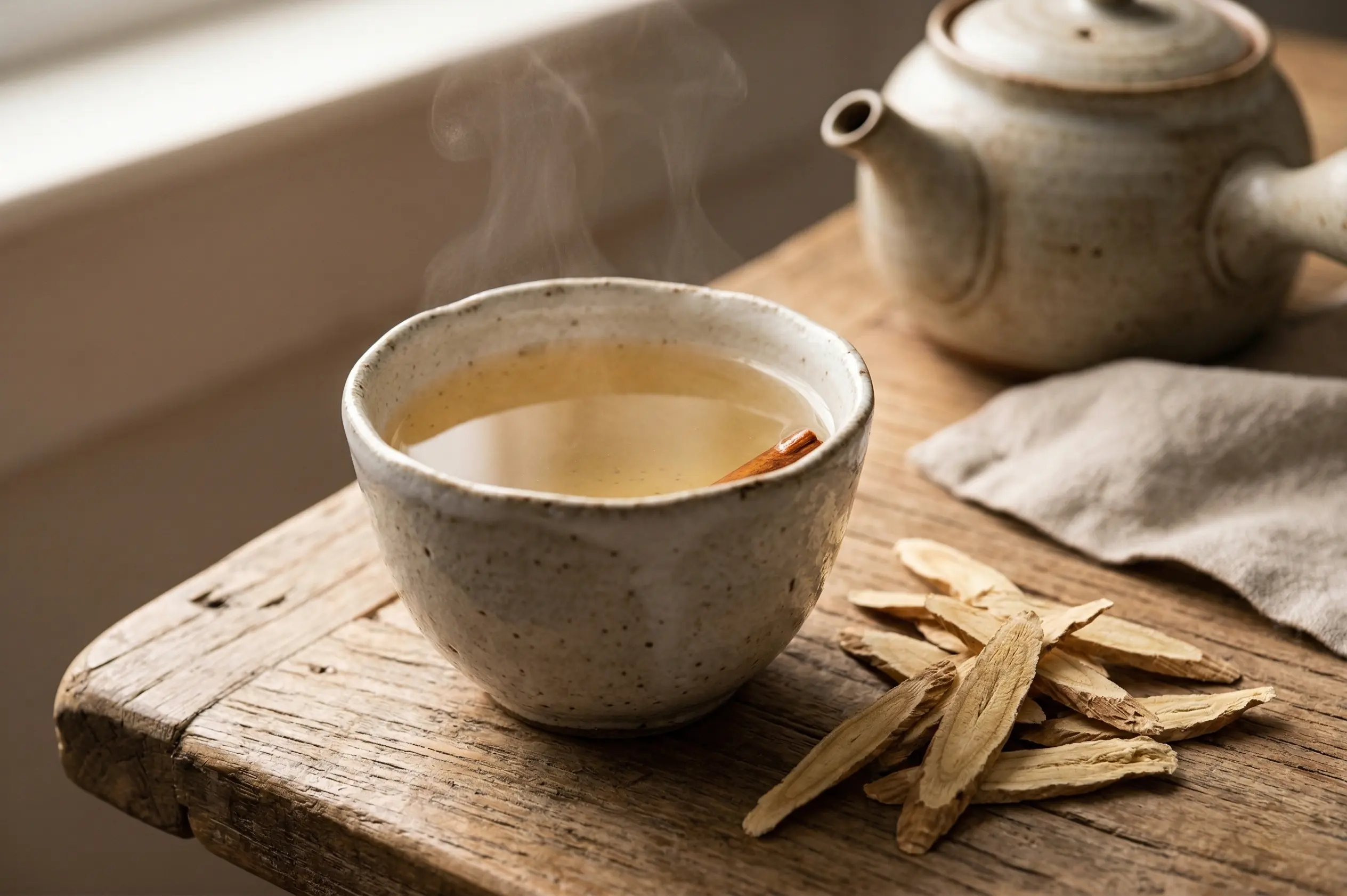
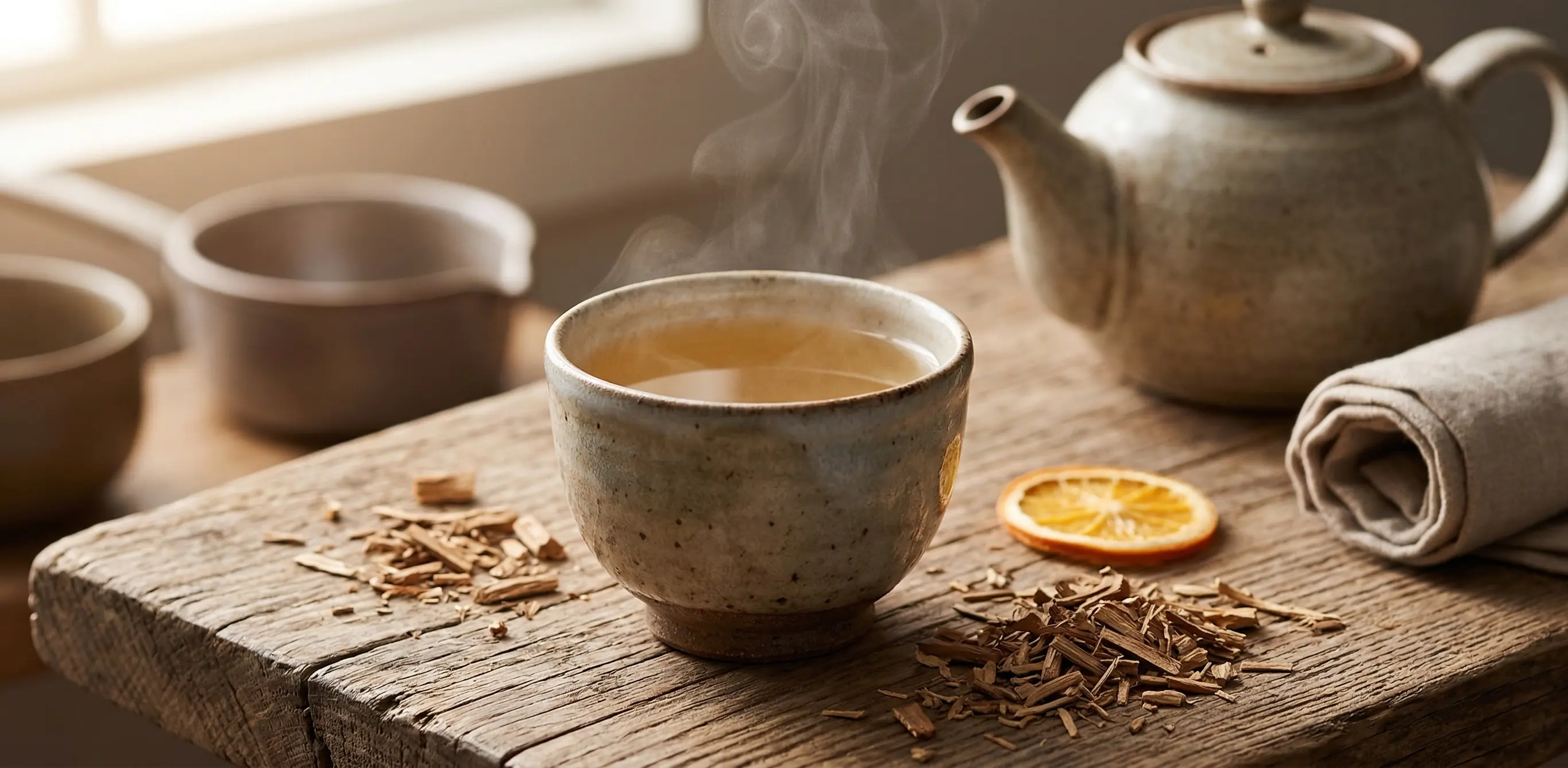
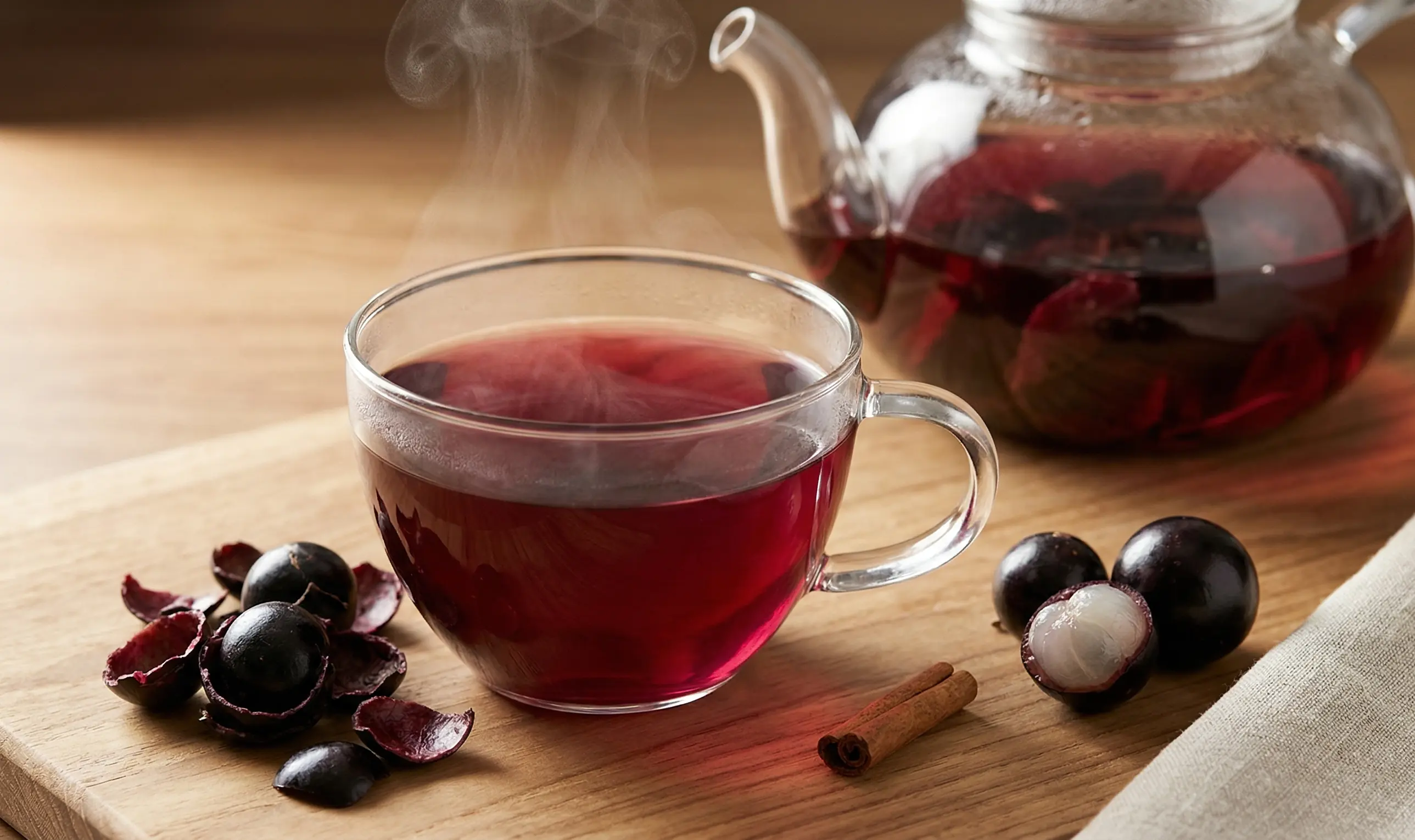
The flavor is dry, astringent, slightly fruity, and woody, with a light to medium body and a firm finish in the mouth. Pomegranate peel brings a tannin sensation, similar to fruit peels and drier beverages. It is not naturally sweet or soft. If the boiling is long or the quantity excessive, the drink can become harsh, bitter, and very astringent.
When to prepare
Can be used occasionally on cold days, after intense voice use, or when one desires a warm drink for sensory comfort for the throat. It can also be used as gargling after cooling, always without swallowing large amounts. It should not be used as a professional care for sore throat, infection, fever, or persistent hoarseness. If there is worsening, plaques, pus, difficulty swallowing, or prolonged symptoms, seek professional evaluation.
Use notes
Pomegranate peel produces an astringent, aromatic, and flavorful drink, traditionally used in homemade preparations associated with throat comfort. In safe language, it may contribute to a sensory feeling of cleanliness and firmness in the mouth and throat, especially when used warm for drinking or cold/warm for gargling. Still, it should not be presented as a professional care for infection, sore throat, tonsillitis, flu, hoarseness, inflammation, or low care routine. The safest benefit lies in the warmth of the cup, hydration, the care ritual, and the characteristic astringency of the peel. It does not replace medical evaluation, medications, antibiotics, rest, adequate hydration, or professional guidance in the face of persistent symptoms, fever, or significant signs.
Ingredients
- 1 teaspoon of dried pomegranate peel
- 250 ml of water
Preparation
- 1. Boil the pomegranate peel in water for 5 minutes.
- 2. Turn off and steep for 10 minutes.
- 3. Strain very well.
- 4. Use to drink warm or for gargling after cooling.
Preparation tips
Use dried pomegranate peel from a good source, clean and suitable for culinary preparation. Boil for only 5 minutes and keep covered for another 10 minutes. Strain very well before drinking or gargling. For a milder version, use half a teaspoon of peel in 250 ml of water or increase the volume to 350 ml. Do not drink scalding hot, especially if the throat is sensitive. For gargling, wait until it cools to a comfortable temperature. Avoid excessive sweetening and do not use continuously for prolonged periods without professional guidance.
Variations
For a milder version, reduce the pomegranate peel by half and keep the same preparation time. For a more pleasant aroma, add a small strip of well-washed orange peel during the final steeping, removing it when straining. For a softer sensation, use a thin slice of apple during the resting period. If gargling is the goal, prefer the simple recipe, without honey and citrus, to reduce irritation. Avoid combining with many astringent herbs or strong spices, as the drink may become aggressive for the mouth, throat, and stomach.
Enjoy your tea

Care and observations
Adult use only. Pomegranate peel is quite astringent; avoid excessive use, concentrated preparation, and prolonged consumption. People with significant constipation, gastritis, reflux, chronic diseases, allergies, pregnant or breastfeeding women, or those on continuous medication should consult a professional before regular consumption. For gargling, use only when cold or warm, never hot, and do not swallow large amounts. If there is intense pain, pus, plaques, high fever, difficulty swallowing, shortness of breath, persistent hoarseness, rapid worsening, or symptoms that do not improve, seek professional evaluation. Do not use as a substitute for antibiotics, medicines of this type used frequently, diagnosis, or indicated professional care.