Tea Honey Thyme
Herbal Comfort
About this recipe
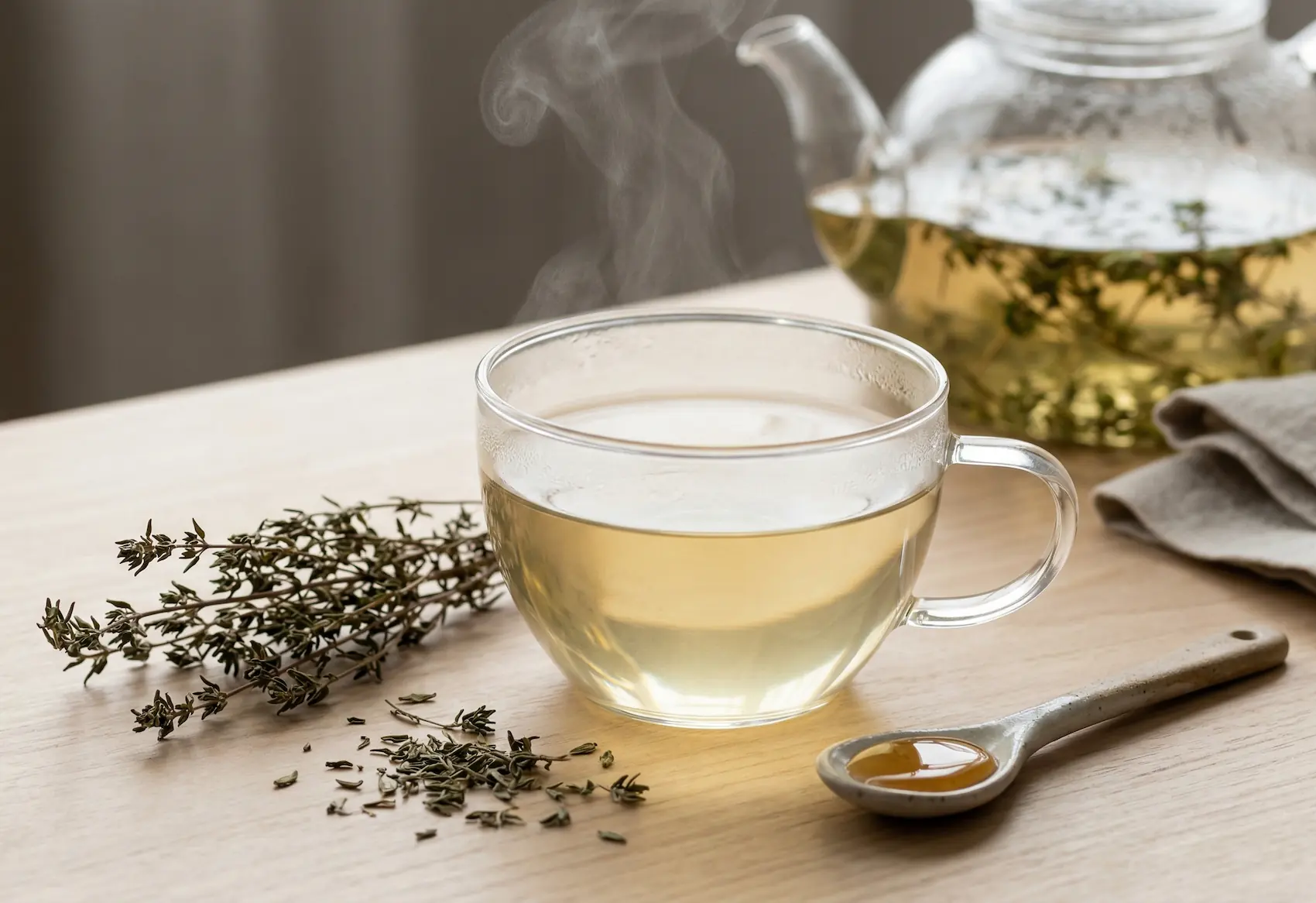
Thyme Tea with Honey is a herbal infusion of classic personality, with an intense aroma and a feeling of coziness. Thyme, well-known in the kitchen, delivers green, slightly resinous, and Mediterranean notes. When prepared in hot water and finished with honey after the drink cools, it gains a softer texture and a rounder flavor. It is a cup that pairs well with cold weather, quiet nights, and moments when the throat seems to ask for something warm and caring. The association with care routine and throat needs to be professional care responsibly. Thyme is traditionally used in culinary and homemade preparations, but the tea should not promise to does not replace care for flu, does not address cough, professional care infection, strengthen care routine, or replace medical care. A hot drink can be comforting, can help with hydration, and can make the moment more welcoming, but significant respiratory symptoms require attention. High fever, shortness of breath, wheezing, chest pain, difficulty swallowing, or rapid worsening are signs to seek medical attention. The preparation should balance intensity and softness. Thyme is strong; a teaspoon in 250 ml is enough. The time of 8 to 10 minutes with the cup covered extracts aroma without making the drink excessively bitter. Honey should only be added when the tea is warm, both for flavor and comfort while drinking. It is optional and should not be offered to children under 1 year. People with reflux or gastritis should observe tolerance, as intense aromatic herbs can be bothersome. Sensorially, Thyme Tea with Honey is herbal, warm, and persistent. It is not sweet by nature, but honey creates a soft layer that complements the character of thyme. In a premium curation, this recipe works when it values the real experience: herbal aroma, warm cup, sensory care, and clear alerts. It is a drink to embrace the moment, not to promise a clinical solution.
Summary
Thyme infusion with optional honey, herbal and intense, designed for sensory comfort on cold days and for a sensitive throat.
Flavor profile
The flavor is herbal, intense, slightly resinous, and subtly bitter, with a light to medium body. Thyme brings Mediterranean, green, and aromatic notes, with a persistent finish. Honey softens the dryness and adds delicate sweetness when used in small amounts. If the infusion exceeds the time or thyme is used excessively, the drink can become rough and dominant.
When to prepare
It can be consumed on cold days, at night, or during moments of pause when one desires a warm and herbal drink. It also pairs well with reading, resting, or a sensory throat care routine. It should not be used as a professional care for flu, cough, sore throat, or shortness of breath. If there is high fever, persistent symptoms, wheezing, chest pain, or worsening, seek professional evaluation. People with reflux or gastritis should observe tolerance.
Use notes
Thyme with honey can offer a herbal, warm, and aromatic cup, associated with sensory comfort on cold days or when the throat is sensitive. Thyme is a culinary herb with an intense aroma, and honey can soften the texture and flavor when used in moderation. Still, the recipe should not be presented as a professional care for flu, cough, infection, sore throat, bronchitis, low care routine, or any respiratory condition. The safest benefit lies in hydration, the warmth of the drink, the herbal aroma, and the care ritual. It does not replace diagnosis, medical professional care, medications, rest, adequate hydration, or professional guidance when there are persistent symptoms, high fever, shortness of breath, or worsening.
Ingredients
- 1 teaspoon of dried thyme
- 1 teaspoon of honey (optional)
- 250 ml of hot water
Preparation
- 1. Add the thyme to the cup.
- 2. Pour in the hot water and cover for 8 to 10 minutes.
- 3. Strain and add honey only when warm.
Preparation tips
Use good quality dried thyme suitable for consumption. Pour hot water over the herb, cover, and let it steep for 8 to 10 minutes. Strain well to remove small leaves. Wait for it to cool before adding honey. For a milder version, use half a teaspoon of thyme or reduce the time to 6 minutes. Avoid boiling thyme directly for too long, as the flavor can become bitter. Do not increase the concentration seeking effects for the throat or care routine. Drink warm, not scalding, especially if the throat is sensitive.
Variations
For a milder version, use half a teaspoon of thyme and keep the honey optional. For a more citrus aroma, add a small strip of well-washed lemon peel for 1 minute before straining, avoiding if there is reflux. For a softer drink, add a thin slice of apple during the infusion. If you prefer without honey, value the pure herbal profile of thyme. Avoid combining with many strong herbs, cloves, pepper, or intense ginger when the throat is sensitive, as the drink may become irritating.
Enjoy your tea
Care and observations
For adult use. Pregnant and breastfeeding women should consult a professional before regular consumption. People with gastritis, reflux, allergy to aromatic plants, chronic diseases, coagulation disorders, use of anticoagulants, antiplatelet agents, or ongoing medications should consult a professional before frequent use. Honey is optional and should not be offered to children under 1 year. Use thyme suitable for infusion or culinary purposes from a good source. If there is high fever, shortness of breath, wheezing, chest pain, difficulty swallowing, rapid worsening, persistent symptoms, or signs of significant infection, seek medical attention. Do not use as a substitute for antibiotics, bronchodilators, or prescribed professional care.