Tea Voice Mallow
Soft for Throat & Voice
About this recipe
Voice Mallow Tea is a delicate infusion, designed for those seeking a warm, soft, and comforting cup after a long day. Mallow has a discreet personality: it is not an explosive herb in aroma, does not deliver intense acidity, and does not dominate the mouth with bitterness. Its charm lies precisely in its softness. When well prepared, the drink gains a slightly velvety texture, a clear vegetal flavor, and a comforting sensation that pairs well with moments of rest, reading, quiet conversation, or a pause after using the voice a lot. The association with throat and voice should be professional care responsibly. Mallow is traditionally remembered in homemade preparations for comfort, but this does not mean that the tea professional care cough, flu, inflammation, infection, persistent hoarseness, or intense sore throat. A warm drink can be pleasant, can help hydrate, and can make the moment more comfortable, but it does not replace medical evaluation, speech therapy, or any professional care when there are significant signs. If there is high fever, shortness of breath, severe pain, difficulty swallowing, throat plaques, rapid worsening, or symptoms that do not pass, professional guidance is essential. The preparation needs to respect the delicacy of the plant. Mallow should not be boiled for long periods. The ideal is to heat the water until just before boiling, turn off the heat, and infuse covered for 8 to 10 minutes. This covering helps preserve the soft character and the smooth sensation of the drink. Honey is optional and should only be added when the tea is warm. It rounds out the flavor and makes the experience more comforting, but should not be used as a promise of healing. It is also not suitable for babies under 1 year. Sensorially, Voice Mallow Tea pairs well with cold nights, end of the workday, routines of teachers, singers, speakers, or people who use their voice a lot, always as sensory comfort and not as professional care. The cup calls for calm: drink slowly, at a comfortable temperature, without haste and without excess. In a premium curation of teas, this recipe stands out for its simple elegance. It does not need to exaggerate to be useful; it just needs to be honest, soft, well-prepared, and safe.
Summary
Soft infusion of mallow with optional honey, delicate and comforting, designed for sensory throat comfort and moments of pause.
Flavor profile
The flavor is smooth, herbal, slightly vegetal, and discreet, with a low to medium body and a soft sensation in the mouth. Mallow does not have an intense aroma or marked sweetness, but can leave a delicately velvety texture. Honey, if used in small amounts, rounds out the drink and brings light sweetness without overshadowing the natural profile of the herb.
When to prepare
It can be consumed at night, in the late afternoon, or after periods of intense speaking, such as classes, meetings, recordings, or presentations. It also pairs well with cold days, reading, and moments of slowing down. It should not be used as professional care for cough, flu, sore throat, or persistent hoarseness. If the voice fails for many days, if there is significant pain, fever, shortness of breath, or difficulty swallowing, seek professional evaluation.
Use notes
Mallow produces a smooth infusion, with a slightly soft texture, traditionally associated with moments of comfort for the throat and voice. This sensation may come from the warmth of the drink, hydration, the delicate profile of the plant, and the natural presence of compounds that provide a velvety sensation in the mouth. Still, the tea should not be presented as professional care for cough, flu, sore throat, hoarseness, inflammation, infection, or any respiratory condition. The safest benefit lies in the ritual of drinking something warm, simple, and comforting, especially after a day of intense speaking or in cold weather. It does not replace medical evaluation, speech therapy, medications, professional care, vocal rest indicated by a professional, or care in case of persistent symptoms.
Ingredients
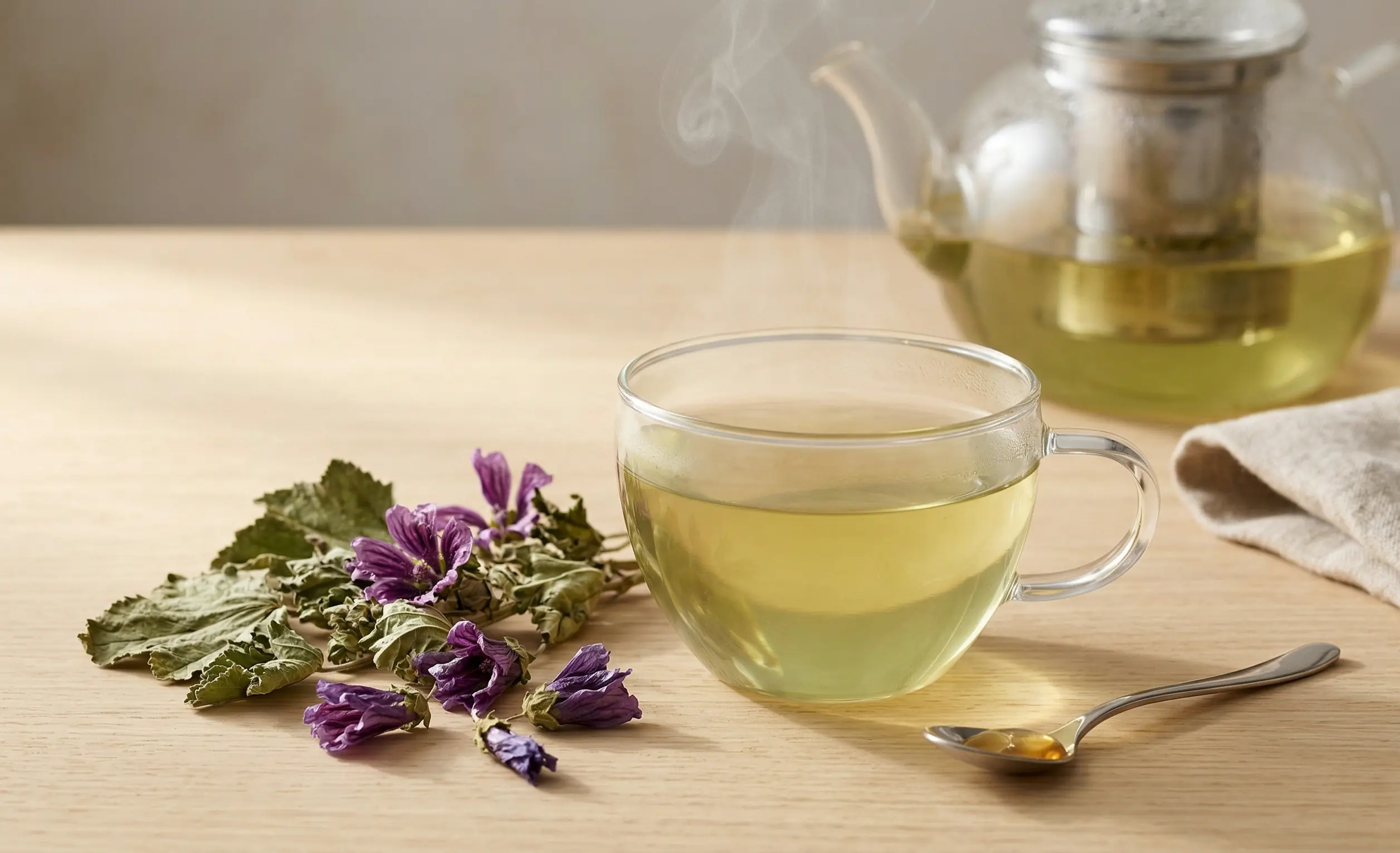
- 1 teaspoon of dried mallow (leaves and/or flowers)
- 250 ml of hot water
- 1 teaspoon of honey (optional)
Preparation
- 1. Heat the water until just before boiling.
- 2. Turn off the heat.
- 3. Add the mallow and cover for 8 to 10 minutes.
- 4. Strain and sweeten with honey, if desired, when warm.
Preparation tips
Use dried mallow suitable for infusion, from a reliable supplier. Heat the water until just before boiling, turn off, and add the herb with the container covered. The time of 8 to 10 minutes is usually sufficient to extract flavor and texture without making the drink heavy. Strain well before serving. Wait for it to cool before adding honey, if using. Drink at a comfortable temperature, not too hot, especially if the throat is sensitive. For a lighter version, use half a teaspoon. If taking medications, maintain an interval of at least 2 hours for prudence.
Variations
For a simpler version, prepare only mallow and water, valuing the smooth texture of the plant. For a sweeter and more comforting profile, use a small amount of honey when the tea is warm. For a more floral version, combine with a small portion of chamomile, provided there is no allergy to Asteraceae family plants. For a fruity touch, add a thin slice of apple during the infusion. Avoid excessive lemon if the throat is irritated or if there is reflux. Also, avoid mixing with many clinical herbs at the same time, to keep the drink light and better observe tolerance.
Enjoy your tea
Care and observations
Adult use only. Avoid if there is a known allergy to mallow or similar plants. Pregnant women, nursing mothers, people with chronic diseases, significant allergies, or those on ongoing medications should consult a healthcare professional before regular consumption. Due to its mucilage content, mallow may interfere with the absorption of medications in some situations; maintain an interval of at least 2 hours if taking medications. Honey is optional and should not be offered to children under 1 year. If there is shortness of breath, high fever, intense pain, difficulty swallowing, persistent hoarseness, rapid worsening, or prolonged symptoms, seek professional care.