Tea Vital Balance
Natural Intestinal Care
About this recipe
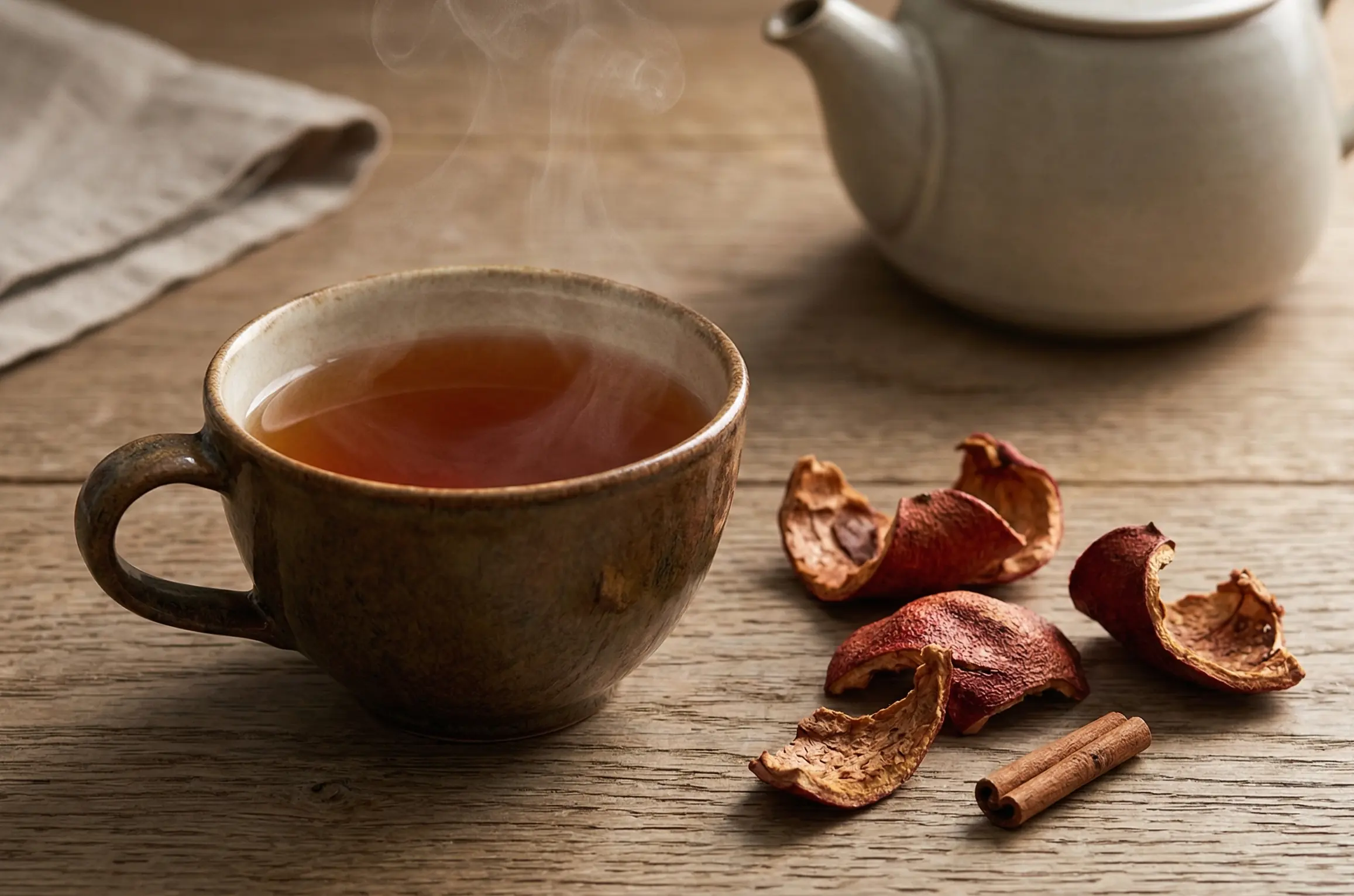
Vital Balance Tea is a recipe with a more serious personality, built from pomegranate peel. Unlike floral or fruity infusions, it delivers a full-bodied, dry, and astringent cup, with a presence that is felt from the first sip. The pomegranate is a fruit of great visual color, but here the focus is not on the ruby-red, juicy seeds; it is on the well-washed peel, used in small amounts and prepared with care. The result is a drink of intense color, firm flavor, and a slightly bitter finish, suitable for adults who appreciate more robust teas. As this recipe is associated with intestinal care, the language must be especially cautious. Pomegranate peel contains tannins, compounds that contribute to the astringent sensation in the mouth. Therefore, it appears in homemade traditions related to moments of looser bowels, but the drink should not be presented as a professional care for diarrhea or any gastrointestinal condition. Diarrhea can have various causes, and when accompanied by fever, blood in stools, signs of dehydration, severe pain, vomiting, or persistence, it requires professional evaluation. The tea can even be part of a light and occasional ritual, but it does not replace medical conduct, proper hydration, or professional care when necessary. Correct preparation is also important to avoid an aggressive drink. The peel must be very well cleaned and used in small amounts. The decoction on low heat for 8 to 10 minutes is sufficient to extract color and flavor without over-concentrating. Cinnamon is optional and should be added discreetly, just to round out the aroma. If used excessively, it can compete with the pomegranate and make the drink heavy. After cooking, letting it rest covered helps integrate the flavors before straining. This tea is not for prolonged or daily consumption without guidance. Its astringent nature calls for moderate use, especially as it may worsen constipation or discomfort in people with a tendency to constipation. In a premium editorial curation, it should be presented as a traditional, intense, and punctual recipe, with clear warnings and no promises. The final cup is good for those seeking a more adult, dry, and concentrated flavor, but always with attention to the body's signals. Vital Balance Tea has value when it respects its limits: it is strong, interesting, traditional, and should be used with awareness.
Summary
Decoction of pomegranate peel with a full-bodied, astringent profile for occasional adult use, designed for a cup with a striking flavor.
Flavor profile
The flavor is full-bodied, dry, slightly bitter, and quite astringent, with subtle fruity notes and a background of peel. The mouthfeel is firm, almost like some tannin-rich teas, leaving a drier finish. Cinnamon, if used in a small piece, brings warmth and softens the bitter perception, but does not does not address the striking character of the pomegranate.
When to prepare
It can be consumed occasionally, preferably during the day, when one desires a warm, astringent drink with a firmer flavor. It is not a tea for prolonged daily routine or preventive use. It should also not be used to try to resolve significant cases of diarrhea, pain, fever, or signs of dehydration. If there are persistent, intense symptoms or blood in stools, the priority should be to seek professional evaluation.
Use notes
Pomegranate peel produces a drink rich in tannins, with an astringent flavor and a marked body, traditionally used in homemade preparations when seeking a drier and more intense cup. In safe language, it can be presented as an infusion for occasional adult use, which may offer a sense of firmness and intestinal comfort in light contexts, but should not be professional care as a remedy for diarrhea, intestinal infection, abdominal pain, or any gastrointestinal condition. The main value of the recipe lies in careful preparation, moderate use, and the sensory experience of the peel. Signs such as blood in stools, fever, dehydration, severe pain, or persistent symptoms require professional evaluation. The drink does not replace diagnosis, professional care, rehydration solution when indicated, medications, or medical care.
Ingredients
- Peel of 1/4 pomegranate (well washed)
- 350 ml of water
- 1 small piece of cinnamon (optional)
Preparation
- 1. Boil the water.
- 2. Add the pomegranate peel and simmer on low heat for 8 to 10 minutes.
- 3. Turn off, cover, and let steep for 5 minutes.
- 4. Strain well and drink warm.
Preparation tips
Wash the pomegranate very well before removing the peel, as the outer part will be used in preparation. Use only a quarter of the peel, avoiding excess. Cook on low heat for 8 to 10 minutes; very long times may concentrate tannins and make the tea too harsh. After turning off, keep covered for 5 minutes and strain very well. If using cinnamon, choose a small piece. Do not sweeten excessively, as the goal is to preserve the dry and controlled profile of the drink. For a less intense version, use half the indicated peel or increase the water to 500 ml.
Variations
For a milder version, use a smaller amount of peel and reduce cooking to 6 minutes. For a more pleasant aroma, add a small strip of well-washed orange peel only during the final steep, removing it when straining. For a version without spices, prepare only pomegranate and water, leaving the flavor more direct and astringent. It is also possible to dilute the finished tea with hot water if the result is too strong. Avoid combining with other astringent plants or strong spices without guidance, as this may make the drink excessively dry and less comfortable.
Enjoy your tea
Care and observations
Adult use, occasional and for a short period. Pomegranate peel is astringent and may cause constipation; avoid in cases of constipation, tendency to constipation, or discomfort when consuming tannins. Do not use for prolonged periods without professional guidance. Seek medical evaluation if there is fever, blood in stools, signs of dehydration, severe pain, persistent diarrhea, frequent vomiting, or worsening symptoms. Pregnant women, nursing mothers, people with chronic diseases, allergies, or those on continuous medication should consult a professional before regular consumption. Cinnamon is optional and should be used in small amounts.