Tea Oregano Secret
The Spice that Heals
About this recipe
Oregano Secret Tea is a curious recipe because it transforms a well-known kitchen herb into an aromatic and unexpected infusion. Oregano often appears in pizzas, sauces, breads, roasted vegetables, and Mediterranean dishes, but in the cup, it reveals another facet: warm, herbal, slightly spicy, and with a fragrance reminiscent of freshly prepared food. This familiarity makes the tea interesting, but it also requires editorial care. It is not correct to present it as 'the spice that heals' in the literal sense, nor as a drink capable of unlocking digestion, combating gas in a suggested way, or professional care gastrointestinal issues. The best interpretation of this recipe is culinary and sensory. Oregano can create a warm drink with a traditional digestive profile, especially for those who enjoy intense herbs and seek a break after heavier meals. The aroma can bring a subjective sense of comfort, and the hot water aids in hydration and the ritual of slowing down after eating. However, if a person has gastritis, reflux, or sensitivity to strong herbs, the infusion may irritate rather than comfort. Therefore, the recipe needs to be moderate, well-strained, and consumed with attention to individual tolerance. The preparation should avoid excess. One teaspoon is sufficient for 250 ml of water, and the 6 to 8 minutes steeping time tends to extract aroma without making the liquid too harsh. Since dried oregano releases small particles, straining well is important to improve texture and prevent the herb from continuing to intensify the flavor in the cup. The lemon is optional and should be used cautiously: it brightens the drink but may bother those with reflux or gastritis. In many cases, the pure tea is already expressive enough. This is a tea for those who enjoy herbal kitchen flavors, not for those seeking floral delicacy. It pairs well with moments after lunch, cold nights, rustic meals, or breaks when a savory-aromatic drink seems fitting. Its charm lies precisely in being different: an everyday spice reinterpreted as an infusion. With responsible text, the recipe gains strength without exaggeration. It ceases to be a miraculous promise and becomes an adult, aromatic option well-guided within a curation of teas and infusions.
Summary
Infusion of dried oregano with aromatic and culinary profile, designed for a light digestive break, without promises of healing or suggested effects.
Flavor profile
The flavor is herbal, warm, slightly spicy, and dry, with a very recognizable culinary aroma. The body is light, but the aromatic intensity is high. It may remind one of sauces, dried herbs, and Mediterranean dishes, so it is not a neutral infusion. The lemon, when used in a thin slice, adds freshness and acidity but should be subtle to avoid making the drink aggressive.
When to prepare
It can be consumed after meals, especially when one desires a warm, aromatic, and caffeine-free drink to conclude the dining experience. It also pairs well with cold nights or breaks when more intense herbal flavors are welcome. It should not be used as a solution for gas, reflux, abdominal pain, or frequent indigestion. If symptoms are persistent, strong, or recurrent, the appropriate guidance is to seek professional evaluation rather than insist on the tea.
Use notes
Oregano is a culinary herb with an intense aroma, traditionally used to bring warmth, fragrance, and lightness to savory dishes. In infusion, it can create a sensory digestive break after heavier meals, especially due to its aroma and herbal character that some people associate with abdominal comfort. Still, it should not be presented as a professional care for gas, indigestion, reflux, pain, infection, or any gastrointestinal condition. The drink can contribute to hydration and provide a different aromatic experience, but its intensity requires moderation, especially in individuals with gastritis or reflux. It does not replace professional evaluation, diagnosis, professional care, medications, or dietary changes when there are frequent, strong, or persistent symptoms.
Ingredients
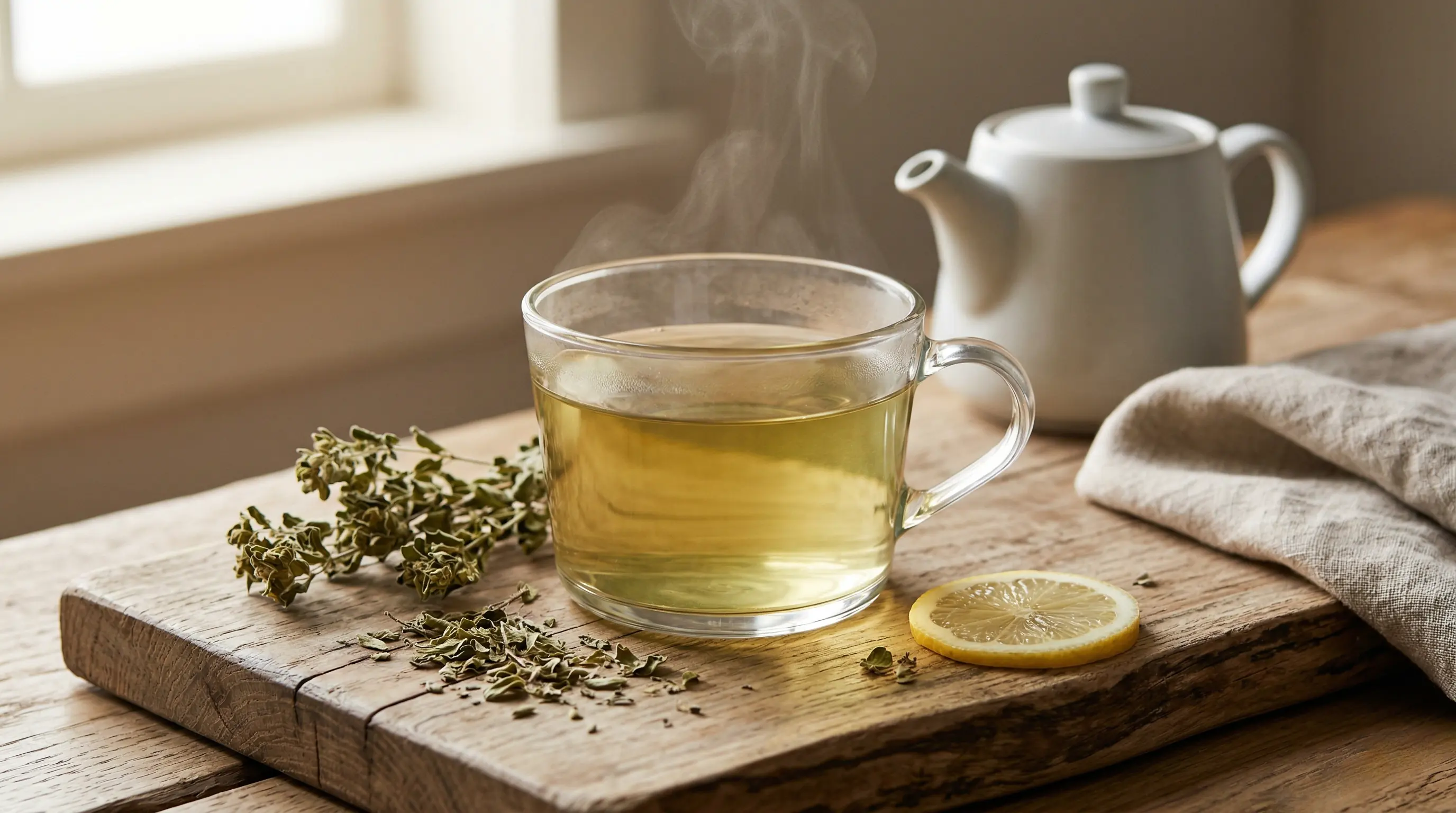
- 1 teaspoon of high-quality dried oregano
- 250 ml of hot water
- 1 thin slice of lemon (optional)
Preparation
- 1. Place the dried oregano in the cup.
- 2. Pour in the hot water, cover, and let steep for 6 to 8 minutes.
- 3. Strain very well.
- 4. Serve warm, with lemon if desired.
Preparation tips
Use high-quality dried oregano with a fresh aroma and no musty or rancid smell. Do not overdo the quantity, as the herb is intense and can make the tea bitter or irritating. Pour hot water over the oregano, cover, and steep for 6 to 8 minutes. Strain with a fine sieve, as small particles may pass into the cup and make the texture unpleasant. If you have gastritis or reflux, avoid lemon and make a weaker version. Do not boil the oregano directly for long periods. To test tolerance, start with half a teaspoon.
Variations
For a milder version, use half a teaspoon of oregano in 250 ml of water and reduce the steeping time to 5 minutes. For a fresher version, add a small mint leaf during the infusion, provided the person does not have reflux sensitive to mint. For a citrus touch, use only a strip of well-washed lemon peel instead of the slice with juice, reducing acidity. It is also possible to combine with a thin slice of apple to soften the dry character of the herb. Avoid mixing with garlic, peppers, cloves, or very strong spices, as the result may be aggressive for the stomach and less pleasant.
Enjoy your tea
Care and observations
Adult use only. Pregnant women should avoid consuming oregano in concentrated tea form without professional guidance. People with gastritis, reflux, sensitivity to aromatic herbs, allergies to plants in the Lamiaceae family, coagulation disorders, or those using anticoagulants, antiplatelet agents, and ongoing medications should consult a professional before regular consumption. It may cause gastric irritation in some individuals. Avoid excess, prolonged daily use, and very concentrated preparations. Discontinue if symptoms worsen, discomfort occurs, allergies arise, or any unusual reactions happen.