Tea Sarsaparilla
Earthy, Full-bodied & Botanic
About this recipe
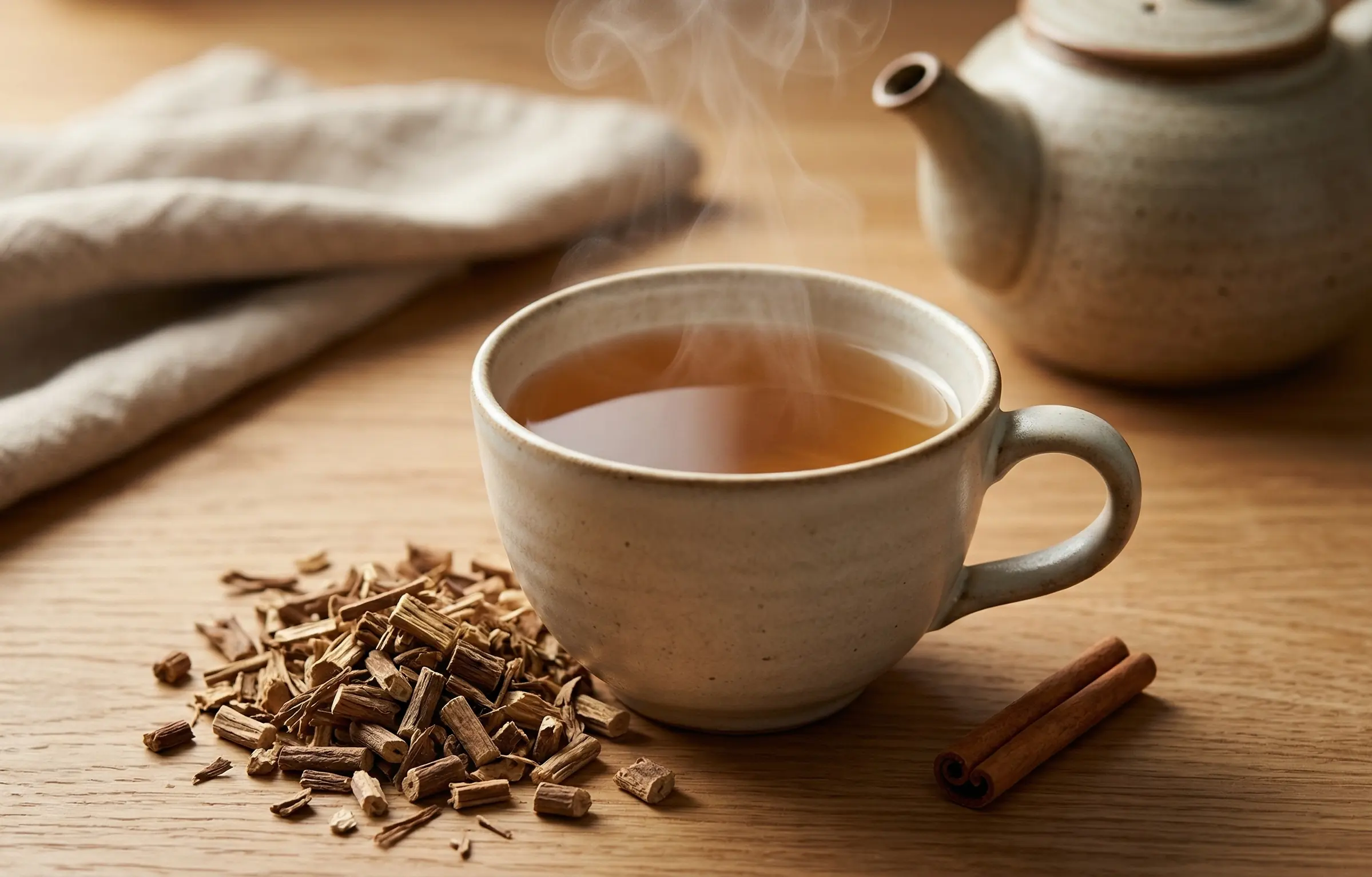
Sarsaparilla Root Tea has an old apothecary atmosphere, with an earthy aroma, denser body, and a preparation that requires time. Unlike infusions of leaves or flowers, sarsaparilla is a dried and chopped root, so it needs decoction: it goes into the pot with water, boils, and cooks on low heat to release flavor. The result is a drink with an adult personality, with notes of earth, light wood, and a slightly sweet finish, especially when it receives a small touch of cinnamon. Despite the traditional imagery surrounding roots and apothecary plants, this recipe needs to avoid strong claims. Sarsaparilla should not be presented as tea for body-result, appetite reduction, create a light pause, personal care improvement, inflammation professional care, or resolving discomfort. The safest benefit lies in the experience: a sugar-free drink, with botanical flavor, prepared slowly and consumed in moderation. The body-result category requires extra care, as the user may seek quick results. The correct communication should make it clear that no cup replaces balanced nutrition, sleep, movement, medical evaluation, or nutritional monitoring. The technique is an essential part of the recipe. Since the root is firm, a simple infusion with hot water may result in weak flavor. Cooking for about 15 minutes better extracts the earthy profile and creates a fuller cup. The cinnamon, if used, should be small so as not to dominate. The goal is to round out the root, not to turn the tea into a spiced drink. After cooking, the covered resting for 5 minutes helps integrate the aroma before straining. The drink should be served warm, in moderate portions. Sarsaparilla Root Tea pairs well with cool afternoons, contemplative breaks, or moments when one wants a more robust alternative to floral infusions. It is not a drink for excessive consumption or continuous use without guidance, especially in people with kidney problems, liver issues, medication use, or chronic conditions. In a premium curation, its strength lies in the deep botanical character and artisanal preparation, not in promises. It is an interesting recipe but should be professional care with respect, moderation, and clarity.
Summary
Decoction of sarsaparilla root with an earthy, full-bodied, and botanical profile, indicated for moderate and well-guided adult consumption.
Flavor profile
The flavor is earthy, woody, slightly sweet, and botanical, with a medium body and dry finish. Sarsaparilla has a root presence, reminiscent of peels, light wood, and older herb preparations. The cinnamon, in a small piece, adds warmth and softens the rusticity, but can dominate if used excessively. The persistence is moderate and welcoming.
When to prepare
It can be consumed at the end of the morning or in the afternoon, especially on cool days when one desires a hot, sugar-free drink with a root profile. It pairs well with reading breaks, rest, or moments of less hurry. It should not be used as a strategy for body-result, hunger control, or compensating for food. It is also not recommended for continuous use without professional guidance, especially for people with chronic diseases, kidney problems, or medication use.
Use notes
Sarsaparilla root produces an earthy, aromatic drink with a more present body, traditionally used in botanical preparations. In a safe approach, it can contribute to hydration and provide a pause of adult flavor, especially for those who appreciate root decoctions. It should not be presented as a way to reduce snacking urges, lose weight, create a light pause, improve personal care, professional care inflammation, or produce any clinical effect. Its safest value lies in the sensory experience, slow preparation, and variety of sugar-free beverages. Due to the specific use of the root and possible interactions, consumption should be moderate and avoided in higher caution groups without professional guidance. It does not replace medical evaluation, nutritional monitoring, diagnosis, professional care, medications, or balanced habits.
Ingredients
- 1 teaspoon of sarsaparilla root (dried and chopped)
- 500 ml of water
- 1 small piece of cinnamon (optional)
Preparation
- 1. Place the water and sarsaparilla on the heat.
- 2. When boiling, lower the heat and cook for 15 minutes.
- 3. Turn off, cover, and steep for 5 minutes.
- 4. Strain and serve.
Preparation tips
Use dried and chopped sarsaparilla root from a reliable supplier. As it is a root, prefer decoction: place it with the water, let it boil, and cook on low heat for about 15 minutes. Avoid high boiling, which evaporates too much water and may concentrate the flavor. Cover during the final resting and strain well. If using cinnamon, choose a small piece. For a milder drink, cook for 10 to 12 minutes or increase the water volume. Do not increase the quantity seeking bodily effects. Prepare only the amount for the day and observe tolerance.
Variations
For a milder version, use half a teaspoon of root in 500 ml of water. For a more aromatic profile, add a small strip of well-washed orange peel during the final resting, removing it when straining. For a version without spices, prepare only sarsaparilla and water, valuing the original earthy flavor. It is also possible to serve it chilled, after straining and cooling, as a summer botanical drink. Avoid combining with other roots, diuretic plants, or herbs associated with body-result without professional guidance, as the mixture may increase risks and hinder tolerance assessment.
Enjoy your tea
Care and observations
Adult use. People with kidney problems, liver disease, low blood pressure, chronic diseases, allergies, those on diuretics, lithium, anticoagulants, antihypertensives, or other continuous medications should consult a health professional before regular use. Pregnant and breastfeeding women should avoid without professional guidance. Avoid excesses, prolonged use without monitoring, and very concentrated preparations. Cinnamon is optional and should be used in small amounts. Discontinue in case of gastrointestinal discomfort, dizziness, allergy, weakness, or any unusual reaction.