Tea Outback Fire
Natural Intense Power
About this recipe
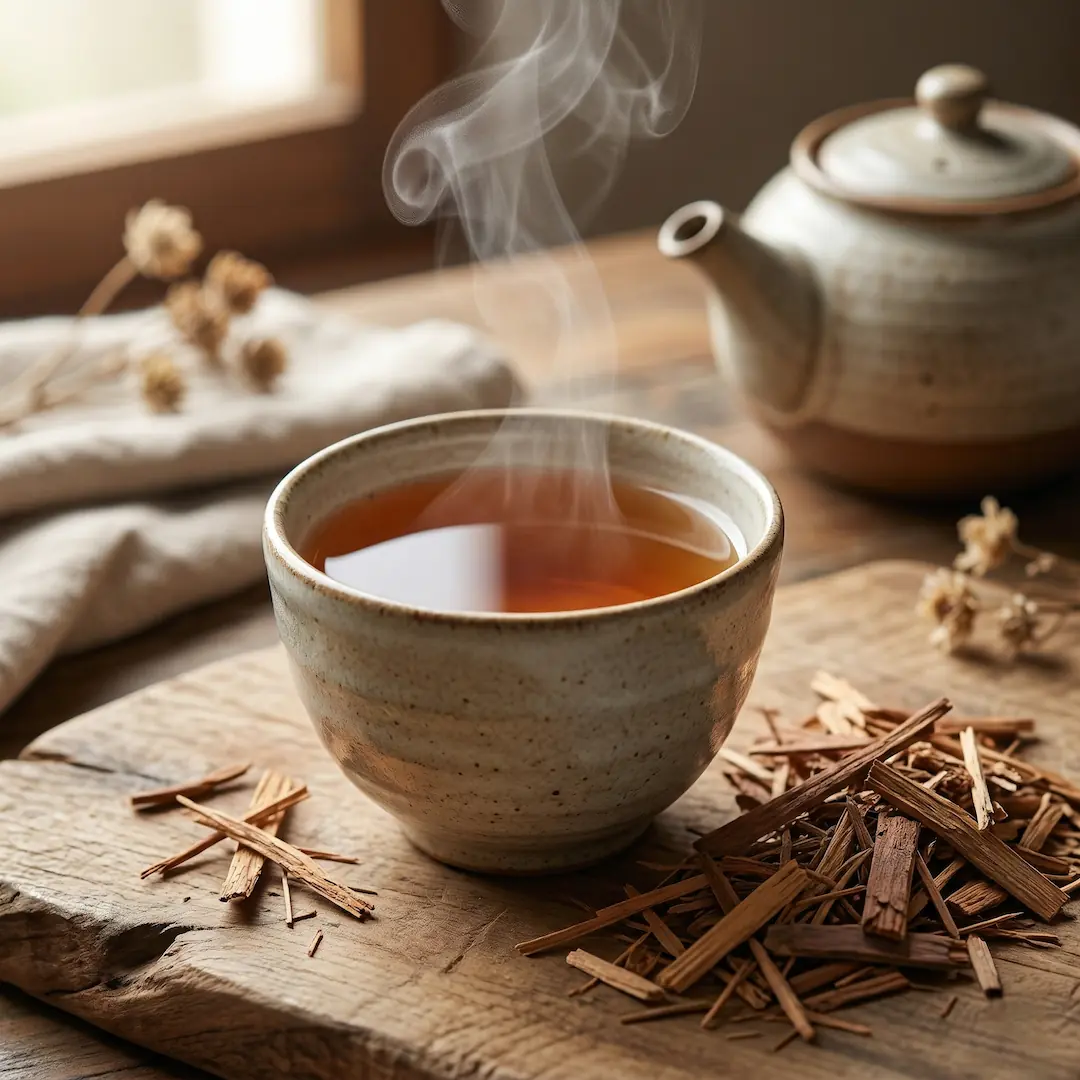
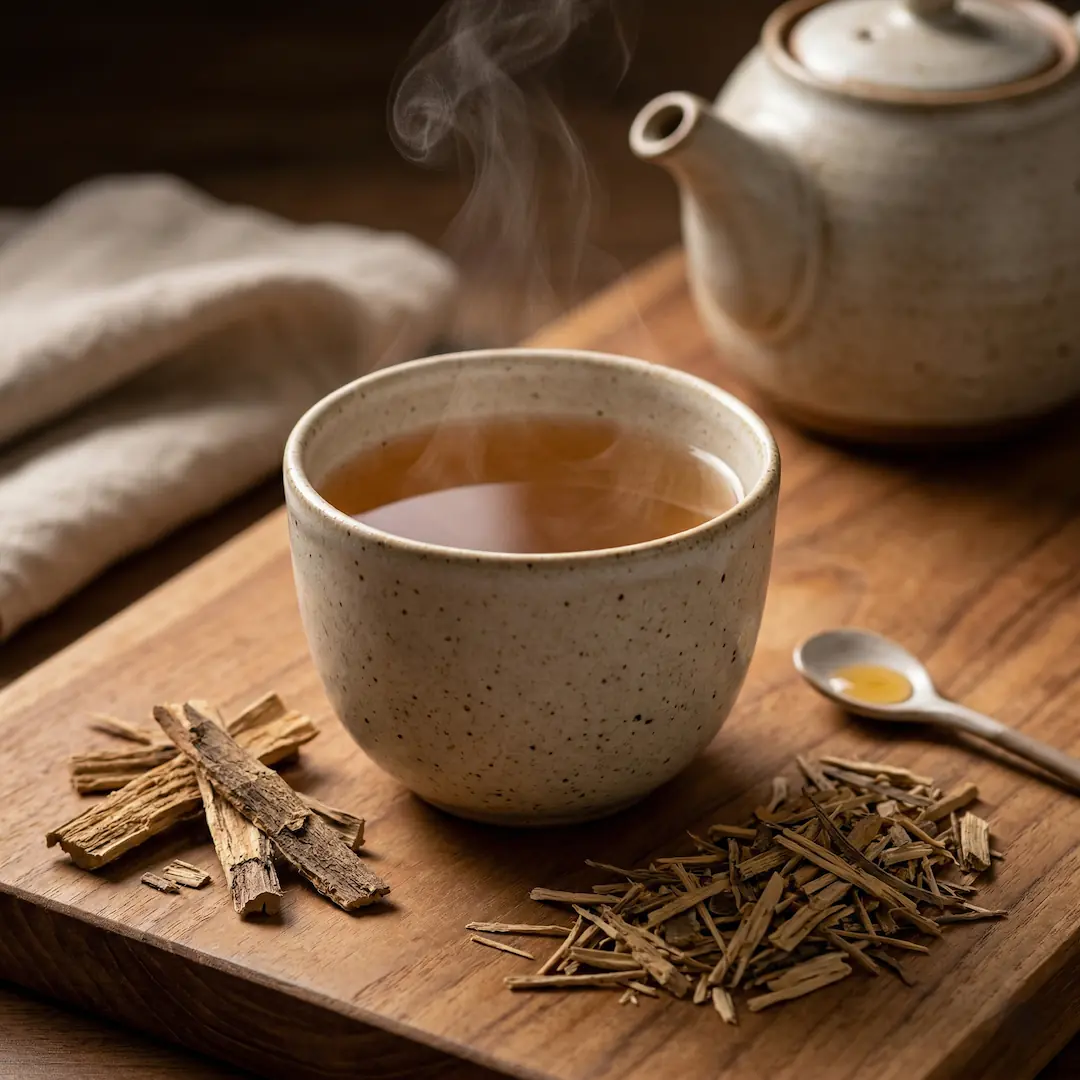
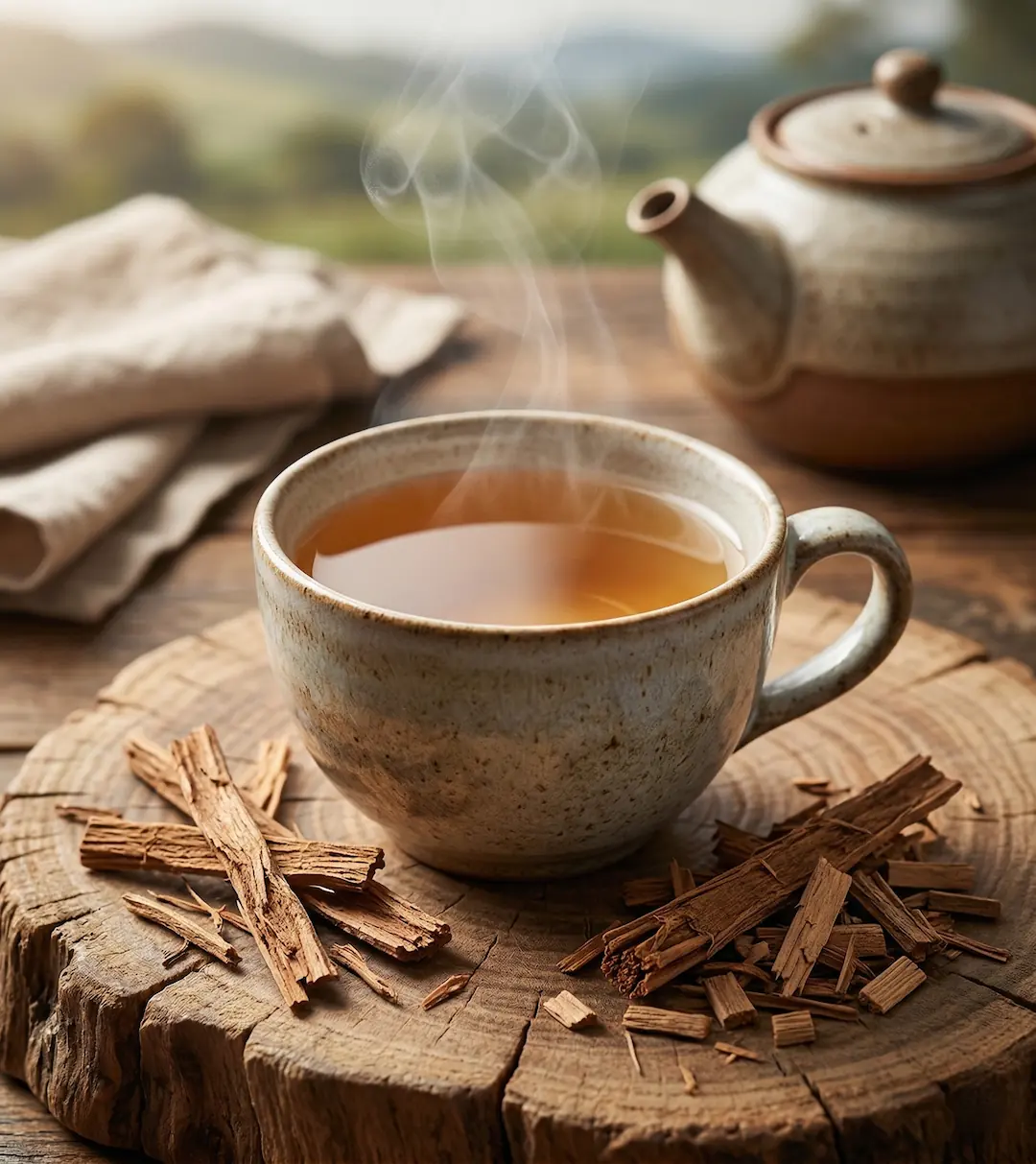
Fire of the Sertão Tea is a decoction of bark with a strong personality, inspired by the universe of traditional interior drinks. Jatobá delivers a woody, robust cup with a deeper flavor than a leaf infusion. It is a recipe of time: the bark goes into the pot, cooks on low heat, and then rests covered to finish releasing aroma. The result is a warm, full-bodied, and rustic drink, with a climate of wood, earth, and regional memory. Despite the name suggesting potency, communication must be responsible. Jatobá should not be presented as a suggested tonic, sensory, energy stimulant, or solution for fatigue, low intimate response, or weakness. The sensory category here should function as a language of presence and ritual, not as a promise of performance. The drink can create an adult, intense, and sensory moment, but does not replace sleep, nutrition, emotional care, medical evaluation, or professional care when there are persistent symptoms. The provenance of the bark is essential. As it is a woody part, it is ideal to buy from a reliable place, with correct identification and good storage conditions. Moldy barks, with strange smells, excessive dust, or dubious origins should not be used. The 15-minute decoction on low heat is sufficient to extract flavor without concentrating too much. The final 10-minute rest integrates the drink before straining. As the flavor is naturally more intense, it is not a recipe for excessive or continuous use. Sensorially, Fire of the Sertão Tea pairs well with late afternoons, cold days, contemplative pauses, and moments when one desires a drink with character, caffeine-free and sugar-free. It is not delicate; it is sober, woody, and adult. In a premium curation, its strength lies in respecting the ingredient and the symbolic territory it carries. With clear warnings and no therapeutic promises, the recipe becomes a sensory tribute to the countryside, not a promise of vigor.
Summary
Decoction of jatobá bark with a woody and full-bodied profile, designed for occasional adult consumption and a ritual of presence.
Flavor profile
The flavor is woody, earthy, slightly astringent, and full-bodied, with a medium to high body for a sugar-free tea. Jatobá bark brings notes of dry wood, interior, bark, and a vegetal base. The persistence is long and rustic. If the decoction is prolonged too much, it can become bitter, dry, and heavy on the palate.
When to prepare
Can be consumed occasionally in the late afternoon or on cold days, as a drink of presence and pause. Pairs well with moments of rest, quiet conversation, or an adult ritual of connection with regional flavors. Should not be used as a strategy for energy, intimate response, performance, or fatigue. People with chronic diseases, those on medication, or any persistent symptoms should seek professional guidance before regular consumption.
Use notes
Jatobá bark is traditionally used in regional preparations and can yield a woody, full-bodied drink with a rustic presence. In a safe approach, this decoction can contribute to hydration and to an adult ritual of pause, with a sensory feeling of vigor linked to the strong flavor and the imagery of the hinterland. However, it should not be presented as a suggested tonic, sensory, source of energy, professional care for fatigue, low intimate response, weakness, or any health condition. The safest benefit lies in the cultural experience, the slow preparation of the bark, and the aromatic character of the drink. Does not replace diagnosis, medical professional care, medications, nutritional follow-up, rest, therapy, or professional evaluation.
Ingredients
- 1 tablespoon of jatobá bark (broken into pieces)
- 700 ml of water
Preparation
- 1. Place the water on the heat and, when boiling, add the jatobá bark.
- 2. Cook on low heat for 15 minutes.
- 3. Turn off, cover, and let steep for 10 minutes.
- 4. Strain and serve warm.
Preparation tips
Use jatobá bark broken into pieces and from a reliable supplier. Quickly wash if there is visible dust, when recommended by the supplier, and discard any part with mold or strange odor. Cook on low heat for 15 minutes, avoiding aggressive boiling that evaporates too much water. After turning off, cover for 10 minutes and strain well. For a milder drink, use half a tablespoon in 700 ml or increase the water to 1 liter. Do not concentrate the decoction seeking more effect. Prepare for consumption on the same day.
Variations
For a milder version, reduce the bark to half a tablespoon and keep the cooking time. For a more welcoming aroma, add a small strip of well-washed orange peel during the final resting period, removing it when straining. For a rounder profile, add a thin slice of apple during the steeping. If you want a slight sweetness, use a small amount of honey when the drink is warm, provided there are no restrictions. Avoid combining with catuaba, marapuama, ginseng, or other ingredients associated with vigor without professional guidance, as the mixture may generate unnecessary expectations and risks.
Enjoy your tea
Care and observations
Adult and occasional use. Use jatobá bark from a reliable source, well identified and purchased from a herb or phytotherapy store with good provenance. People with chronic conditions, liver disease, kidney disease, plant allergies, gastrointestinal problems, pregnant women, nursing mothers, or those on continuous medication should consult a health professional before regular consumption. Avoid excesses, very concentrated preparation, and prolonged continuous use without supervision. Do not use as a suggested tonic, sensory, professional care for weakness, fatigue, low intimate response, or any clinical condition. Discontinue in case of discomfort, nausea, dizziness, allergy, abdominal pain, or unusual reaction.