Tea Ardent Tonic
Brazilian sensory Tradition
About this recipe
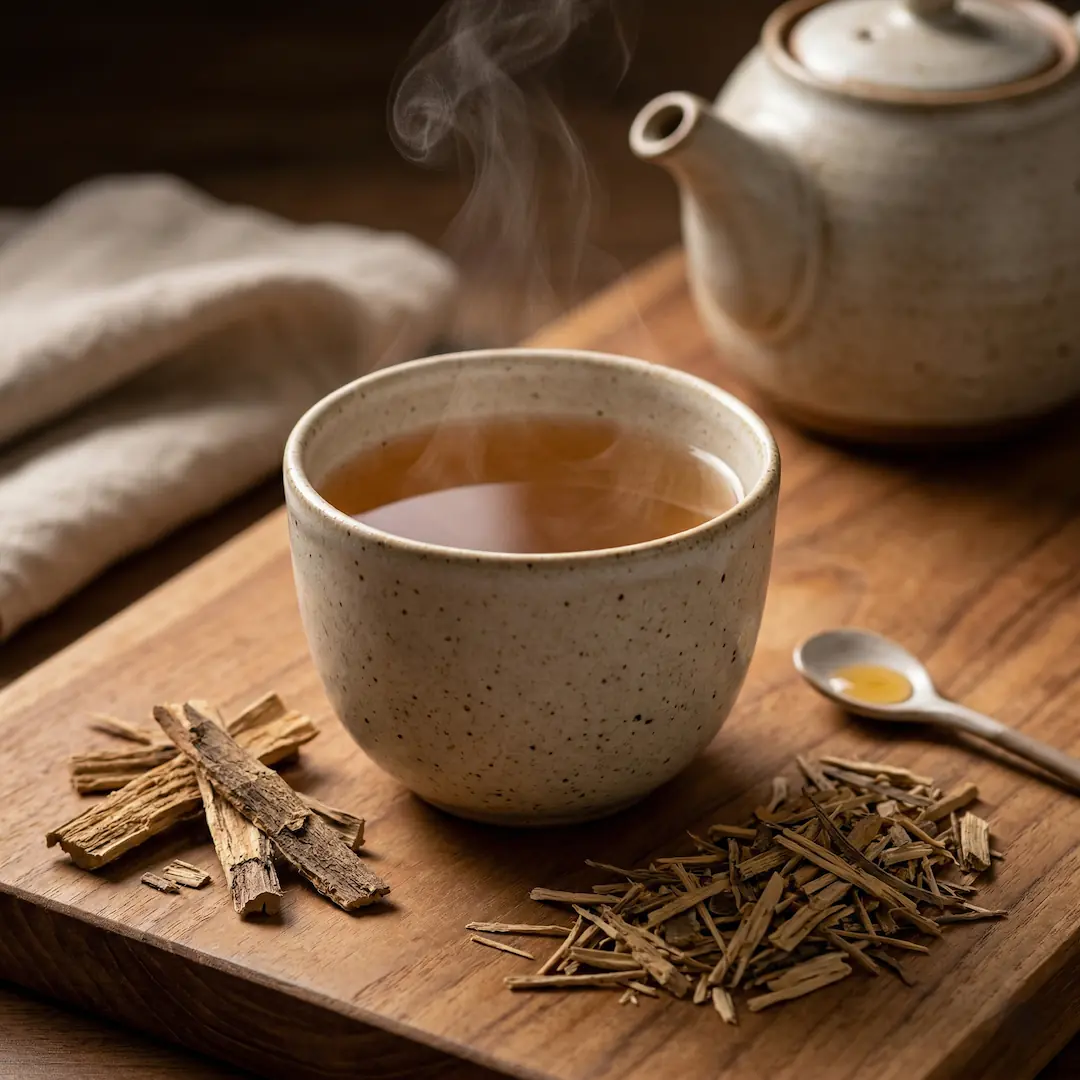
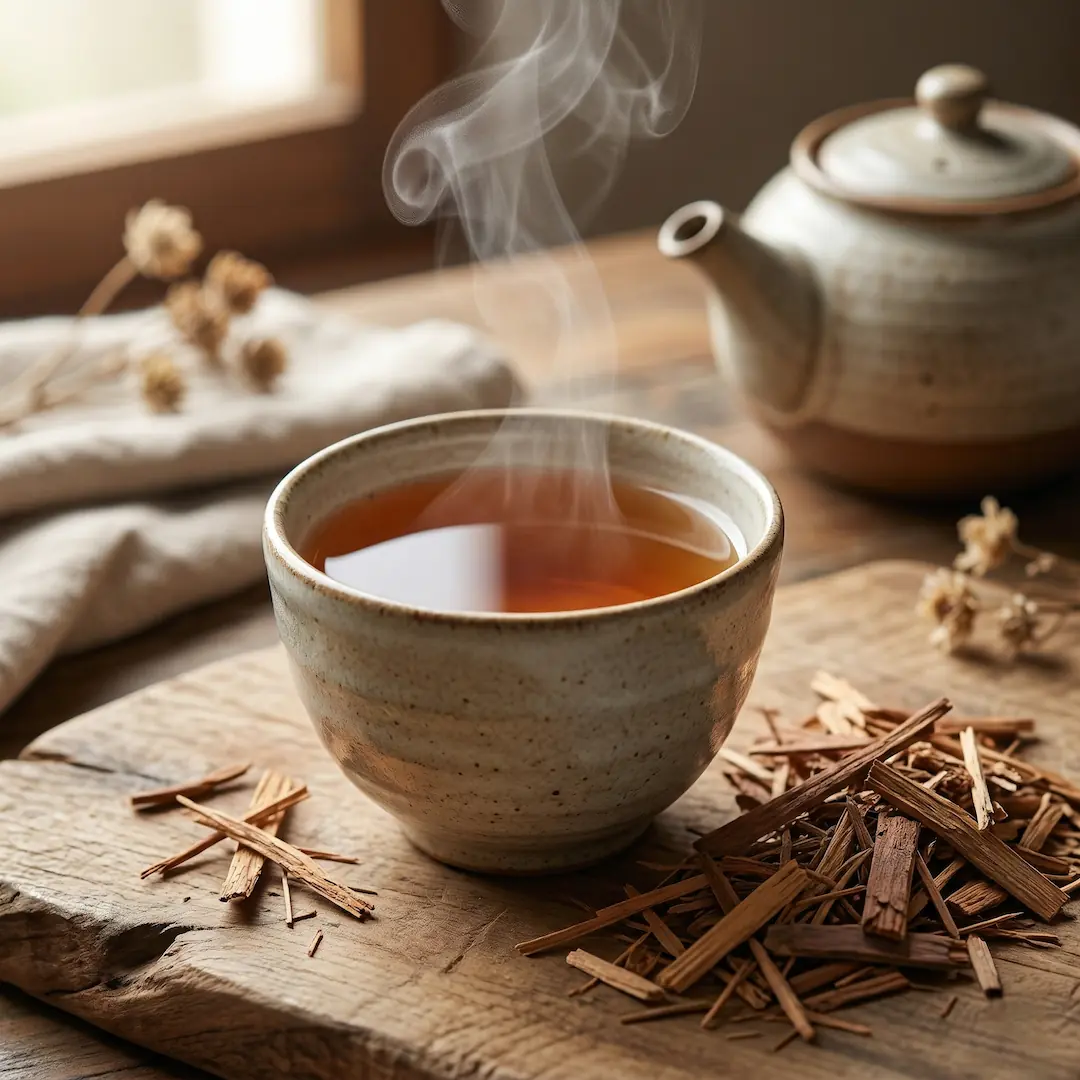
The Love of the Forest Tea is a recipe with Brazilian cultural roots. Catuaba, popularly known as bark associated with vitality and the sensory imagination, has a strong presence in the repertoire of traditional beverages. The decoction preparation values this origin: bark, water, low heat, and time. The result is a woody, dry, slightly bitter drink with a medium body, evoking a forest, apothecary, and adult ritual atmosphere. It is a tea of presence but needs to be presented responsibly. The word sensory should be used with caution. Catuaba has a popular reputation linked to energy and intimacy, but this does not mean it professional care sexual dysfunctions, guarantees increased intimate response, or resolves fatigue, emotional tension, or emotional issues. Desire, energy, and intimate life depend on many factors: physical health, sleep, stress, bonding, self-esteem, medications, hormones, mental health, and relationship context. A cup can create atmosphere, ritual, and presence, but does not replace specialized evaluation when there is persistent difficulty. The preparation requires a short and controlled boil. Since it is bark, simple infusion may be weak; therefore, the decoction over low heat for 10 minutes helps extract flavor. The covered resting period after boiling integrates the woody notes and makes the drink rounder. The source is essential, as the common name catuaba may refer to different plants. Using a reliable supplier reduces risks of error, contamination, or misidentification. It is also important to respect the possible stimulating effect. Some people may experience agitation, difficulty sleeping, palpitations, or emotional tension. Therefore, consumption should preferably occur by the end of the afternoon and be avoided in people with uncontrolled hypertension, arrhythmias, bipolar disorder, panic, intense emotional tension, or use of certain medications. In a premium curation, the Love of the Forest Tea stands out when it balances tradition, discreet sensuality, and safety. It is a drink to create presence, not to promise performance.
Summary
Decoction of catuaba with a woody flavor and Brazilian popular tradition, designed for moderate adult consumption and a ritual of presence.
Flavor profile
The flavor is woody, herbal, slightly bitter, and dry, with a medium body and persistent finish. Catuaba has an aroma of bark, light wood, and apothecary preparation, without marked natural sweetness. When well prepared, the drink is hot and sober. If boiled for too long, it may acquire a stronger bitterness and a less pleasant dryness.
When to prepare
It can be consumed in the morning or afternoon, during moments of pause and presence, preferably away from the evening if there is sensitivity to stimuli. It can also accompany an adult ritual of intimacy in a sensory and cultural sense, without promising sexual effect. Avoid during periods of emotional tension, sleep difficulty, or palpitations. It should not be used to professional care sexual dysfunction, persistent low intimate response, intense fatigue, or mood changes; in these cases, seek professional evaluation.
Use notes
Catuaba is traditionally associated in Brazilian popular culture with vitality, energy, and intimacy, but scientific evidence for sensory effects is limited. The drink can offer an adult ritual of presence, woody flavor, and sensory pause, especially when consumed in moderation and at the right time. It should not be presented as a professional care for sexual dysfunction, low intimate response, impotence, infertility, emotional tension, fatigue, or any clinical condition. The safest benefit lies in the cultural experience, the slow preparation of the bark, and the creation of a moment of care and attention. People with cardiovascular diseases, intense emotional tension, medication use, or persistent symptoms should seek professional guidance. Does not replace diagnosis, professional care, therapy, medical follow-up, or specialized evaluation.
Ingredients
- 1 tablespoon of catuaba bark
- 500 ml of water
Preparation
- 1. Boil the water with the catuaba bark for 10 minutes over low heat.
- 2. Turn off and let it steep for another 5 to 10 minutes.
- 3. Strain and drink 1 to 2 cups throughout the day, preferably by the end of the afternoon.
Preparation tips
Use catuaba bark from a reliable and well-identified supplier. Since it is bark, make a decoction: place it in the water, bring to a boil, and cook over low heat for about 10 minutes. Avoid high boiling, which can concentrate the flavor too much. After turning off, cover for 5 to 10 minutes and strain well. Start with a small portion to observe tolerance. Do not consume at night if there is sensitivity to stimulants. Do not combine with energy drinks, excess caffeine, guarana, or other stimulants. Do not increase the dose seeking sensory effect.
Variations
For a milder version, use half a tablespoon of catuaba in 500 ml of water and reduce the final resting time. For a more welcoming aroma, add a small strip of well-washed orange peel during the steeping, removing it when straining. For a rounder drink, add a thin slice of apple during the resting period. If you desire slight sweetness, use a small amount of honey when the tea is warm, provided there are no restrictions. Avoid mixing with marapuama, guarana, green coffee, or other stimulants without professional guidance, as the combination may increase agitation and discomfort.
Enjoy your tea
Care and observations
Adult use. Prefer catuaba from a reliable supplier, as the common name may refer to different species. It may be stimulating for some people; avoid at night if sensitive, have sleep difficulty, or experience agitation. Use with caution or avoid in uncontrolled hypertension, arrhythmias, heart diseases, intense emotional tension, panic, bipolar disorder, epilepsy, or use of stimulants. Caution with the use of antidepressants, especially MAOIs, anxiolytics, psychiatric medications, or other continuous medications. Pregnant and breastfeeding women should avoid. Does not replace specialized evaluation for sexual dysfunction, persistent low intimate response, intense fatigue, or mood changes.