Tea Brazilian Fire
Brazilian Root, Hot Mood
About this recipe
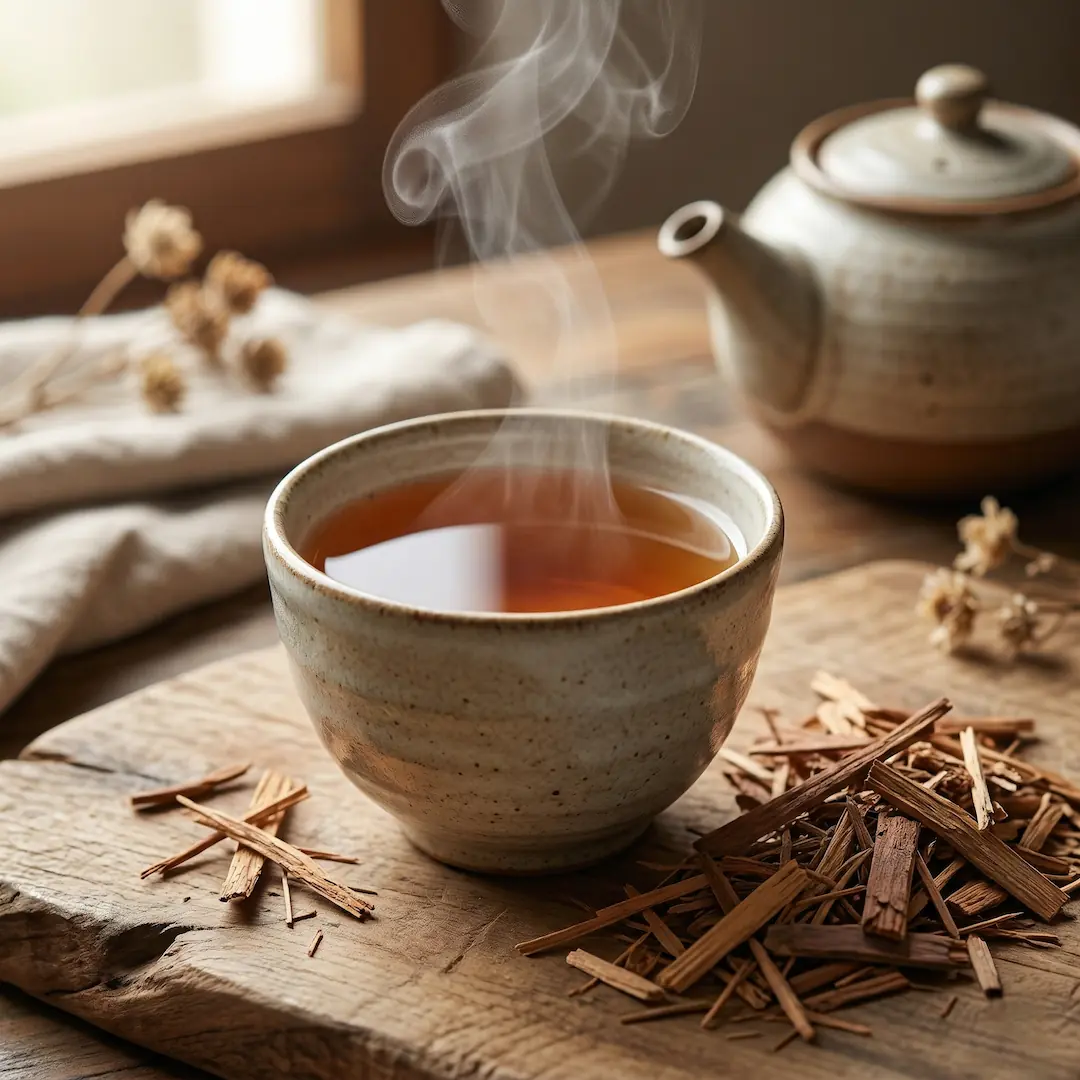
The Ember of Marapuama Tea is a drink with Brazilian roots, warm in imagination and earthy in flavor. Marapuama, also known as muirapuama, has a presence in popular traditions associated with vigor and intimacy, but needs to be professional care responsibly. The recipe proposes a decoction of dried bark or shavings, prepared over low heat, with enough time to extract a woody and botanical profile. The optional honey can soften the rusticity, but the core of the drink remains the root: dry, warm, and with an adult personality. In an sensory category, communication should avoid performance promises. Marapuama should not be presented as a solution for intimate response, sexual dysfunction, energy, focus, fertility, or persistent fatigue. Intimate life involves physical health, emotional state, sleep, stress, medications, self-esteem, relationships, and many other factors. The tea can help create a ritual of presence, a pause atmosphere, and a warmer sensory experience, but does not replace professional evaluation when there is recurring difficulty or suffering. The preparation requires decoction because marapuama comes in shavings or bark. The water should boil, the plant is added next, and the heat is lowered for 10 to 12 minutes. This time helps extract flavor without concentrating bitterness too much. Afterward, the covered resting period completes the integration before straining. Honey should only be added when the drink is warm, if the person wants to round out the flavor. It is not advisable to increase the dose or combine with other stimulants, such as guarana, coffee, catuaba, or energy drinks, without guidance. There are also important cautions. Some people may perceive a stimulating effect, agitation, palpitations, or worsening emotional tension. Therefore, those with uncontrolled hypertension, arrhythmias, bipolar disorder, panic, intense emotional tension, or who use certain medications should avoid or seek professional guidance. Sensorially, the Ember of Marapuama Tea pairs better with late afternoon than with night, especially in sensitive individuals. In a premium curation, this recipe becomes stronger when it is honest: tradition, flavor, ritual, and clear limits.
Summary
Decoction of marapuama with an earthy and woody flavor, designed for an adult ritual of presence, without performance promises.
Flavor profile
The flavor is earthy, woody, slightly bitter, and warm, with a medium body and dry finish. Marapuama has a profile of bark and root, reminiscent of apothecary, light wood, and rustic infusions. Honey, if used in small amounts, softens the bitterness and makes the texture rounder. If overcooked, the drink can become heavy and excessively bitter.
When to prepare
It can be consumed in the morning or late afternoon, in small amounts, as an adult ritual of presence and pause. Avoid at night if there is sensitivity to stimuli, sleep difficulty, or emotional tension. It should also not be used before activities that require attention if the person does not know their tolerance. It is not a professional care for low intimate response, sexual dysfunction, fatigue, or lack of focus. If there are persistent symptoms or suffering related to intimacy, seek professional evaluation.
Use notes
Marapuama, also called muirapuama, appears in Brazilian traditions associated with vigor, energy, and intimacy, but should be presented with caution. This decoction can offer an adult experience of ritual, presence, and botanical flavor, with a subjective warming sensation for some people. However, it should not be described as a professional care for low intimate response, erectile dysfunction, infertility, fatigue, lack of focus, emotional tension, or any clinical condition. Evidence for sensory effects is limited, and individual response may vary. The safest benefit lies in the sensory and cultural experience, not in performance promises. Does not replace diagnosis, professional care, therapy, medical follow-up, medications, or specialized evaluation.
Ingredients
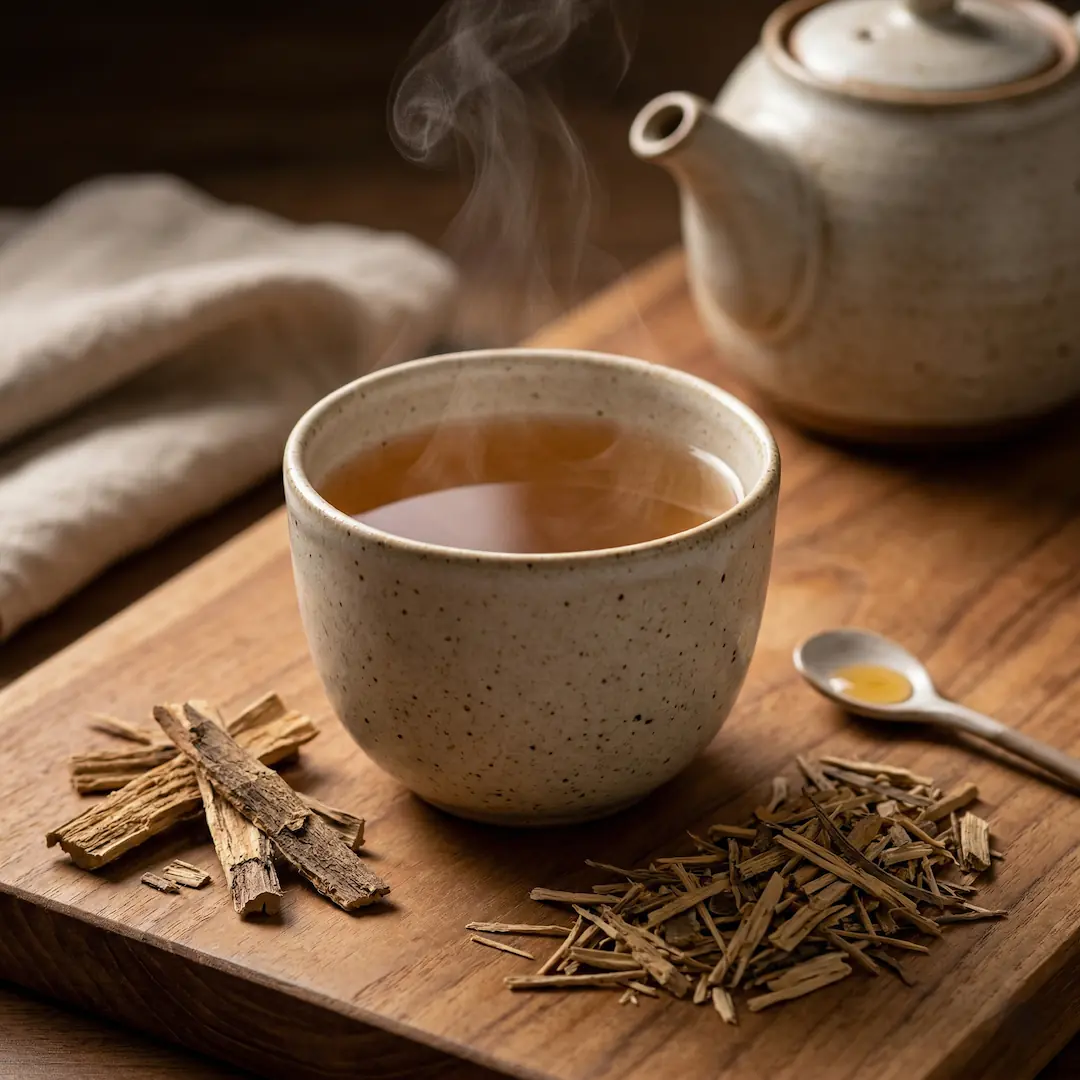
- 1 teaspoon of dried marapuama (muirapuama) (shavings/bark)
- 450 ml of water
- Honey (optional)
Preparation
- 1. Place the water on the heat and, when boiling, add the marapuama.
- 2. Cook over low heat for 10 to 12 minutes.
- 3. Turn off, cover, and let steep for 5 minutes.
- 4. Strain and serve warm. Sweeten with honey if desired, when warm.
Preparation tips
Use dried marapuama from a reliable and well-identified supplier. Since it is bark or shavings, prepare in decoction: add to boiling water and cook over low heat for 10 to 12 minutes. Avoid high and prolonged boiling, as it can concentrate bitterness. After turning off, cover for 5 minutes and strain well. Start with a small portion to observe tolerance. If using honey, add only when warm. Do not increase the dose seeking sensory effect and avoid combining with caffeine, guarana, catuaba, or other stimulants.
Variations
For a milder version, use half a teaspoon of marapuama in 450 ml of water and cook for 8 to 10 minutes. For a more welcoming aroma, add a small strip of well-washed orange peel during the final resting period, removing it when straining. To soften the rusticity, use a thin slice of apple during the steeping. Honey can round out the drink, but it should be optional and discreet. Avoid mixtures with other sensory or stimulating plants, especially if there is emotional tension, hypertension, sleep difficulty, or use of continuous medications.
Enjoy your tea
Care and observations
Adult use. It may be stimulating for some people; avoid at night if sensitive, have sleep difficulty, or experience agitation. Use with caution or avoid in uncontrolled hypertension, arrhythmias, heart diseases, intense emotional tension, panic, bipolar disorder, epilepsy, or sensitivity to stimulants. Caution with the use of antidepressants, especially MAOIs, anxiolytics, psychiatric medications, stimulants, or other continuous medications. Pregnant and breastfeeding women should avoid without guidance. Avoid excesses, prolonged use without monitoring, and combination with caffeine, guarana, catuaba, or other stimulants. Does not replace professional evaluation for sexual dysfunction, persistent fatigue, or mood changes.