Tea Fresh Basil
Herbal, Fresh & Calming
About this recipe
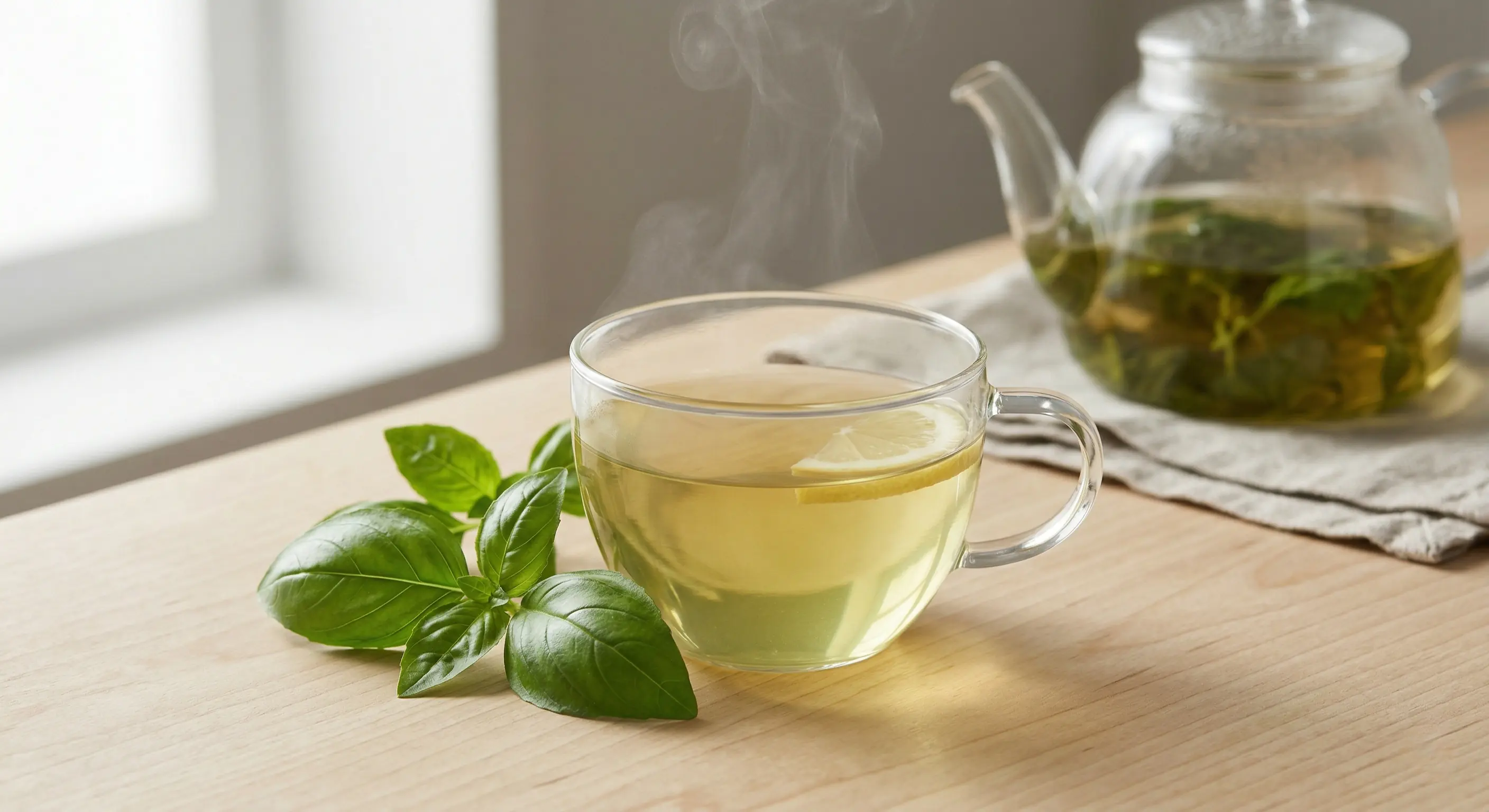
Basil Freshness Tea is a light, green, and very aromatic infusion, with that feeling of freshly picked leaves. Basil, close to the world of sweet basil, has a herbaceous, soft, and slightly sweet fragrance, capable of transforming a simple cup into an elegant pause moment. This recipe works especially well when the intention is to drink something warm, caffeine-free, and less intense than spiced teas. It has a domestic character, almost from a garden, but can be presented with a premium finish when the preparation respects the delicacy of the leaves. The digestive proposal here should be professional care responsibly. Basil is traditionally used in homemade and culinary preparations, but that does not mean the infusion professional care gas, reflux, abdominal pain, or slow digestion. The best editorial path is to speak of sensory comfort: a hot, fragrant drink with a fresh flavor that can accompany the end of a meal and help create a calmer rhythm. This difference is important because it keeps the recipe useful without turning it into a medical promise. If a person has frequent or strong digestive symptoms, the tea does not replace professional evaluation. The preparation should preserve the aroma. Fresh leaves do not need to be boiled; on the contrary, direct boiling can darken, reduce freshness, and leave a more vegetal than pleasant flavor. The ideal is to heat the water until almost boiling, turn off the heat, and only then add the well-washed leaves. Steeping for 7 to 9 minutes allows the fragrance to pass into the water without losing softness. The thin slice of lemon is optional and should be added carefully, especially for those with reflux or gastritis. When used in small amounts, it brightens the drink and makes the finish livelier. This tea pairs well with light lunches, homemade dinners, warm or iced on hot afternoons, and moments when one desires a simple alternative to sweet drinks. It is also a good way to value fresh herbs from the kitchen in a different format. The final cup has a discreet appearance, enveloping aroma, and clean flavor. The secret is not to overdo it: good leaves, hot water, controlled time, and careful straining. Thus, Basil Freshness Tea becomes a natural, welcoming, and safe recipe, with Brazilian identity and reliable editorial language.
Summary
Basil infusion with a fresh aroma, soft herbal profile, and optional lemon touch for a light break after meals.
Flavor profile
The flavor is herbal, fresh, slightly sweet, and vegetal, with a light body and clean finish. Basil brings the aroma of fresh leaves, reminiscent of mild basil, garden, and delicate green notes. Lemon, if used in a thin slice, adds subtle acidity and brightness but can dominate the drink if overdone. The persistence is light and fragrant.
When to prepare
It can be consumed after lunch or dinner, especially when one desires a warm, fresh, and caffeine-free drink to close the meal. It also pairs well with afternoon breaks, hot days in a colder version, or moments of reading and rest. It should not be used as a solution for gas, reflux, or abdominal pain. If there are persistent, strong, or recurring symptoms, it is best to seek professional guidance and not increase the infusion's concentration.
Use notes
Basil offers an aromatic, fresh, and herbal infusion that may contribute to hydration and a sensory feeling of lightness after meals. The fragrance of the leaves and the warmth of the drink help create a simple pause ritual, without the need to promise therapeutic effects. Although traditionally associated with homemade comfort preparations, the drink should not be presented as a professional care for gas, slow digestion, reflux, abdominal pain, or any clinical condition. Its safest benefit lies in the aroma, flavor, hot water, and the experience of drinking slowly. People with persistent symptoms, pregnancy, lactation, chronic diseases, or medication use should seek professional guidance. It does not replace diagnosis, professional care, medications, or health follow-up.
Ingredients
- 6 to 8 well-washed basil leaves
- 250 ml of hot water
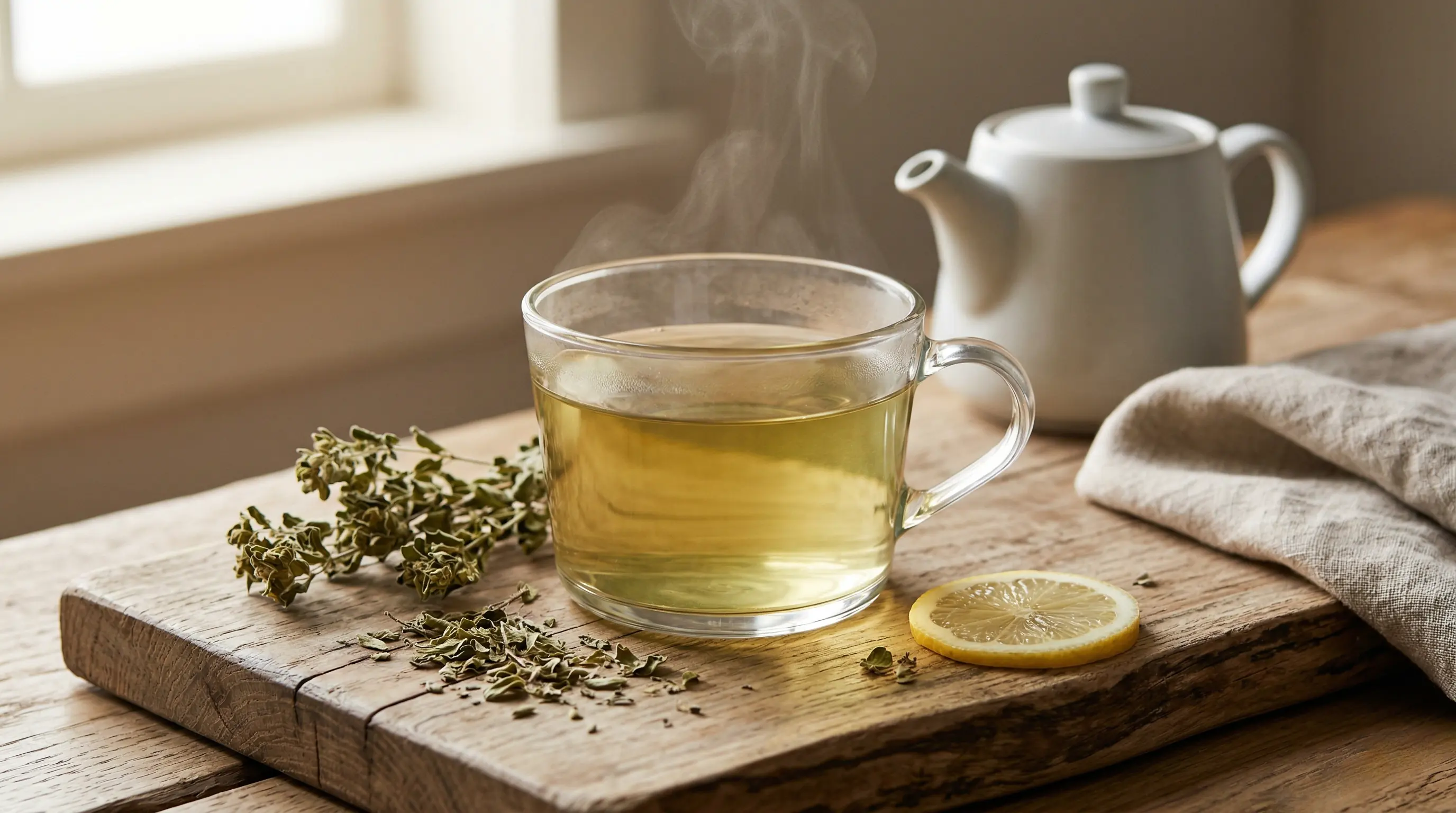
- 1 thin slice of lemon (optional)
Preparation
- 1. Heat the water until almost boiling.
- 2. Turn off the heat.
- 3. Add the basil leaves and let steep for 7 to 9 minutes.
- 4. Strain and serve warm, with lemon if desired.
Preparation tips
Choose lush, well-identified leaves without dark spots, mold, or signs of deterioration. Wash each one under running water, as fresh leaves accumulate dust and residues. Do not boil the basil directly: heat the water, turn off the heat, and add the leaves with the container covered. The time of 7 to 9 minutes is sufficient to extract aroma without making the drink heavy. Strain before serving. If using lemon, add only a thin slice when the tea is warm, especially if there is gastric sensitivity. For a milder flavor, use 4 leaves. For a more pronounced aroma, lightly crush the leaves before infusion.
Variations
For a milder version, reduce to 4 or 5 leaves and keep the 250 ml of water. For a fresher version, prepare the infusion normally, strain, cool, and serve with ice, adding lemon only at serving time. For a more aromatic profile, mix in a few mint leaves, as long as the person tolerates well and does not have reflux sensitive to mint. It is also possible to substitute lemon with a small strip of well-washed orange peel, making the drink less acidic. Avoid combining with very strong spices, such as clove or pepper, as they overshadow the delicacy of basil.
Enjoy your tea
Care and observations
Adult use only. Use well-identified leaves from a reliable source and very well washed. People with allergies to aromatic plants, gastritis, reflux, chronic diseases, pregnant women, nursing mothers, or those on continuous medication should consult a health professional before regular consumption. Lemon is optional and may bother those sensitive to acidity. Avoid excess, very concentrated preparations, and prolonged daily use without guidance. Suspend in case of gastrointestinal discomfort, irritation, allergy, or any unusual reaction.