Tea Dandelion
Bitter Leaf, Light Day
About this recipe
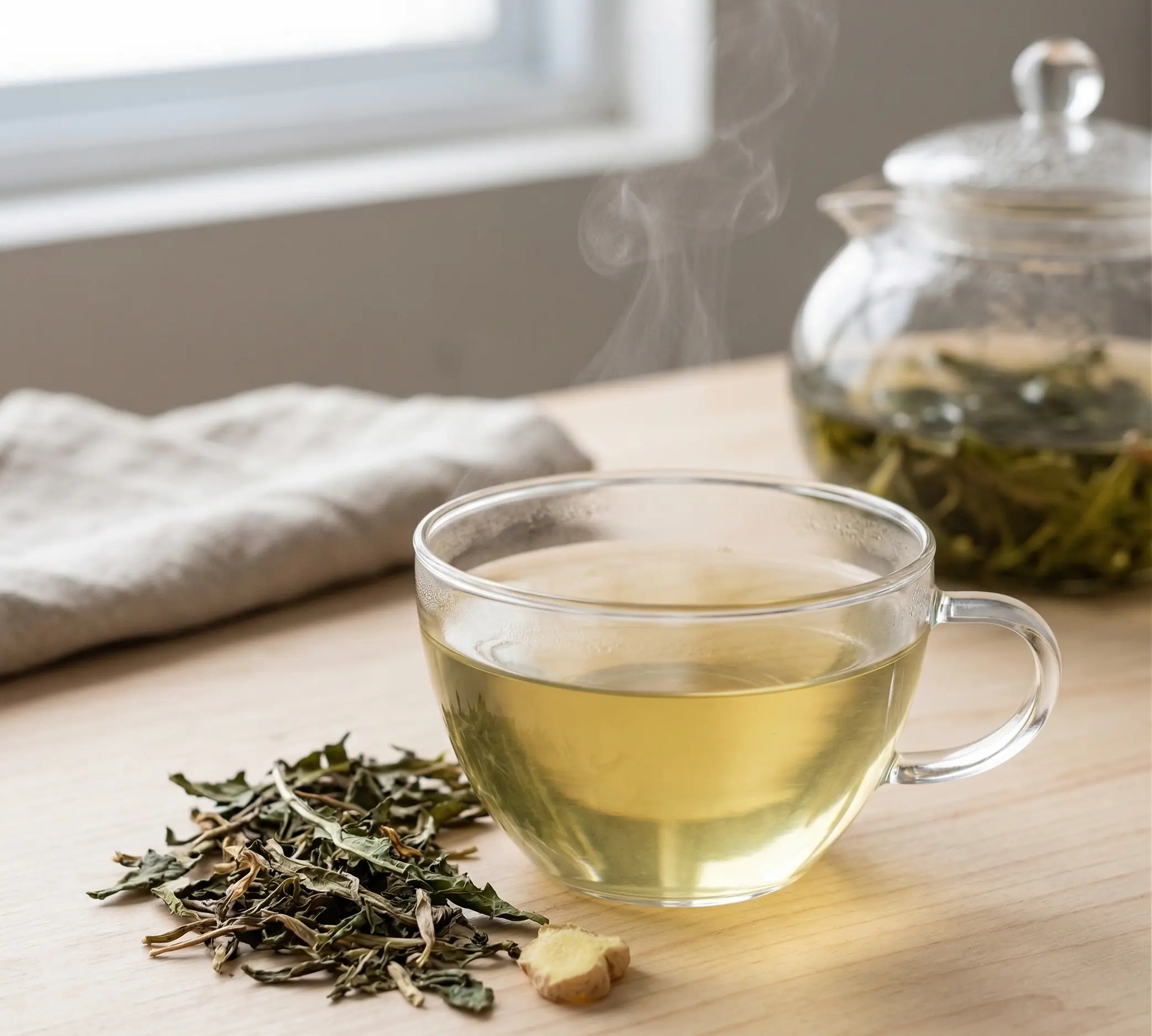
Dandelion Tea is a field infusion, pleasantly bitter and with a very clear green personality. The dried leaves deliver an herbal, slightly dry, and earthy flavor that aligns with a simple and adult drink proposal. It is not a tea of easy sweetness or exuberant perfume. Its charm lies in the elegant bitterness, the leaf sensation, and the aesthetics of everyday care: hot water, warm cup, few ingredients, and a moment of pause. As a plant often mentioned in contexts of liver, digestion, and de-bloating, the recipe needs to avoid promises. Dandelion should not be presented as a liver protector, gallbladder professional care, safe digestive solution for all, or a suggested way to reduce swelling. Although it is part of botanical usage traditions, this does not replace professional evaluation. People with gallbladder issues, bile obstruction, kidney diseases, use of diuretics, lithium, anticoagulants, or continuous medications need to be cautious. It is also important to observe allergies, as dandelion belongs to the Asteraceae family. The preparation is simple and should maintain balance. The dried leaves do not need to be boiled directly. Hot water off the heat and covered infusion for 8 to 10 minutes are sufficient to extract flavor without making the drink excessively harsh. The optional ginger adds warmth and movement at the end but should be used in small amounts, especially by those with reflux or gastritis. When the goal is a milder cup, simply reduce the amount of leaves or shorten the infusion time. Sensorially, Dandelion Tea fits well in the mid-morning, afternoon, or moments when a person desires a herbal drink without sugar. It may be interesting for those who appreciate light bitters, but it should not be consumed as a prolonged routine without guidance. In a premium curation, its strength lies in honesty: a traditional plant, a cup of adult flavor, proportional alerts, and no miraculous promises. The result is a safe, elegant recipe suitable for those seeking botanical variety with responsibility.
Summary
Infusion of dried dandelion leaves with elegant bitterness, herbal profile, and optional ginger for moderate adult consumption.
Flavor profile
The flavor is herbal, bitter, slightly earthy, and dry, with a light to medium body. Dandelion leaves bring a rustic and vegetal sensation, without evident natural sweetness. Ginger, if used in a small piece, adds warmth and slight spiciness at the end. The drink can become harsh if the infusion is too long or if there is an excess of herb.
When to prepare
It can be consumed in the mid-morning or afternoon, during moments of pause, reading, or work, when a person desires a herbal drink without sugar. Avoid at night if you notice an increased urge to urinate. It should not be used to professional care liver, gallbladder, digestion, fluid retention, or swelling. People with chronic conditions, medication use, or a history of allergy to Asteraceae should seek professional guidance before regular consumption.
Use notes
Dandelion produces a bitter, herbal infusion with a rustic profile, traditionally associated with leaf preparations. In a safe approach, it may contribute to hydration and a subjective feeling of lightness for some people, especially as it is a sugar-free drink with a drier flavor. However, it should not be presented as a professional care for liver, gallbladder, digestion, fluid retention, inflammation, or any clinical condition. It also does not guarantee de-bloating, body-result, or metabolic improvement. Due to its potential diuretic effect and significant contraindications, consumption should be moderate and well-guided. It does not replace medical evaluation, tests, diagnosis, professional care, medications, nutritional follow-up, or professional care.
Ingredients
- 1 teaspoon of dried dandelion leaves
- 300 ml of hot water
- 1 small piece of ginger (optional)
Preparation
- 1. Heat the water until just before boiling.
- 2. Turn off the heat.
- 3. Add the dandelion and ginger, if using, and cover for 8 to 10 minutes.
- 4. Strain and serve warm.
Preparation tips
Use dried dandelion leaves suitable for infusion and from a reliable supplier. Heat the water until just before boiling, turn off the heat, and add the herb with the container covered. Let it steep for 8 to 10 minutes and strain well. To reduce bitterness, use half a teaspoon or steep for 6 to 7 minutes. If using ginger, only add a small piece. Do not combine with other diuretic plants without professional guidance. Do not increase the dose seeking to de-bloat or improve digestion. Observe tolerance, especially in people with reflux, low blood pressure, or medication use.
Variations
For a milder version, use half a teaspoon of dried leaves in 300 ml of water. For a fresher version, add a small strip of well-washed lemon peel during the steeping, removing it when straining, as long as there is no sensitive reflux. For a softer profile, add a thin slice of apple, which softens the bitterness without overly sweetening. On hot days, prepare weaker, strain, let cool, and serve with ice. Avoid mixing with chapéu-de-couro, quebra-pedra, porangaba, or other plants with possible diuretic effects without professional guidance.
Enjoy your tea
Care and observations
Adult use. It may have a diuretic effect on some people. Avoid if allergic to plants in the Asteraceae family, such as chamomile, daisy, chrysanthemum, arnica, or ragweed. People with gallbladder issues, bile obstruction, kidney disease, liver disease, low blood pressure, dehydration, use of diuretics, lithium, anticoagulants, antihypertensives, or continuous medications should consult a professional before regular consumption. Pregnant and breastfeeding women should avoid without guidance. Ginger may irritate gastritis or reflux. Avoid prolonged use, excess, and combinations with other diuretic plants without supervision.