Tea Watermelon Peel
Fresh, Smooth & Summery
Responsibility Notice
The content on the website and in the app does not replace professional medical advice, diagnosis, or treatment. If you have clinical questions, consult a qualified health professional.
Responsible UseAbout this recipe
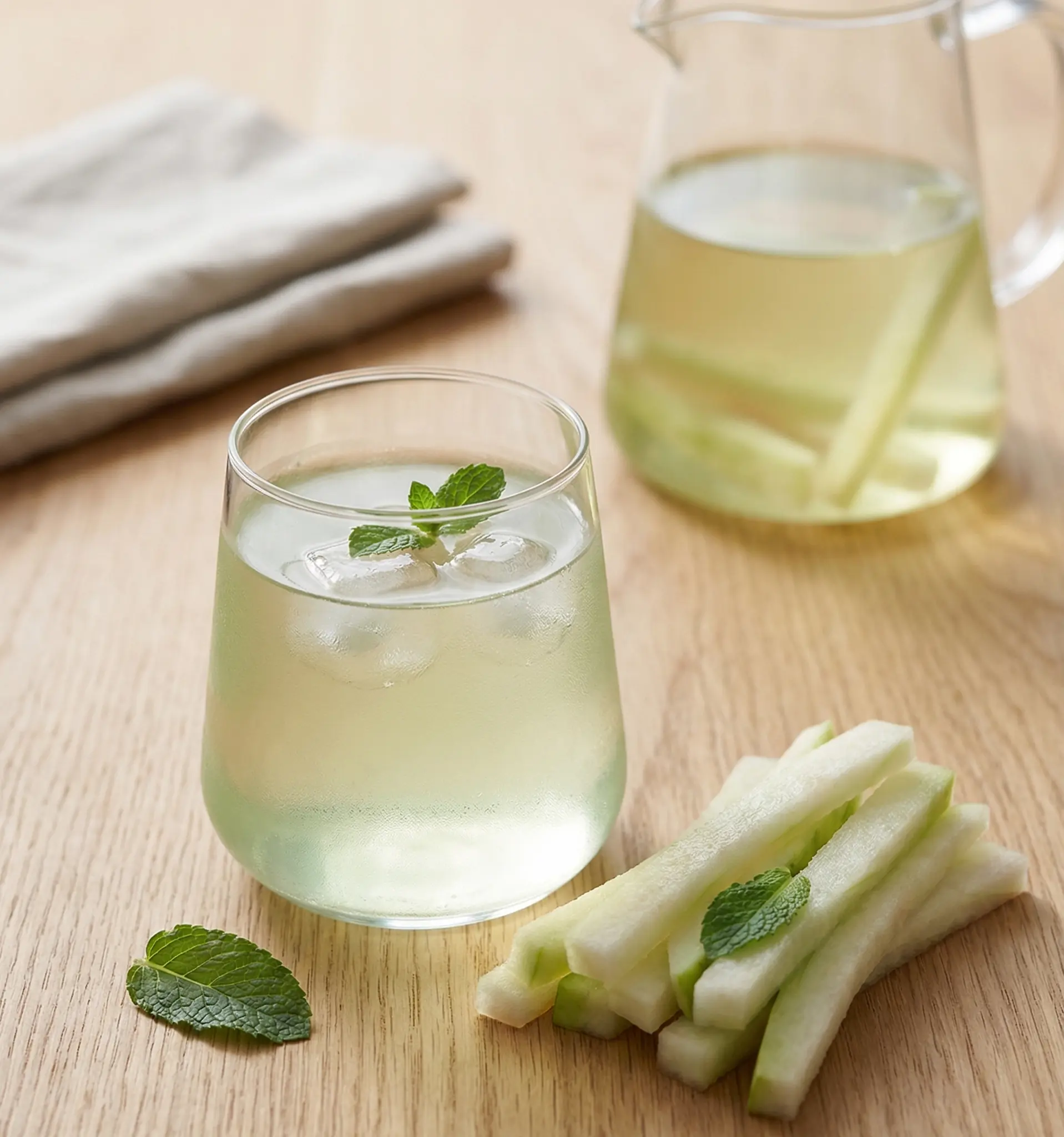
Watermelon Rind Tea is a light and smart summer recipe made from a part of the fruit that typically goes to waste. The idea is to use the well-sanitized white and light green area of the rind to create a mild, clear, and refreshing drink. The result is not an intense or sweet tea like the flesh of the watermelon; it is a delicate infusion with a light vegetable flavor, meant to be served chilled on hot afternoons. The optional mint helps enhance the feeling of freshness when used in moderation. Since it falls into a category associated with body-result, the recipe requires honest communication. Watermelon rind tea should not be presented as a drink that promotes body-result, reduces bloating, eliminates fluids, or resolves retention. It can contribute to hydration and replace sugary drinks, which can make sense in a balanced routine, but this does not equate to a body-result effect. Additionally, due to its potential mild diuretic effect in some individuals, it should not be consumed excessively or by those with fluid restrictions, kidney problems, heart failure, or diuretic use without professional guidance. Preparation requires attention to food safety. Since the outer rind of the watermelon is involved in the process, the fruit must be thoroughly washed before cutting. Ideally, use watermelon from a reliable source and discard any bruised, moldy, or foul-smelling parts. The area used should be the white and light green part, without excess of the tougher outer rind when it is too thick or compromised. Cooking for 10 minutes is sufficient to extract softness and a light aroma. Afterward, the covered resting period integrates the drink before straining. Sensorially, Watermelon Rind Tea is simple, fresh, and clean. It aligns more with hydration than intensity. Warm, it serves as a mild and discreet drink; chilled, it becomes more appealing, especially with mint. It is a recipe that resonates with domestic sustainability, full utilization, and a less sugary routine. In a premium curation, the charm lies in transforming a common ingredient into a beautiful and responsible drink, without promising what should not be promised. The final cup is light, clear, and perfect for those who value simple preparations with good guidance.
Summary
Mild watermelon rind tea, fresh and light, ideal for enjoying the fruit in a summer drink without body-result promises.
Flavor profile
The flavor is very mild, slightly vegetal and watery, with natural freshness and a light body. It does not have the intense sweetness of watermelon flesh; its personality is more discreet and clean. Mint, when used in small amounts, adds a refreshing aroma and a livelier finish. Served chilled, the tea feels lighter and more pleasant, while warm it is more neutral.
When to prepare
It is a good option for hot afternoons, mid-morning, or moments when one desires a sugar-free drink to vary hydration. It can also be consumed after light meals, especially in its chilled version. It should not be used as a body-result strategy, for reducing bloating, or as a food compensation. Individuals who need to control fluid intake, use diuretics, or have kidney problems should avoid regular consumption without professional guidance.
Use notes
Watermelon rind tea can contribute to hydration and the culinary use of a part of the fruit that is often discarded. With its mild flavor and ability to be served chilled, it can replace sweetened beverages on hot days and create a lighter routine. Still, it should not be presented as a drink that promotes body-result, reduces bloating reliably, eliminates fluids safely, improves kidney function, or produces any bodily results. Its safest benefit lies in hydration, freshness, conscious use of the ingredient, and the experience of a homemade sugar-free drink. Individuals with fluid restrictions, kidney diseases, diuretic use, pregnancy, lactation, or chronic conditions should seek professional guidance. It does not replace nutritional monitoring, diagnosis, medications, treatment, or balanced habits.
Ingredients
- Well-washed rind from 2 cups of watermelon (only the white and light green parts)
- 600 ml of water
- 2 mint leaves (optional)
Preparation
- 1. Boil the water.
- 2. Add the rinds and cook for 10 minutes.
- 3. Turn off, cover, and let steep for 5 minutes.
- 4. Strain and serve warm or chilled.
Preparation tips
Thoroughly wash the watermelon before cutting, as the rind will be used. If possible, use a food brush and running water. Separate the white and light green parts, discarding very hard, damaged, or unsightly sections. Cook for 10 minutes and avoid prolonged boiling to prevent a heavy vegetable flavor. Cover for 5 minutes after turning off and strain well. If using mint, add it at the end or just when serving chilled, to preserve freshness. Store in the refrigerator for a short period and prefer to consume on the same day.
Variations
For a more refreshing version, prepare the tea, strain, chill, and serve with ice and fresh mint only in the glass. For a more citrus profile, add a small strip of well-washed lemon peel during the final resting, without overdoing it. For a milder version, use less rind and keep the 600 ml of water. A thin slice of cucumber can be added just when serving chilled, creating an even lighter summer drink. Avoid excessive sweetening or mixing with various diuretic plants, as the proposal is a simple hydration drink, not an exaggerated functional preparation.
Enjoy your tea
Care and observations
Adult use only. Thoroughly sanitize the watermelon rind before cutting and prefer fruit from a reliable source, free of pesticide residues. Use only the white and light green parts, discarding any deteriorated sections. It may have a mild diuretic effect in some people. Individuals with kidney issues, heart failure, fluid restrictions, low blood pressure, dehydration, chronic diseases, or those on diuretics, lithium, antihypertensives, and continuous medications should consult a professional before regular consumption. Pregnant and breastfeeding women should avoid without guidance. Mint may worsen reflux in sensitive individuals. Avoid excess.