Tea Pearl White
Delicate, Light & Antioxidant
Responsibility Notice
The content on the website and in the app does not replace professional medical advice, diagnosis, or treatment. If you have clinical questions, consult a qualified health professional.
Responsible UseAbout this recipe
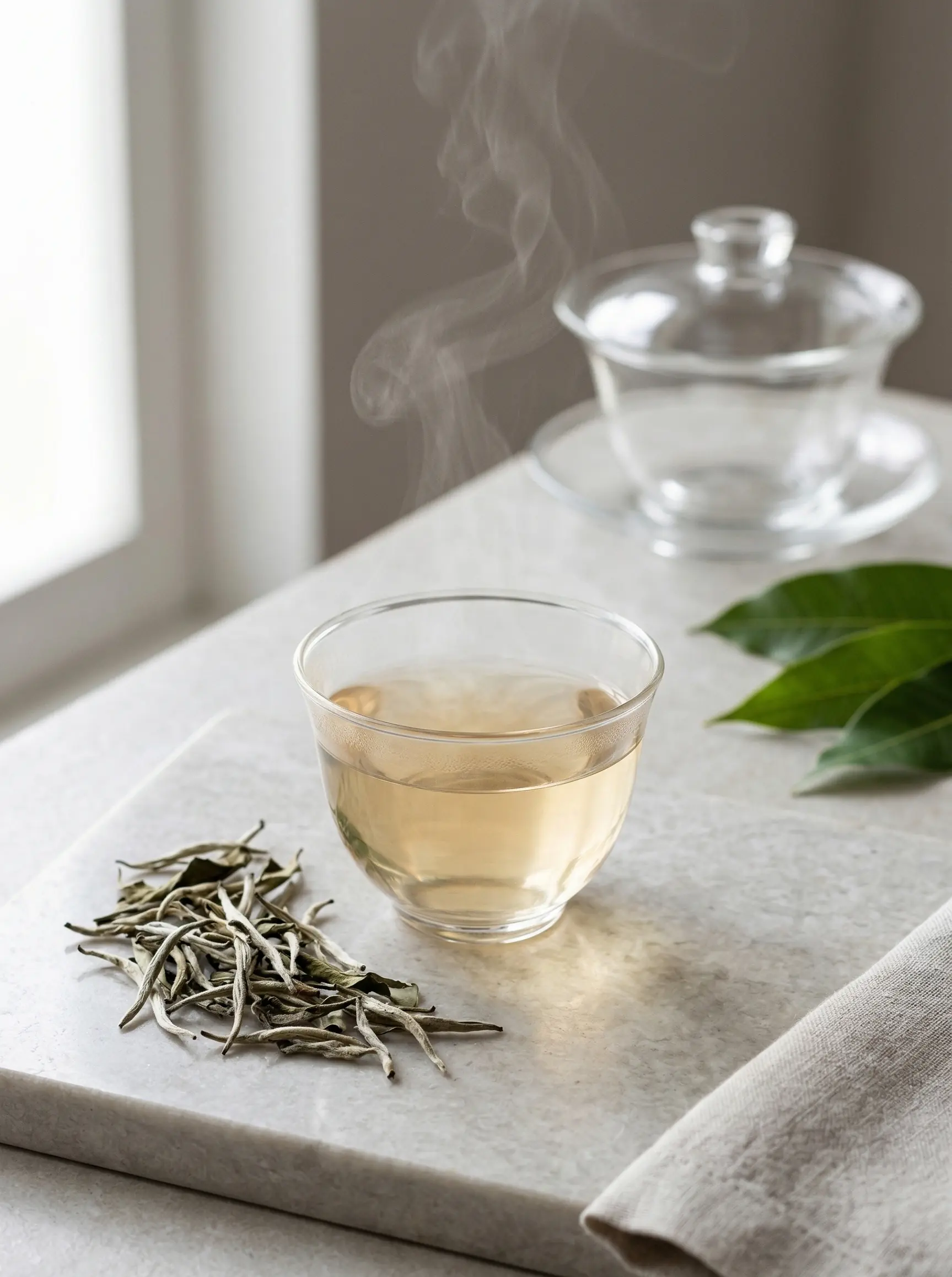
The Pearl White Tea is an infusion of delicacy. Among the teas derived from Camellia sinensis, white tea is often remembered for its lightness, more discreet processing, and soft sensory profile. The cup tends to be clear, elegant, and slightly bitter when prepared correctly. It is a drink that does not need sugar, milk, or many complements to seem special; its charm lies precisely in its subtlety. The aroma may remind of light flowers, sweet hay, very light honey, and young leaves, creating a refined experience for self-care breaks. Being in a beauty category, the recipe needs to maintain an important care: white tea should not be presented as a solution for skin, youth, energy, focus, or appearance. It can be part of a beautiful ritual, can replace sweetened beverages, and can offer a lighter experience within the routine, but it does not guarantee aesthetic results. Skin depends on factors such as diet, hydration, sleep, sun protection, genetics, overall health, and dermatological care. The drink enters as part of the moment, not as a promise of transformation. Preparation is crucial. Water that is too boiling can burn the delicate leaves and bring bitterness, hiding the refined character of the tea. The range of 75 to 80°C is more suitable to preserve freshness and softness. The time of 3 to 5 minutes allows adjusting intensity without making the drink aggressive. In good quality white teas, shorter infusions tend to reveal floral and sweet notes; longer infusions deliver more body and astringency. The ideal is to start with 3 minutes and adjust in the next cups. Sensorially, the Pearl White Tea pairs well with clear mornings, quiet afternoons, moments of reading, skincare, writing, or a break between tasks. It contains caffeine, so sensitive individuals should avoid it at night. In a premium curation, this recipe works because it is minimalist, precise, and elegant. It shows that a beauty tea does not need to promise perfect skin: it can offer a beautiful, light, well-prepared cup that aligns with a more careful routine.
Summary
Delicate, light, and naturally elegant white tea, ideal for a low-intensity self-care break, with a mild aroma and sugar-free consumption.
Flavor profile
The profile is delicate, floral, slightly vegetal, and softly sweet in aroma, with a light body and clean finish. It may present notes of light hay, white flower, discreet honey, and young leaves. Astringency is low when the water is at the correct temperature. If prepared with boiling water or for too long, it may become bitter and lose its natural elegance.
When to prepare
It is ideal for mid-morning or afternoon, when one desires a light, sugar-free drink with moderate caffeine. It pairs well with self-care breaks, reading, quiet work, or moments when a clear and sophisticated cup seems more appropriate than coffee. Avoid at night if there is caffeine sensitivity, insomnia, or anxiety. It should not be used as a strategy for skin, focus, energy, or body-result; the best use is as a sensory ritual within a balanced routine.
Use notes
White tea can contribute to a more elegant hydration routine with less sugar when it replaces sodas, sweetened drinks, or very caloric beverages. Being an infusion of Camellia sinensis, it contains naturally occurring plant compounds in the leaves, as well as caffeine in varying amounts depending on origin, dose, and preparation. Still, it should not be presented as a treatment for skin, aging, energy, focus, body-result, or any clinical condition. The safest benefit lies in the sensory ritual, delicate flavor, choice of a sugar-free drink, and conscious pause throughout the day. It does not replace adequate sleep, balanced nutrition, dermatological care, medical follow-up, medications, treatment, or professional guidance.
Ingredients
- 1 teaspoon of white tea (leaves)
- 250 ml of water (75–80°C)
Preparation
- 1. Heat the water to about 75–80°C, before it boils strongly.
- 2. Place the white tea leaves in the cup or infuser.
- 3. Pour the hot water over the leaves and cover for 3 to 5 minutes.
- 4. Strain and serve immediately to preserve the freshness of the drink.
Preparation tips
The water should not boil strongly. Heat until small bubbles appear at the bottom of the kettle or let boiled water rest for a few minutes before pouring over the leaves. Use 1 teaspoon for 250 ml and start with 3 minutes of infusion; increase to 4 or 5 minutes only if you want more body. Strain completely to avoid continuous extraction and bitterness. Prefer leaves from good sources and well-stored, away from moisture and light. Avoid sweetening before tasting, as white tea reveals subtle nuances when drunk plain. Caffeine-sensitive individuals may use fewer leaves or take a smaller portion.
Variations
For a milder version, use half a teaspoon of leaves and infuse for 2 to 3 minutes. For an elegant iced version, prepare the tea normally, strain, let cool, and serve with ice, without sweetening. For a fruity touch, add a thin slice of apple after straining, leaving it for a few minutes. For a delicate citrus aroma, use a small strip of well-washed orange peel in the ready cup for 30 seconds. Avoid excessive lemon, strong spices, or intense sweeteners, as they may overshadow the fine notes of white tea.
Enjoy your tea
Care and observations
Adult use only. Contains caffeine, although generally in a more delicate profile than more intense beverages; avoid at night if you are sensitive, have insomnia, or notice agitation. People with anxiety, hypertension, arrhythmias, gastritis, reflux, caffeine sensitivity, or those using stimulants and ongoing medications should consume with caution and consult a health professional before regular consumption. Pregnant and nursing women should consult a professional before use. Avoid preparing too concentrated, taking on an empty stomach if it causes discomfort, or using as a promise of beauty, energy, or focus. Discontinue in case of palpitations, tremors, gastric irritation, anxiety, dizziness, or any unusual reaction.