Tea Azure personal care
color from Within
About this recipe
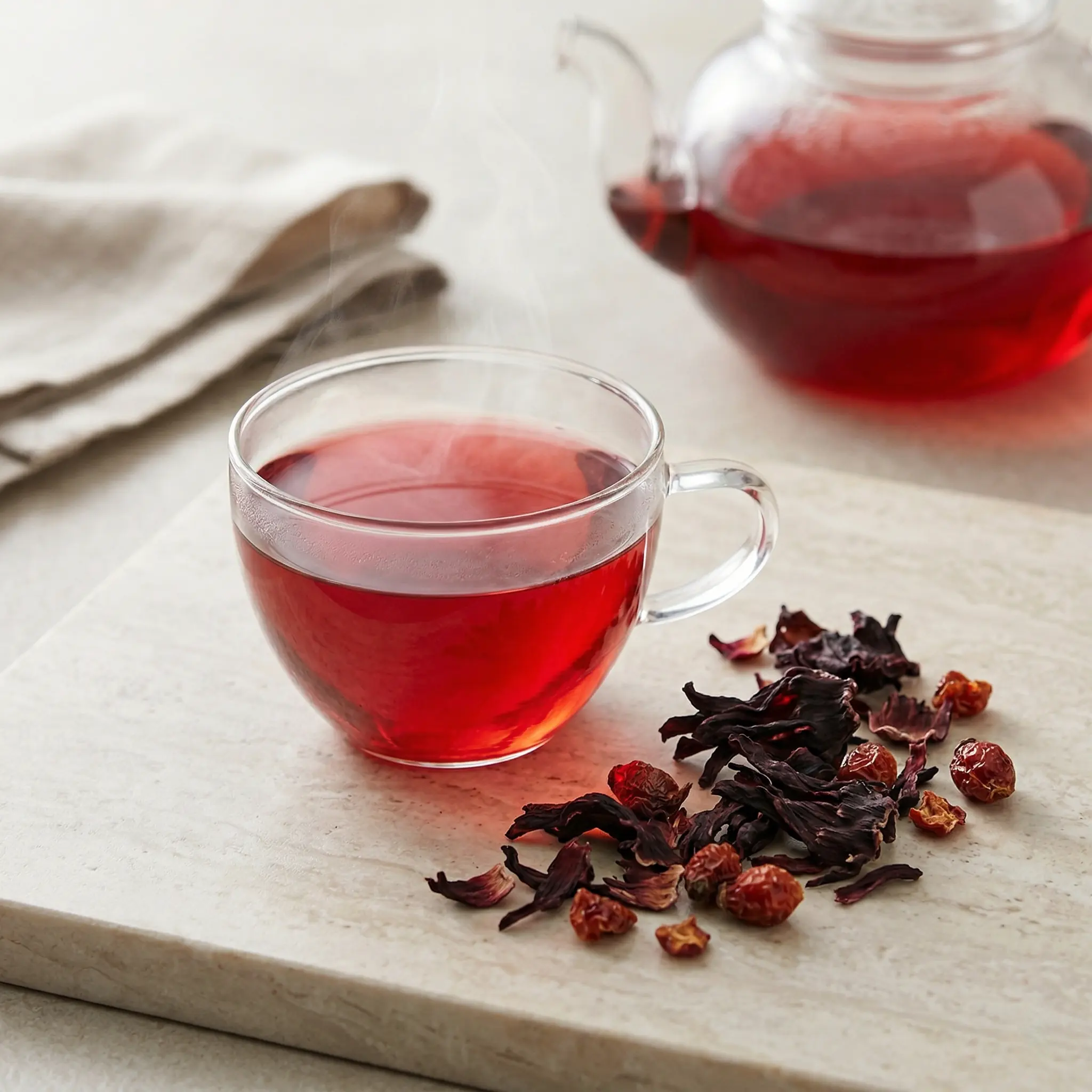
Ruby color Tea is a visually striking infusion, one that catches attention even before the first sip. Hibiscus delivers a deep red color, almost liquid jewel, while rosehip adds a fruity, tart, and delicately floral character. The cup has editorial presence: it looks beautiful hot, elegant in a glass with ice, and photogenic in any wellness composition. But its color should not be confused with aesthetic promise. This recipe should not claim to improve personal care, reduce aesthetic result, guarantee body-result, or does not replace care for free radicals as if it were professional care. The safest proposal is to enhance the sensory experience. Hibiscus and rosehip offer color, acidity, fragrance, and a refreshing sensation that can help replace sugary drinks. This, in itself, is already interesting within a more conscious hydration routine. The tea can be served warm on cool days or cold on hot afternoons, functioning almost like an adult, tart, and sugar-free refreshment. The color category here should be understood as a ritual: a beautiful, well-prepared drink that accompanies a moment of care, without promising visual results. The preparation needs to respect the natural acidity of the ingredients. Water that is too boiling for too long can accentuate the tart flavor and leave the drink harsh. Therefore, the revised version uses hot water off the heat and infuses for 8 to 10 minutes. Rosehip should not be overused, as it also contributes acidity and fruity body. The drink can be consumed pure, but those who prefer softness can dilute it with more water or serve it with ice. Sweetening is optional, but excess sugar changes the proposal of the recipe. There are also important precautions. Hibiscus may not be suitable for people with low blood pressure, use of antihypertensives, pregnant women, nursing mothers, or those trying to conceive without guidance. People with gastritis or reflux may feel discomfort with acidity. In a premium curation, these alerts do not hinder the recipe; they increase confidence. Ruby color Tea is beautiful, vibrant, and sensorially rich, but its communication must be honest. It is a cup of color, freshness, and self-care, not a promise of personal care transformation.
Summary
Ruby hibiscus infusion with rosehip, tart, fruity, and vibrant, designed for a beautiful hydration routine without aesthetic promises.
Flavor profile
The flavor is tart, fruity, vibrant, and slightly floral, with a light to medium body and refreshing finish. Hibiscus dominates with ruby acidity and note of dried red fruit, while rosehip adds a delicate fruity nuance. The persistence is clean but can become intense if the infusion goes too long. Chilled, the tea feels more refreshing and balanced.
When to prepare
It can be consumed mid-morning, in the afternoon, or on hot days as a cold sugar-free drink. It also pairs well with self-care breaks, reading, work, or moments when one wants a beautiful and refreshing cup. Avoid on an empty stomach if there is gastritis or sensitive reflux. It should not be used as a strategy for personal care, aesthetic result, body-result, or reduction of swelling. People with low blood pressure or on medication should seek guidance before regular consumption.
Use notes
Hibiscus and rosehip create an infusion of intense ruby color, tart flavor, and presence of plant compounds associated with pigmentation and the natural profile of the plants. The drink can contribute to hydration and a sensory self-care routine, offering a sugar-free alternative to soft drinks and sweet beverages. However, it should not be presented as a professional care for personal care, aesthetic result, fluid retention, aging, inflammation, or any aesthetic or clinical condition. It also does not guarantee vitality, reduction of swelling, or visible improvement in appearance. Its safest value lies in the color, freshness, fruity flavor, and the ritual of drinking something beautiful and well-prepared. It does not replace a balanced diet, sun protection, dermatological care, medical evaluation, medications, or professional guidance.
Ingredients
- 1 tablespoon of dried hibiscus flowers
- 1 teaspoon of dried rosehip peels or fruits
- 500 ml of hot water
Preparation
- 1. Heat the water until just before boiling.
- 2. Turn off the heat and add the hibiscus and rosehip.
- 3. Cover for 8 to 10 minutes.
- 4. Strain and drink warm or cold, in moderate portions throughout the day.
Preparation tips
Use hot water, but do not keep hibiscus and rosehip boiling. Turn off the heat before adding the ingredients and keep the container covered for 8 to 10 minutes. Strain well before serving. To reduce acidity, use less hibiscus or increase the water volume to 700 ml. To serve cold, prepare normally, strain, let cool, and refrigerate. Avoid sweetening before tasting, as the drink has its own personality. People with reflux or gastritis should test a weaker version. Do not increase the quantity seeking aesthetic or bodily effects.
Variations
For a milder version, use half a tablespoon of hibiscus and keep the rosehip at the same amount. For a more refreshing profile, serve chilled with thin slices of orange or a few mint leaves, if well tolerated. For a fruitier version, add a thin slice of apple during the infusion. For a less acidic drink, dilute after it's ready with cold water. Avoid combining with other diuretic plants or very acidic ingredients, like excessive lemon, especially for sensitive individuals. The best variation preserves the ruby color without turning the tea into a color promise.
Enjoy your tea
Care and observations
Adult use only. Hibiscus may not be suitable for people with low blood pressure, tendency to dizziness, cardiovascular disease, use of antihypertensives, diuretics, ongoing medications, or a history of sensitivity to acidity. Pregnant women, nursing mothers, and those trying to conceive should avoid without professional guidance. People with gastritis, reflux, or sensitivity to acidic beverages should consume with caution or make a weaker version. In case of dizziness, malaise, drop in blood pressure, gastric irritation, allergy, or any unusual reaction, discontinue use and seek professional guidance. Do not use as a strategy to reduce swelling, lose weight, or professional care personal care.