Tea Curation & Market
How to Read a Tea Label
Origin, lot, ingredients, and the signs that help you buy with more clarity
Open article
Learn how to read labels, recognize real quality, understand harvests, and buy with more discernment and less impulse.
Buying high-quality teas requires discernment and repertoire. The market is full of options, but knowing how to read between the lines of a label is what guarantees an honest cup. Develop your critical eye to recognize freshness, harvests, and the integrity of the leaves.
In this path, the reading order makes a difference. Understand 'What Defines a Premium Tea' to calibrate your level of sensory expectation. Then move on to the practical guides about reading labels and apply this new knowledge to your next purchases.
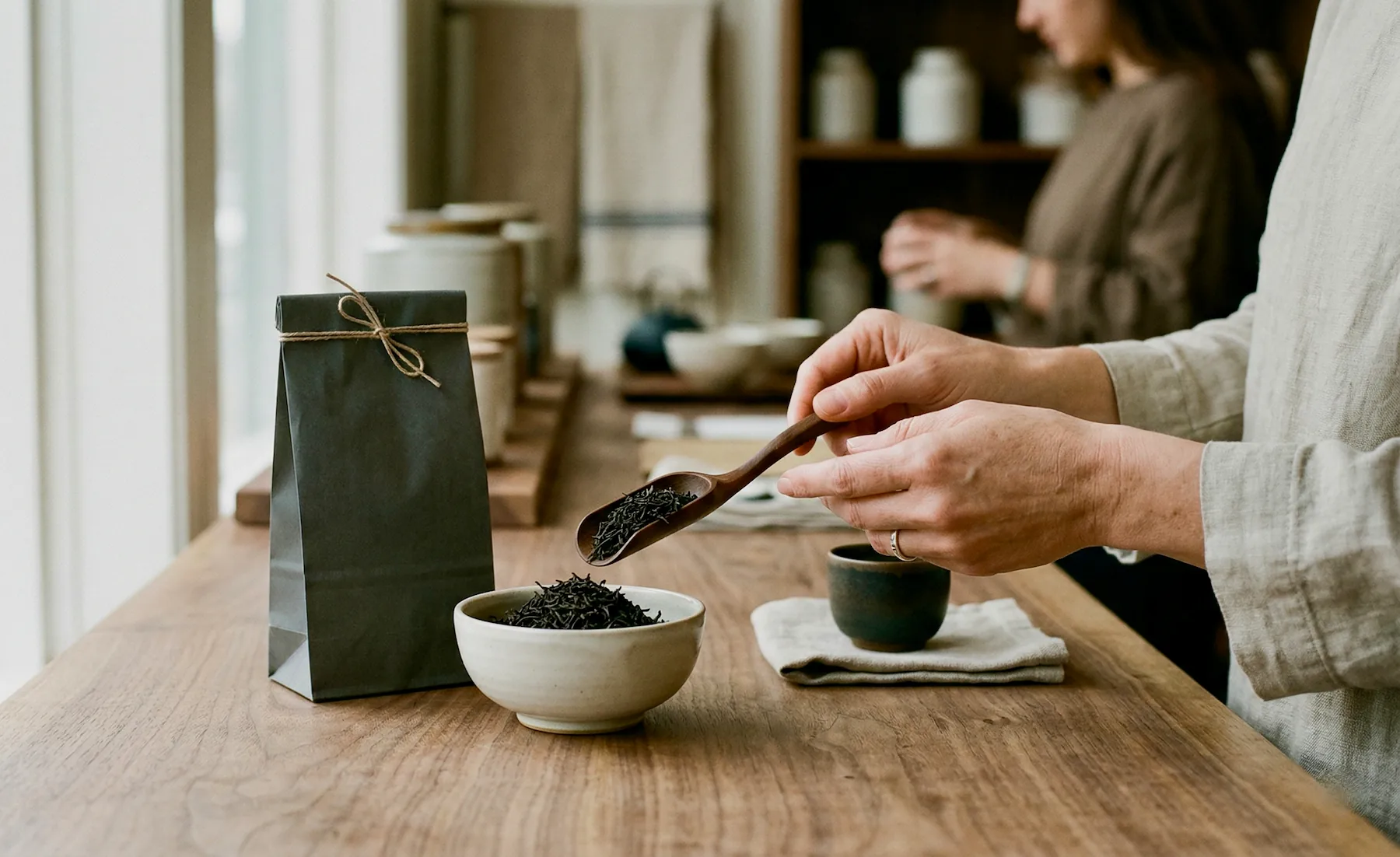
In the vast majority of cases, yes. Good-quality loose leaves keep their essential oils intact and need physical space to expand in water, the so-called 'dance of the leaves', delivering far more flavor, aromatic complexity, and beneficial compounds than the broken tea dust, known as fannings or dust, found in commercial supermarket tea bags.
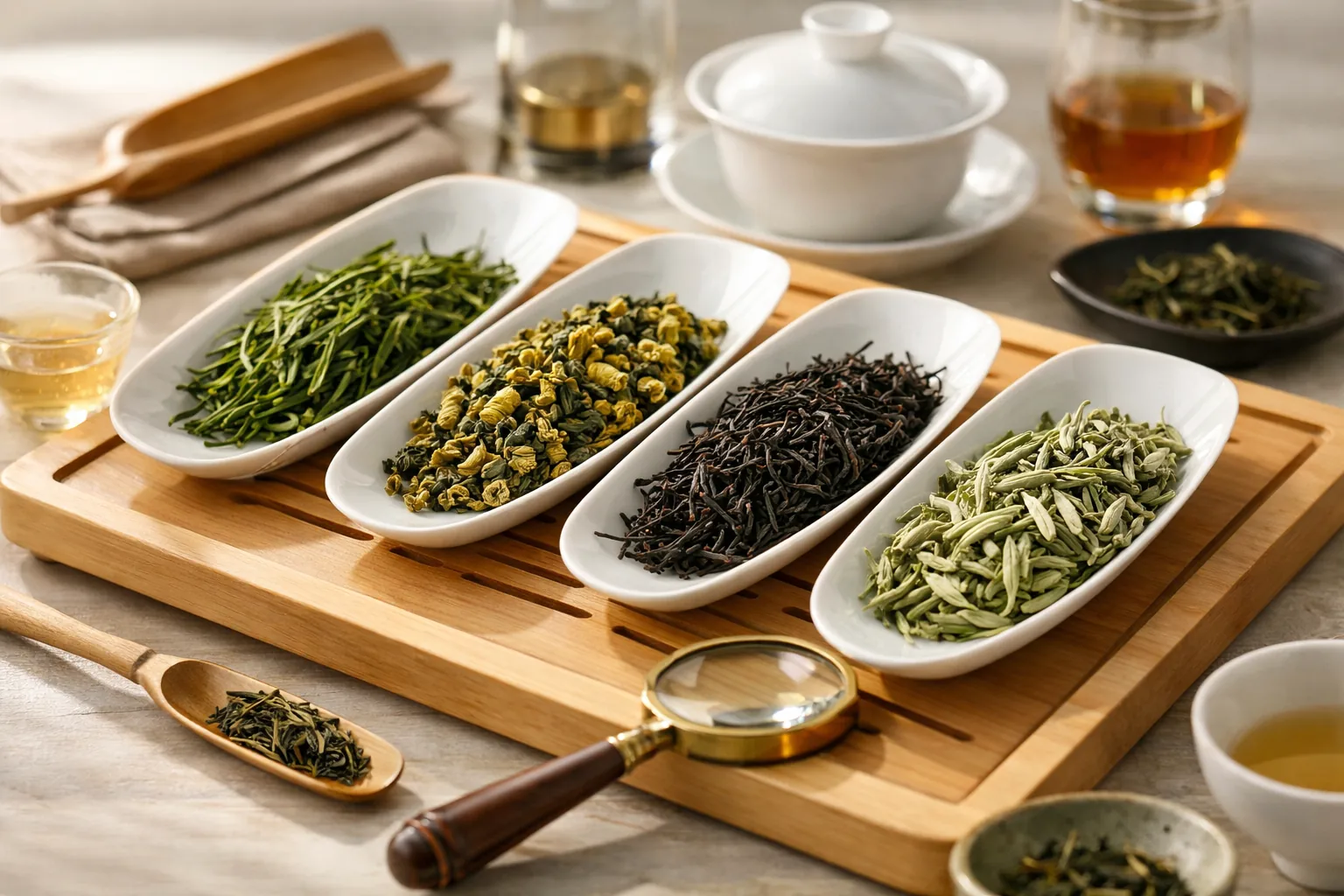
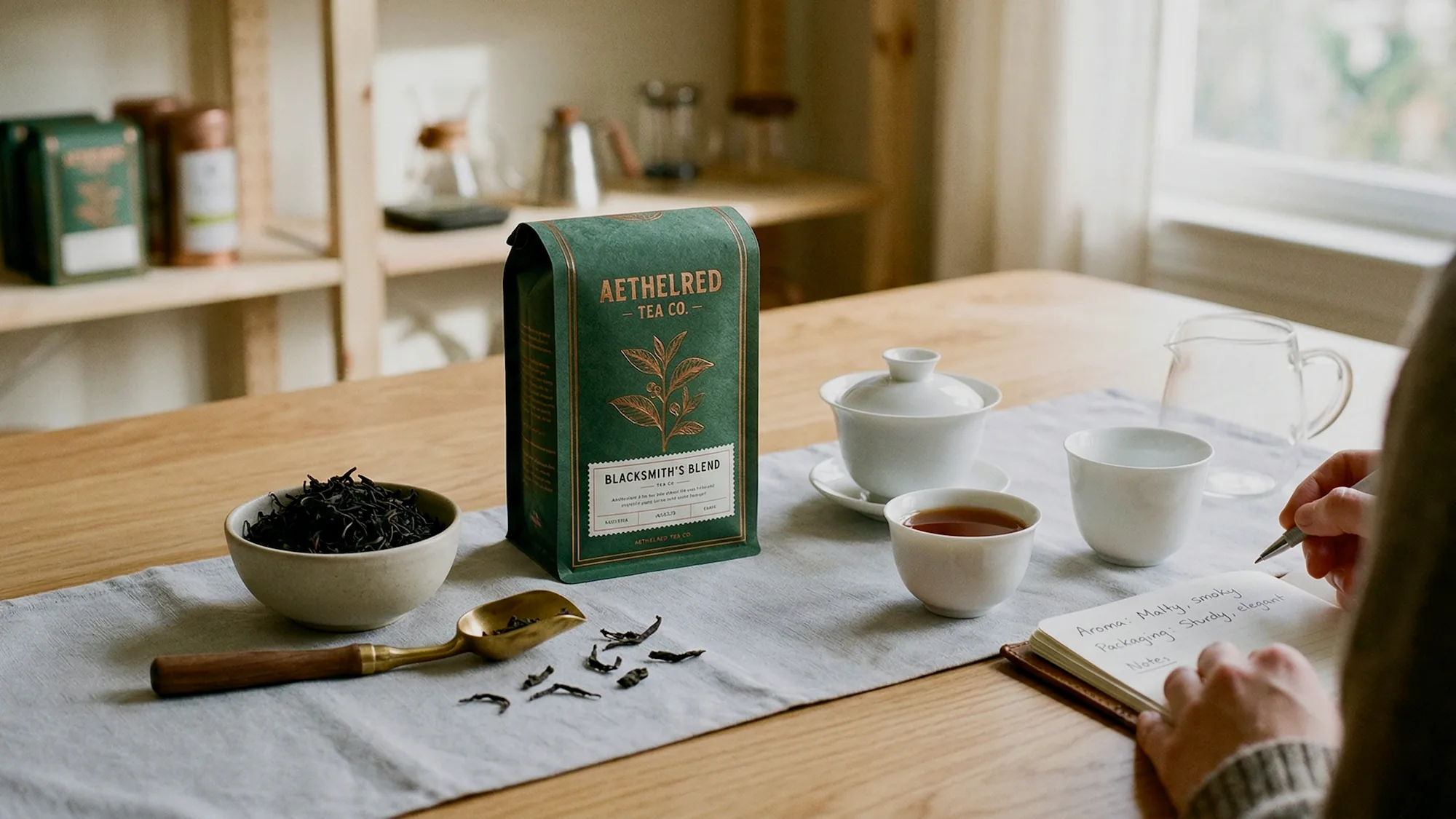
Trust the brand’s transparency and your own senses. An excellent tea should have a pronounced aroma even when dry and show leaves with vibrant colors. Avoid faded, grayish, or brittle-looking leaves. Good curation will always inform the specific region of origin, exact ingredients, and harvest year or batch on the label.
These acronyms represent the Leaf Grading system, used mainly for black teas from India, Sri Lanka, and Nepal. An acronym such as FTGFOP, Finest Tippy Golden Flowery Orange Pekoe, does not describe the flavor, but rather the excellence of the hand-plucked harvest, indicating a lot containing the youngest, whole leaves rich in golden buds, known as tips.