Creating your own blend is the final stage in the journey of an elite tea sommelier. It is not just about mixing leaves, but about building a unique sensory signature: your perfect balance of flavor, visual color, and intention, turning each cup into a refined, memorable, and personal experience.
Golden Rule of Alchemy: Finished mixing? Resist the temptation! Seal the container tightly and store it in a dark place for at least 48 hours. This resting time helps the aromas of the dry ingredients integrate better with the base, making the blend more cohesive, balanced, and pleasant in the cup.
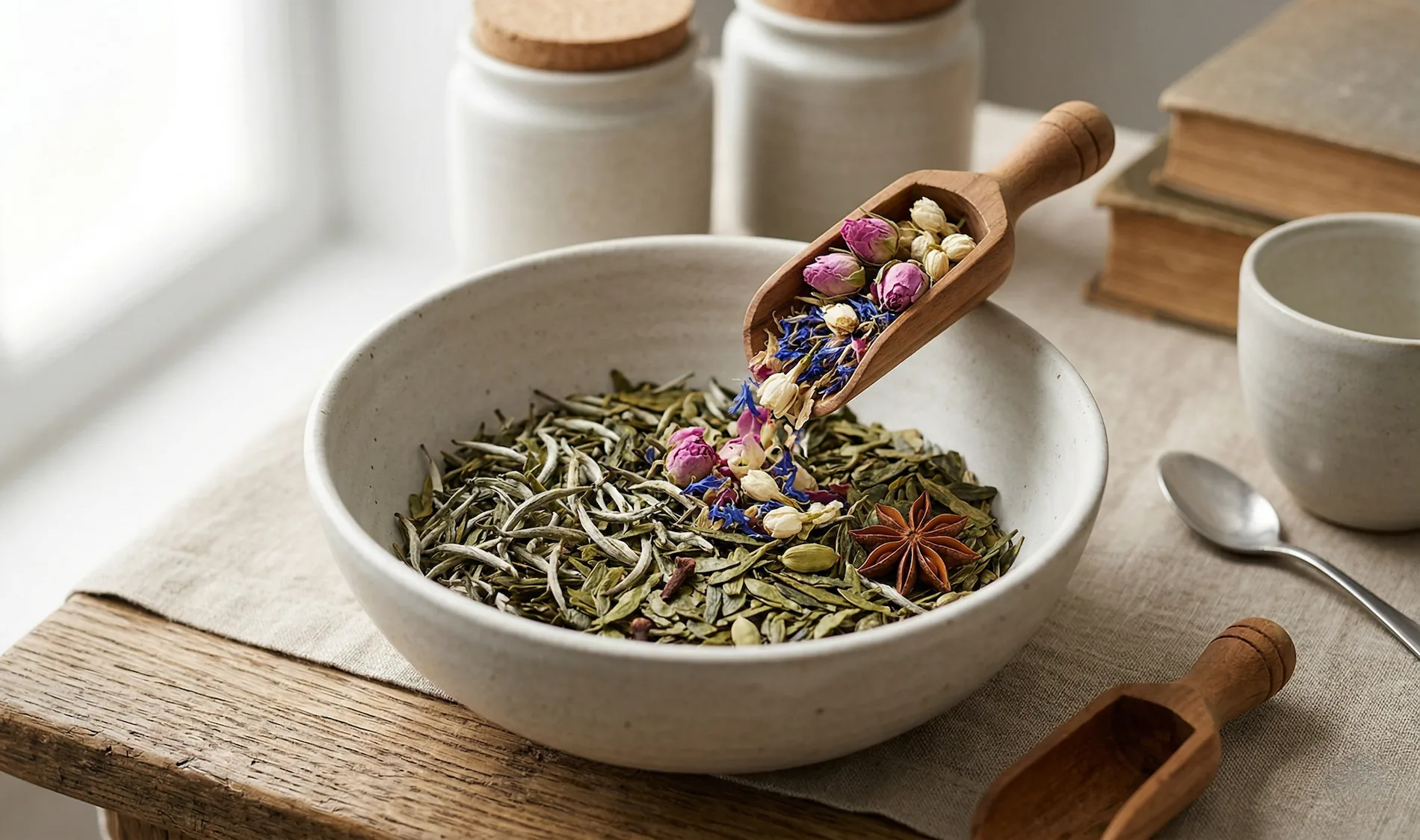
The Master Blender’s Triad
The world’s greatest specialists do not mix ingredients at random. They build the sensory experience by respecting three fundamental pillars that bring harmony to the cup:
- 11. The Soul (Base and Spices): This is the foundation, such as green tea, black tea, or rooibos, harmonized with supporting spices like ginger or cinnamon, which define the direction of the flavor.
- 22. The Visual Trick (Inclusions): One of the industry’s great secrets. Orange slices, petals, flowers, and coconut flakes help the brain anticipate aroma, sweetness, and freshness before the first sip.
- 33. The Perfume (Aromatization): The invisible layer. Aromatic flowers, well-dried citrus peels, or naturally fragrant ingredients can create a more elegant and enveloping finish.
When adding Inclusions or Perfumes, make sure all ingredients, especially fruit peels and flowers, are 100% dehydrated. Adding anything fresh or with residual moisture to an airtight container creates an environment favorable to fungi, mold, and rapid quality loss, compromising the aroma, flavor, and safety of the batch.
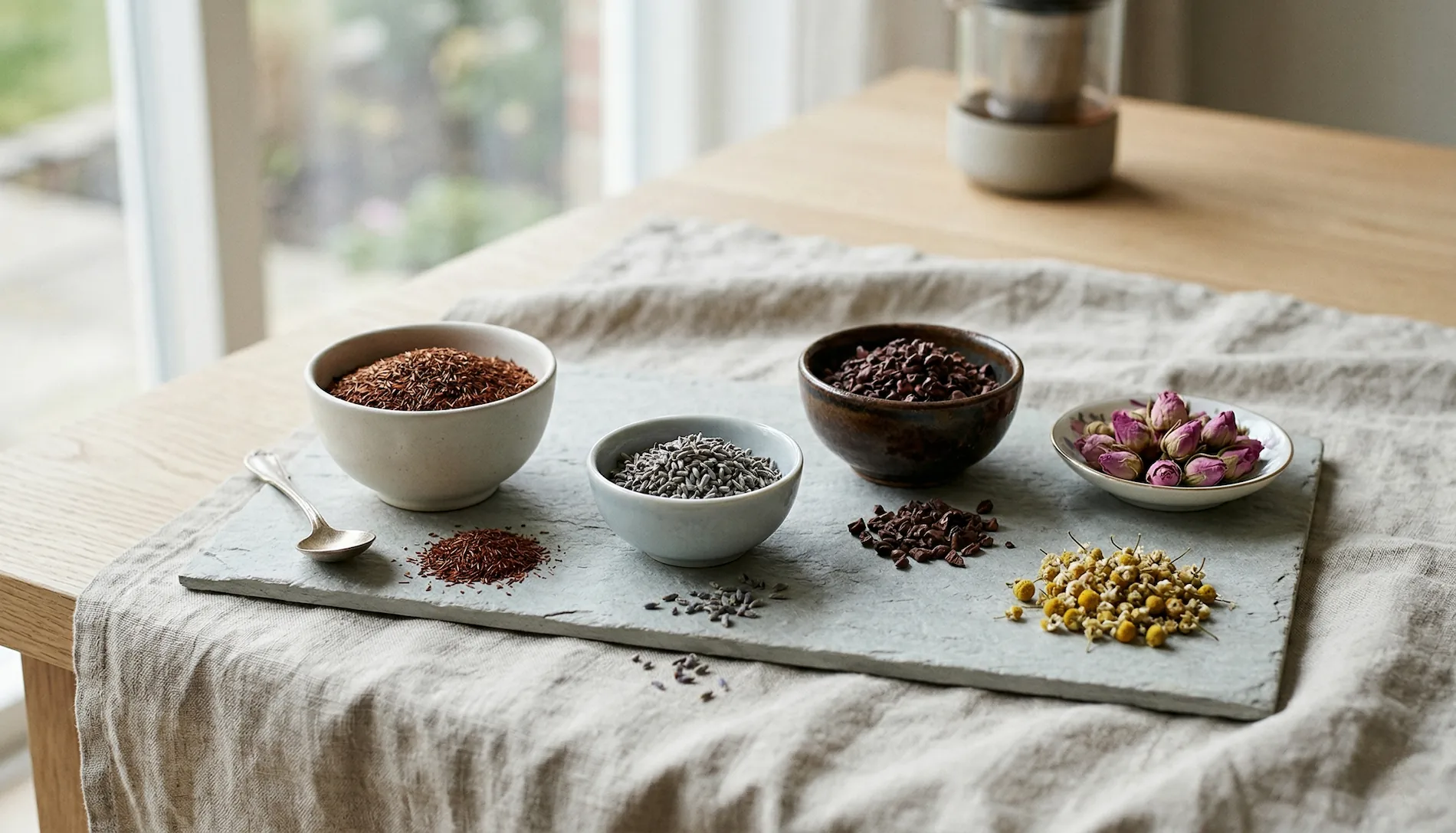
Before the Mix: Understand the Base
Every blend begins with the base, and each base has its own personality. Black teas usually deliver body, structure, and more intense notes, pairing well with spices, citrus peels, cacao, and vanilla. Green teas are more delicate, vegetal, and fresh, so they call for lighter ingredients, such as lemongrass, mint, soft flowers, and fruits with controlled acidity. Oolong sits in an elegant middle ground, with floral, toasted, or fruity nuances depending on the style. Rooibos and honeybush do not come from Camellia sinensis, but they work beautifully as naturally caffeine-free bases, with a sweet, woody, and comforting profile.
The choice of base also influences preparation. A blend with green tea, for example, can become bitter if infused with water that is too hot or for too long. Blends with whole spices, roots, and denser peels may need more time to release their aroma. That is why creating a blend is not just about choosing beautiful ingredients: it is about thinking how all of them will behave at the same temperature, during the same infusion time, and in the same cup.
The Golden Formula: 5:1:1 Ratio
To avoid a confusing or bitter drink, use this classic sommelier proportion. It is a reliable starting point for creating small batches with elegance and balance:
- 1Step 1 (The Base): 5 teaspoons of the main ingredient, such as black tea or chamomile.
- 2Step 2 (The Heart Note): 1 teaspoon of the secondary herb that should shine on the palate.
- 3Step 3 (The Background): 1 teaspoon of a third complementary herb to add depth.
- 4Step 4 (The Aesthetic): Generous pinches of dried fruits or petals to create a stunning visual effect.
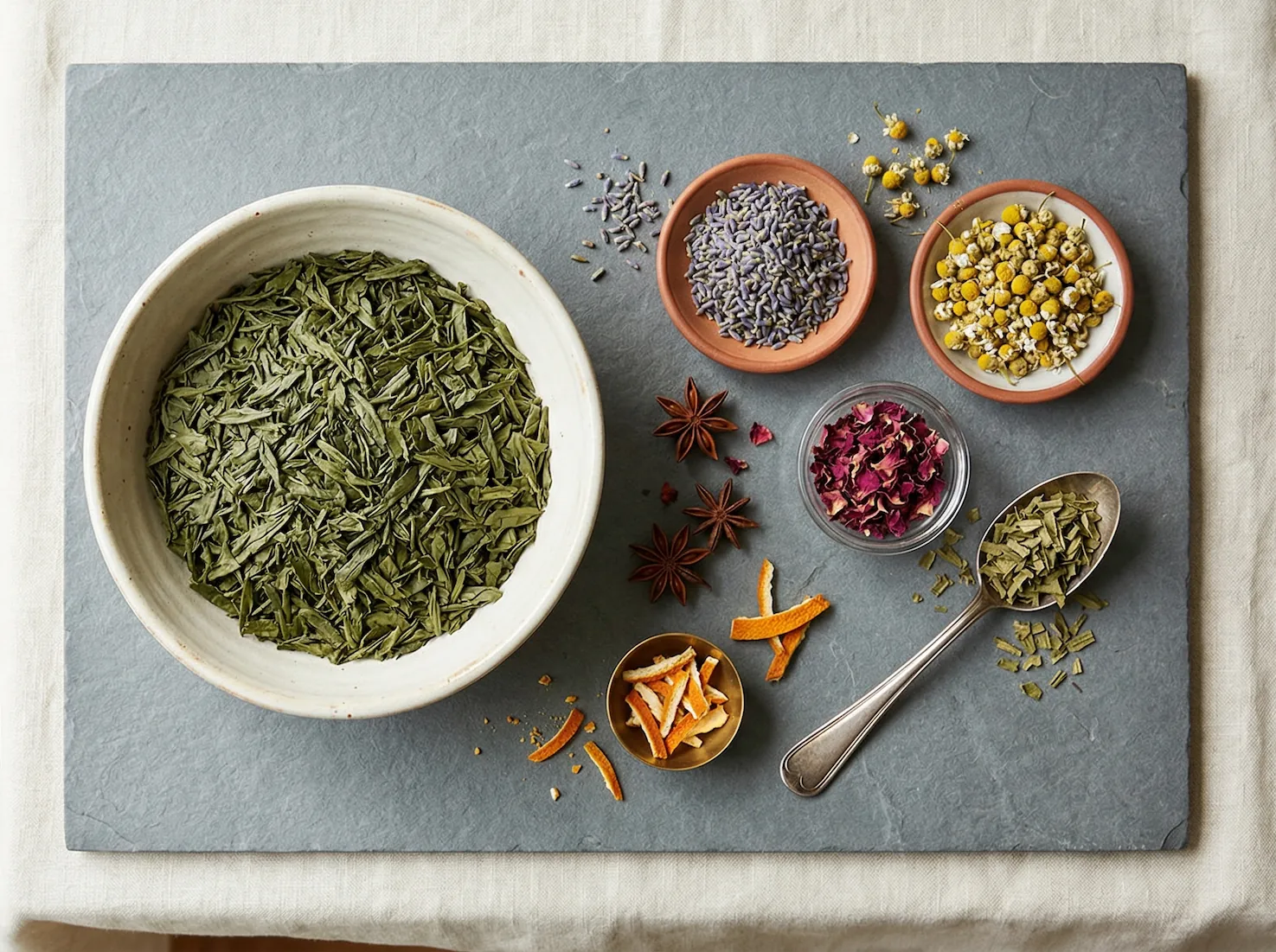
Particle Size: The Detail That Changes Everything
One often overlooked but essential point is the size of the ingredients. Very large leaves, light flowers, and spices cut into small pieces do not behave the same way inside the jar. Over time, heavier ingredients may settle at the bottom, while petals and lighter leaves stay near the top. This means the first spoonful of the blend may be different from the last. To avoid this imbalance, mix well before serving and, whenever possible, try to work with ingredients of similar sizes.
It is also important to be careful with very fine powders, such as ground cinnamon, powdered ginger, or cacao powder. They can dominate the flavor, cloud the drink, settle at the bottom of the cup, and leave a gritty sensation. In dry blends, spices in chips, pieces, nibs, or granulated forms usually offer a more elegant, stable, and easier-to-measure result.
Aromatic Intensity: Not Everything Should Be Loud
A sophisticated blend is not one where every ingredient appears with the same strength. Quite the opposite: elegance comes from hierarchy. Some ingredients should form the body of the drink, others should appear in the middle of the sip, and some should work only as an aromatic finish. Lavender, clove, cardamom, mint, citrus peels, and resinous spices are examples of ingredients that can quickly dominate the composition if used in excess.
A good practice is to smell each ingredient separately before mixing. If the aroma is already very intense in the jar, use less. If the ingredient is soft, such as chamomile, dried apple, or rooibos, it can have a stronger presence. The goal is not to create a competition of aromas, but a sequence: first the fragrance, then the body, then the finish.
Your First Flavor Laboratory
Begin your Master Blender skills by testing these three trusted recipes, adjusted to the Nature Chá standard:
- 1Orange Chai (Energy): 5 tsp black tea + 1 tsp clove + 1 tsp cardamom + 1 tsp dried ginger + orange peels.
- 2Rooibos Delight (Relaxation): 5 tsp rooibos + 1 tsp lavender flowers + 1 tsp dried coconut + cacao nibs.
- 3Awakening Garden (Light Focus): 5 tsp green tea + 2 tsp lemongrass + 1 tsp thyme + rose petals.
Test in Small Batches
Before preparing a large jar, make a microblend. Mix only enough for two or three cups and write everything down: base, proportion, infusion time, approximate water temperature, and final impression. This simple practice prevents waste and turns creation into a more precise process. If the result was too strong, reduce the spices. If it felt flat, add a heart note. If it looked beautiful but lacked aroma, it may need a more expressive ingredient or a better resting period.
After testing, taste the blend at two moments: right after mixing and again after 48 hours of rest. Many blends change during this interval, especially those with citrus peels, spices, and aromatic flowers. Resting does not create miracles, but it can round out the aromatic perception and make the mixture feel more integrated.
Professional storage: use a clean, dry, well-sealed jar protected from light, heat, and humidity. Avoid storing blends near coffee, strong spices, or cleaning products, because dried leaves and herbs absorb aromas easily. Label the jar with the name, preparation date, and main ingredients.
Now that you have the secret formula, the next step is experimentation. At Nature Chá, we encourage you to create your own signature. Start with classic bases, be bold with inclusions, test small variations, and discover the pleasure of tasting a blend that is entirely yours. Happy blending!