Not every beautiful tea is a great tea. There are refined packages, elegant tins, seductive words, and promises of rarity that impress even before water touches the leaf. But a truly premium tea almost never depends on that alone. It begins long before the table: in the field, in the harvest, in the type of leaf, in the way it is processed, in the integrity of the lot, and in the honesty with which all of that reaches you.
Golden rule: premium is not what looks most luxurious at first glance, but what sustains quality with coherence — from leaf to label, from aroma to freshness, from origin to the final result in the cup.
Premium Begins with the Raw Material
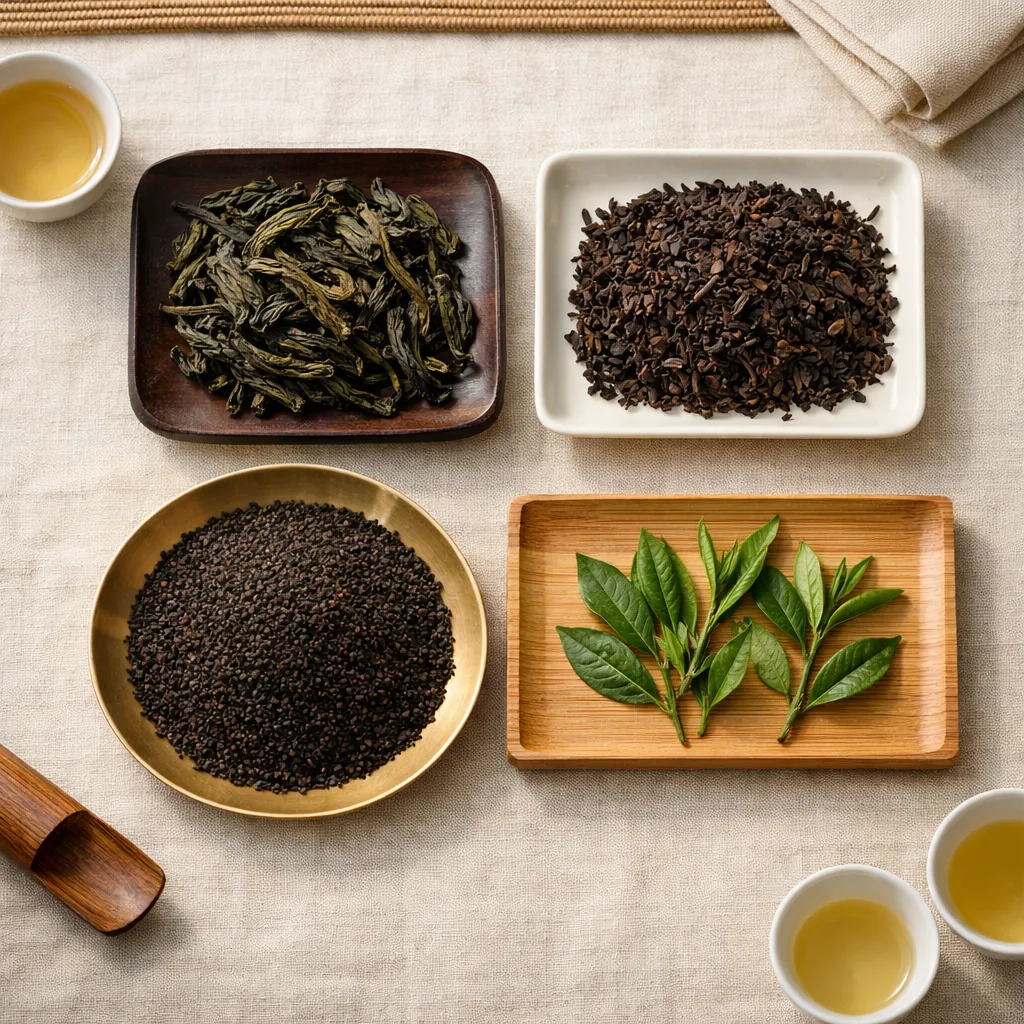
In many high-quality contexts, fine plucking remains one of the most important foundations. The classic standard of “two leaves and a bud” appears repeatedly as a reference because it concentrates the youngest and most valued material on the plant. In Darjeeling, for example, this standard is explicitly highlighted as part of the character of the product of origin. When leaf selection is careful, the cup usually starts better even before processing enters the scene.
This also helps explain why so much premium tea tradition remains linked to hand plucking. In Sri Lanka, manual selection of green leaf is presented as a factor that strongly influences final quality. Not because the human hand is always romantic in itself, but because it allows a more precise choice of what truly enters the process.
Leaf Integrity Is Not Everything — But It Matters Greatly
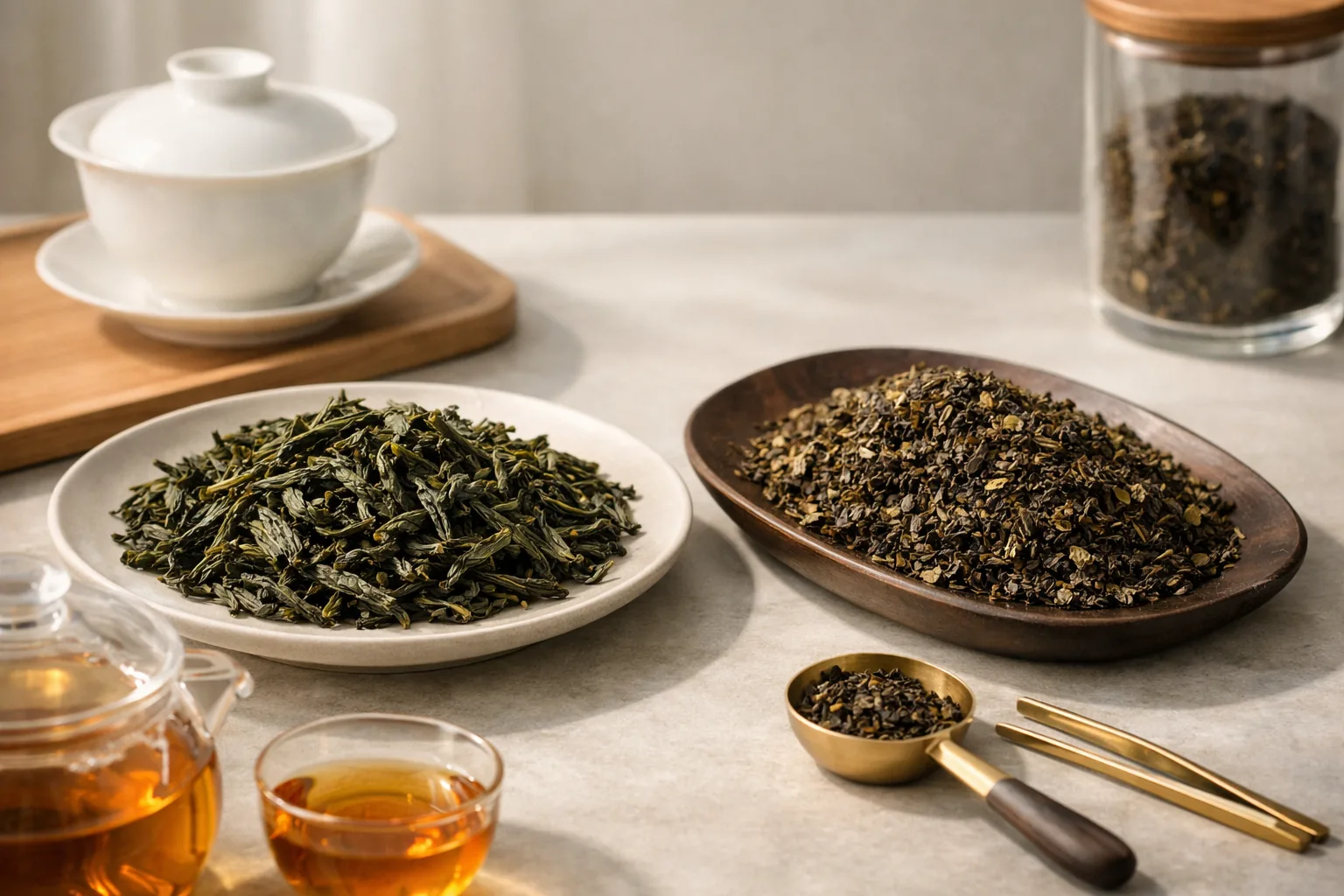
It is common to hear that whole leaf is automatically superior. Reality is more interesting. In many grading systems, larger and more voluminous leaves do in fact occupy higher positions in the grade hierarchy. But that does not mean smaller particles are always inferior in absolute terms of pleasure. Britannica notes that broken grades can contain a significant contribution from the finest buds, while certain leafy grades come more from mature leaves. The point is not to worship a single format, but to understand the style of drink that leaf was intended to deliver.
Even so, a premium tea usually reveals one important thing: integrity. Even when the proposal is broken, BOP, or BOPF, the leaf should appear well made, clean, coherent with the grade, and free from excessive fiber, dust, or disorderly mixtures of particles outside the expected standard.
Processing: Quality Is Also Method and Craft
Good raw material can still be ruined by mediocre processing. Premium teas usually stand out because of precision: controlled withering, well-managed oxidation, stable drying, clean grading, and lot consistency. In origins such as Sri Lanka, the orthodox process is valued precisely because it allows a great variety of leaf styles and is associated with the finest expression of flavor in many contexts.
- 1Young, well-selected raw material.
- 2Leaf that is coherent with the proposed style, without excess fiber or disorderly mixture.
- 3Clean and consistent processing.
- 4Clear aroma, with no signs of staleness, dustiness, or premature aging.
- 5Origin and traceability that make sense.
Origin, Traceability, and Product Truth
Premium is also a word of provenance. When a tea presents itself with a precise origin, certificate of origin, or traceable lot, it stops being just a generic commodity and begins to exist as an identity. This is especially strong in recognized origin products such as Darjeeling, whose reputation is directly tied to the region, local practices, and protected name.
Even outside the most famous geographical indications, the logic still holds: the clearer the label is about garden, region, country, lot, and composition, the greater the chance that you are facing a product that does not depend only on vague storytelling. The lot code, though it may seem too technical for many people, is one of the concrete signs of seriousness because it enables traceability within the chain.
When a tea uses words such as rare, artisanal, exclusive, or premium, but offers almost nothing about origin, lot, or composition, it may be selling atmosphere rather than information.
Freshness: The Luxury That Almost Never Shouts
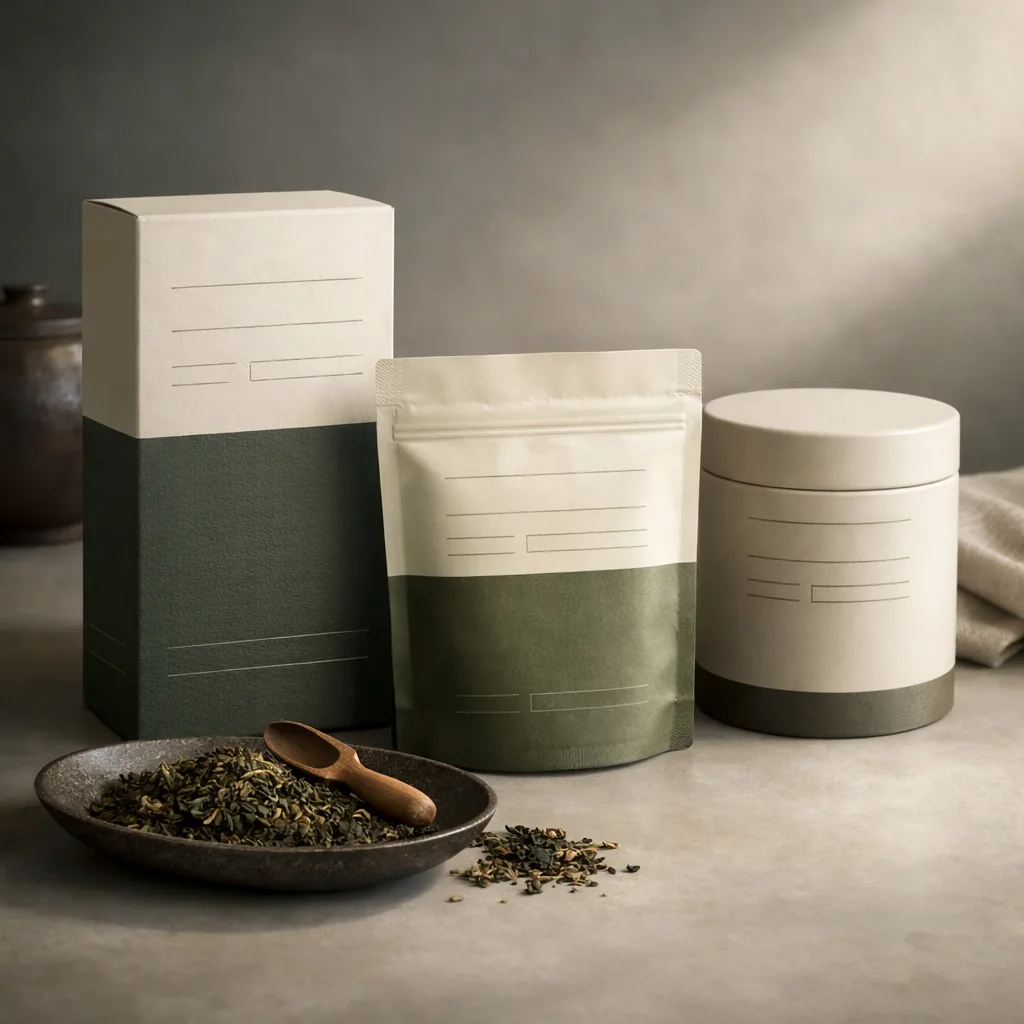
Few things are as decisive and yet as little glamorized as freshness. Tea is sensitive to moisture, air, light, and surrounding odors. Tea Board India recommends storing it in an opaque, airtight container, in a cool, dry place, away from strong smells. Sri Lanka Tea Board goes further and states that packing at origin, just a few weeks after harvest, helps preserve aroma and freshness more faithfully.
This means premium can also be a matter of time and logistical care. An excellent tea, poorly packaged or kept too long without proper protection, loses brilliance before it even reaches the cup. This is tea’s most discreet luxury: seeming alive when the package is opened.
How to Recognize a Premium Tea in Practice
- 1A leaf with a coherent visual identity and good craftsmanship for the proposed style.
- 2Clear information about origin, composition, and, when possible, lot.
- 3A clean dry aroma, without a stale or tired impression.
- 4Packaging that protects against light, air, and odors.
- 5A sensory promise that matches what the product actually delivers.
A premium tea does not need to shout luxury. It needs to persuade through the leaf, sustain itself through information, and confirm in the cup what it promised on the package.
At Nature Chá, calling a tea premium only makes sense when that word stops being an adjective and becomes a structure: good raw material, good processing, good preservation, and real product truth. Everything else is scenery.