In tea, the tool is never just scenery. It affects how heat is retained, the space the leaf has to open, the speed of extraction, and even the way you perceive the drink. Choosing well is not a collector’s fetish: it is a concrete way to give the infusion better conditions to reveal texture, aroma, and balance.
Essential rule: the best tool is not the most expensive one, but the one most consistent with the leaf, the temperature, and your brewing style. Material, shape, and internal space matter far more than they seem to.
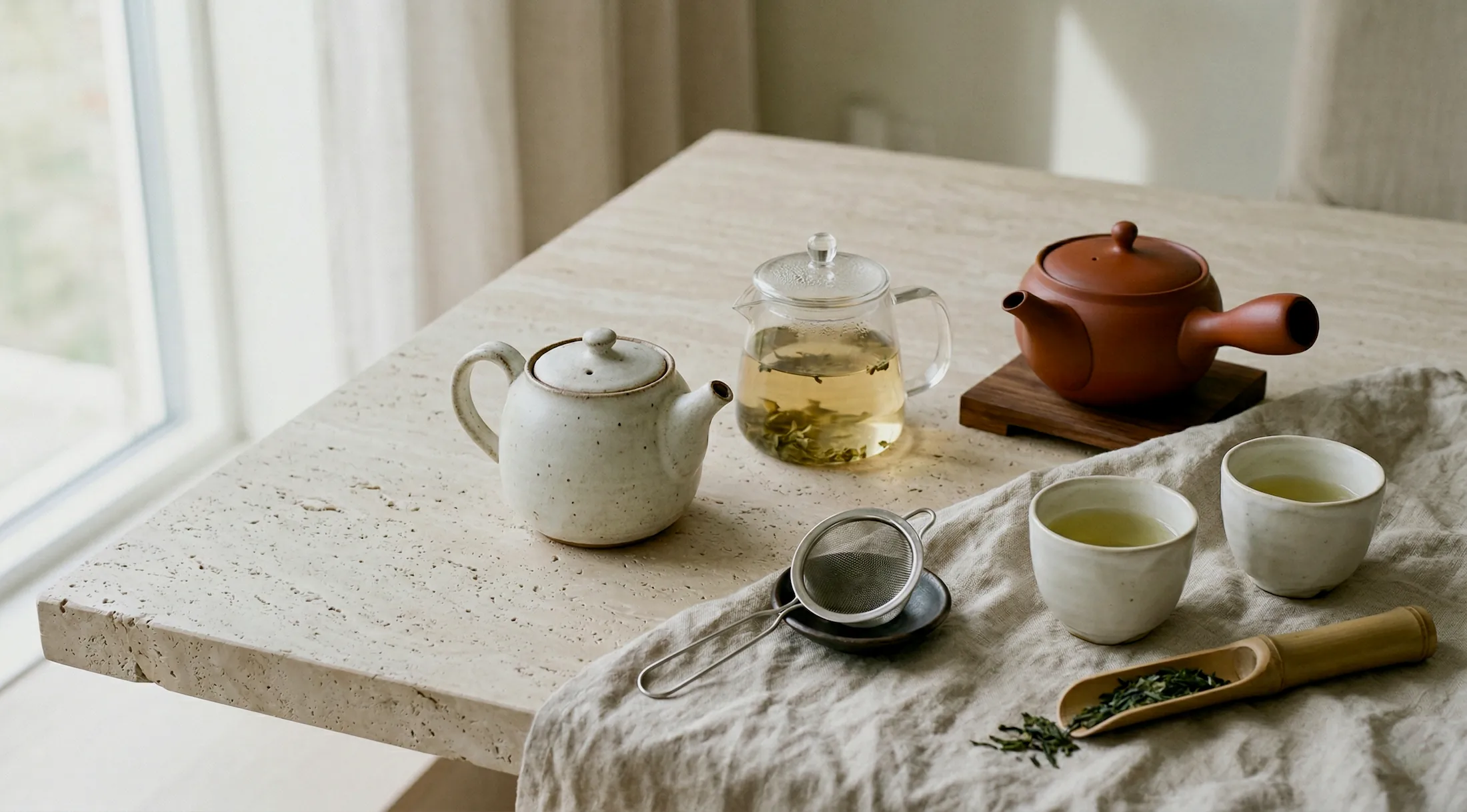
The Teapot: The Thermal and Sensory Center of Preparation
Before discussing specific models, one simple idea is worth keeping in mind: the teapot mainly influences three things — heat retention, material neutrality, and ease of use. Some vessels preserve temperature better; others let the leaf express itself with less interference; others still ask to be dedicated to a single type of tea. The ideal choice depends less on status and more on what you usually prepare.
1. Yixing: Clay with Memory and a Calling for Specific Teas
Yixing teapots, made from unglazed zisha clay, are valued precisely for this intimate relationship with use. Because the walls are porous, they absorb traces of infusions over time. That is why so many tea drinkers dedicate one of these pots to a single tea family, such as more roasted oolongs, black teas, or pu-erh. Rather than absolute neutrality, Yixing offers continuity, depth, and a kind of biography of preparation.
That also explains why it is usually not the most democratic choice for someone who wants to alternate among many delicate styles. For that role, neutral materials are more versatile. Yixing shines when there is repetition, intimacy, and intention.
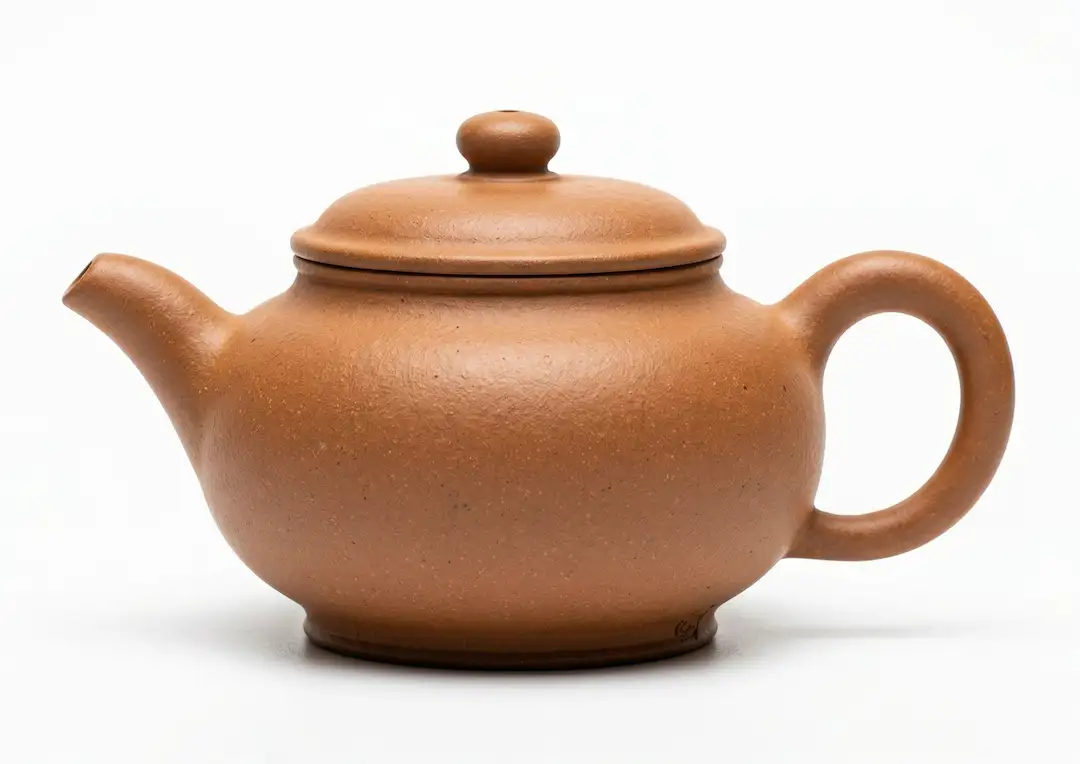
Important care note: with unglazed Yixing, avoid soap and detergent. The ideal is to rinse with hot water, let it dry very thoroughly, and dedicate the pot to one type of tea to prevent aroma mixing.
2. Porcelain and Glass: Neutrality, Clarity, and Versatility
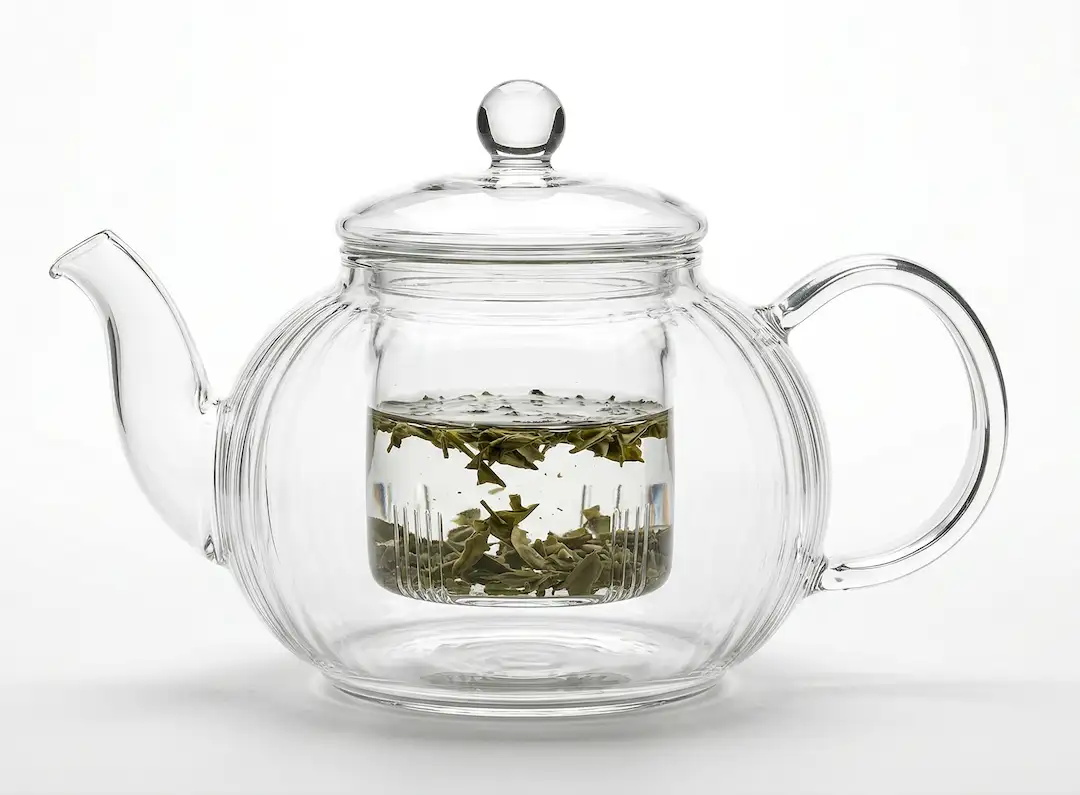
If the goal is to taste tea with less interference from the vessel, glazed porcelain and glass are very safe choices. Glazed ceramic is practical, stable, and easy to use day to day. Glass, meanwhile, has its own charm: it lets you see the color of the infusion, the movement of the water, and the unfurling of the leaves, something especially beautiful in floral, white, and green teas.
The difference is that glass generally tends to lose heat faster than thicker vessels. That is why it is charming for delicate leaves and shorter sessions, while porcelain is usually a great ally when you want neutrality with a bit more thermal stability.
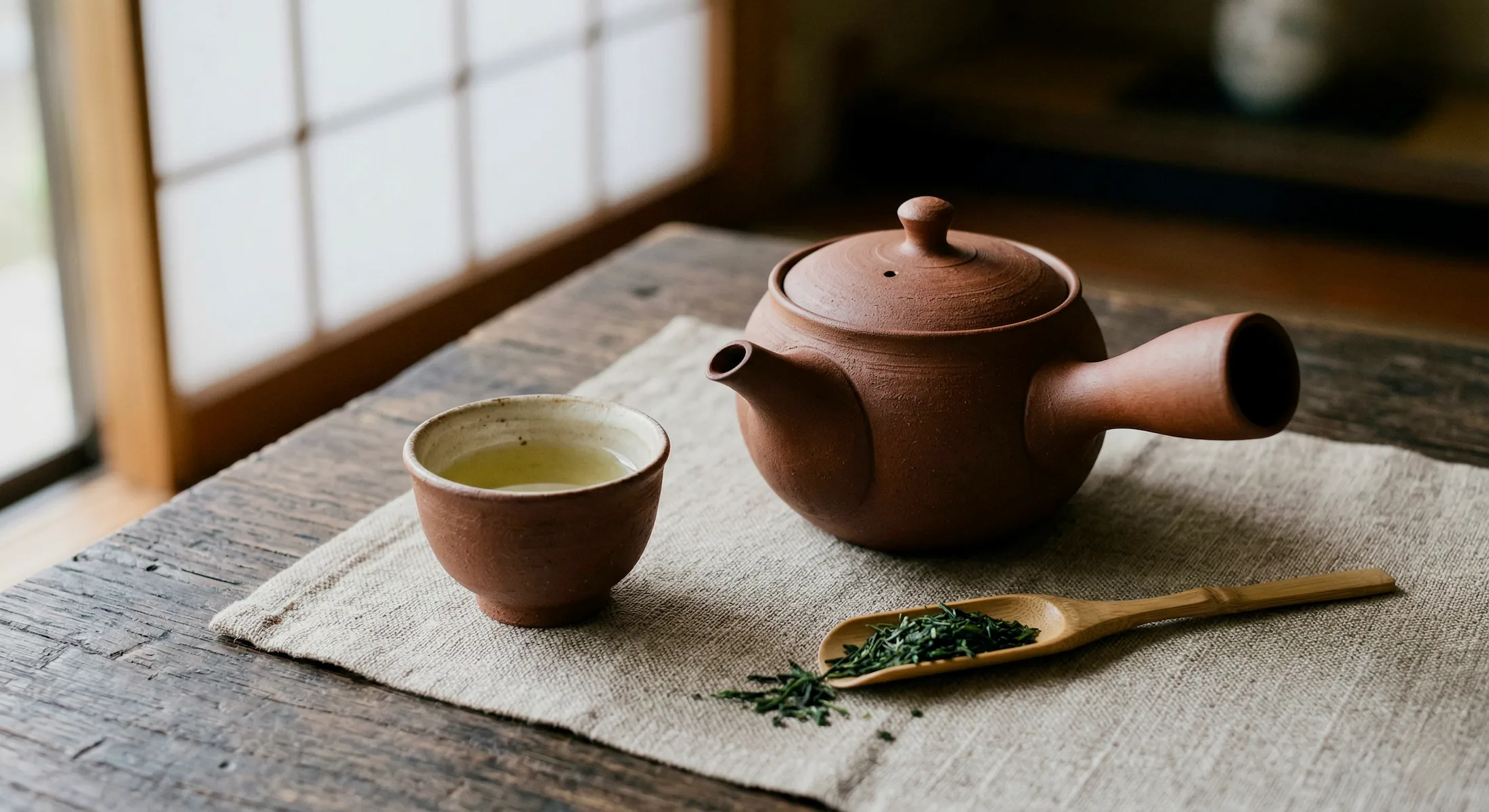
3. Kyusu: Japanese Precision for Green Teas
Few tools translate the idea of harmony between form and tea as well as the kyusu. This Japanese teapot, often with a side handle, was designed to prepare green teas with control, lightness, and ergonomics. Its shape favors quick pouring, comfort in the hand, and delicate service, which pairs especially well with sencha, gyokuro, and other Japanese styles that require attention to temperature and time.
In many versions, the kyusu includes internal filters that help serve with precision without crushing the leaf experience. It is an excellent tool for anyone who wants preparation to feel simple while remaining technically careful.
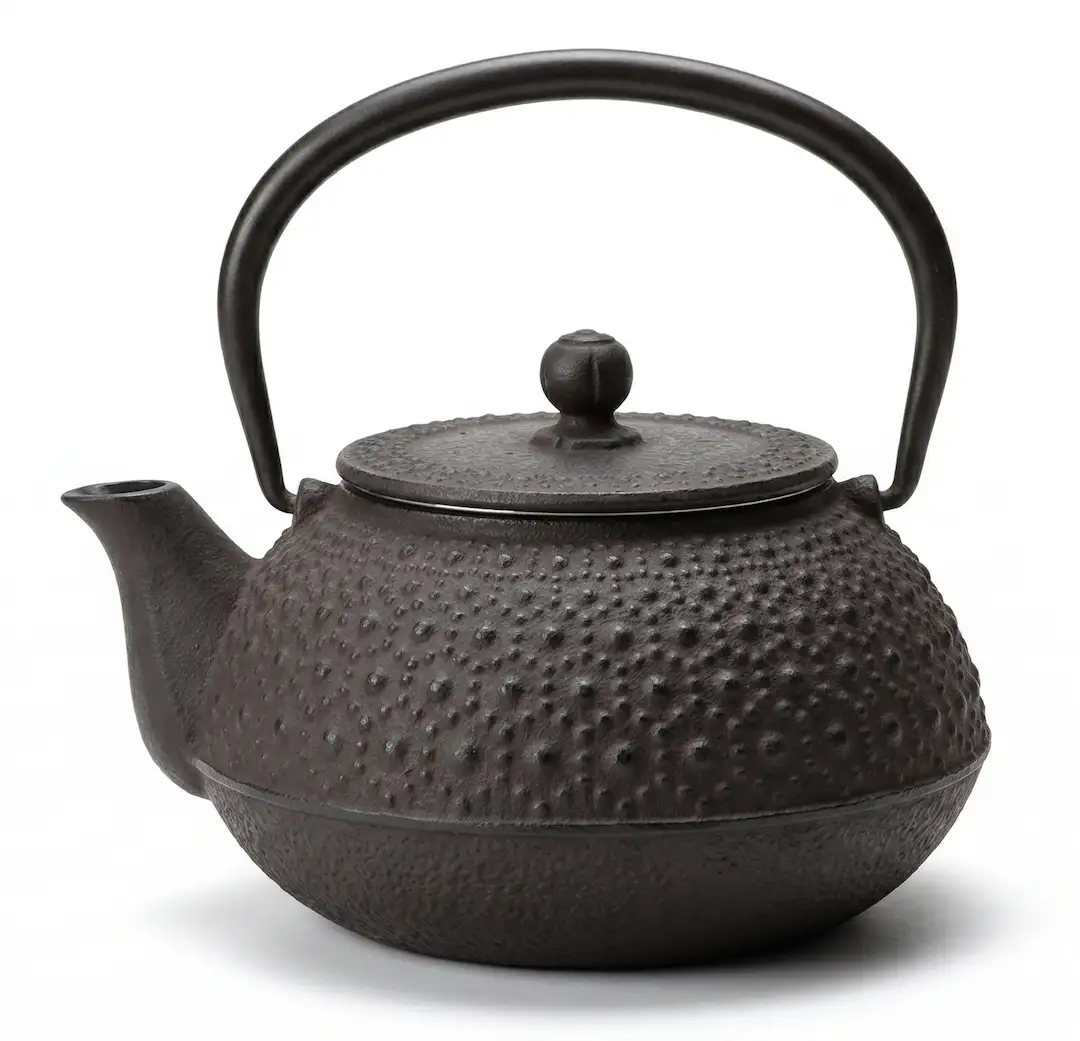
4. Cast Iron: What Is a Teapot, What Is a Tetsubin
An important distinction matters here. Traditionally, a tetsubin is the Japanese cast-iron kettle used to boil water — not the enameled vessel designed for steeping leaves. In the contemporary market, many cast-iron teapots are visually inspired by the tetsubin, but have an enameled interior and should be used as teapots, not as direct-heat kettles.
These enameled models retain heat very well and are quite practical for those who enjoy fuller-bodied teas, longer sessions, or table service. The critical point lies in care: they need to dry completely before being stored, and their use must respect the object’s function. An enameled pot is excellent for infusion; a traditional tetsubin belongs to the world of hot water.
The Ritual: How the Tool Enters the Preparation
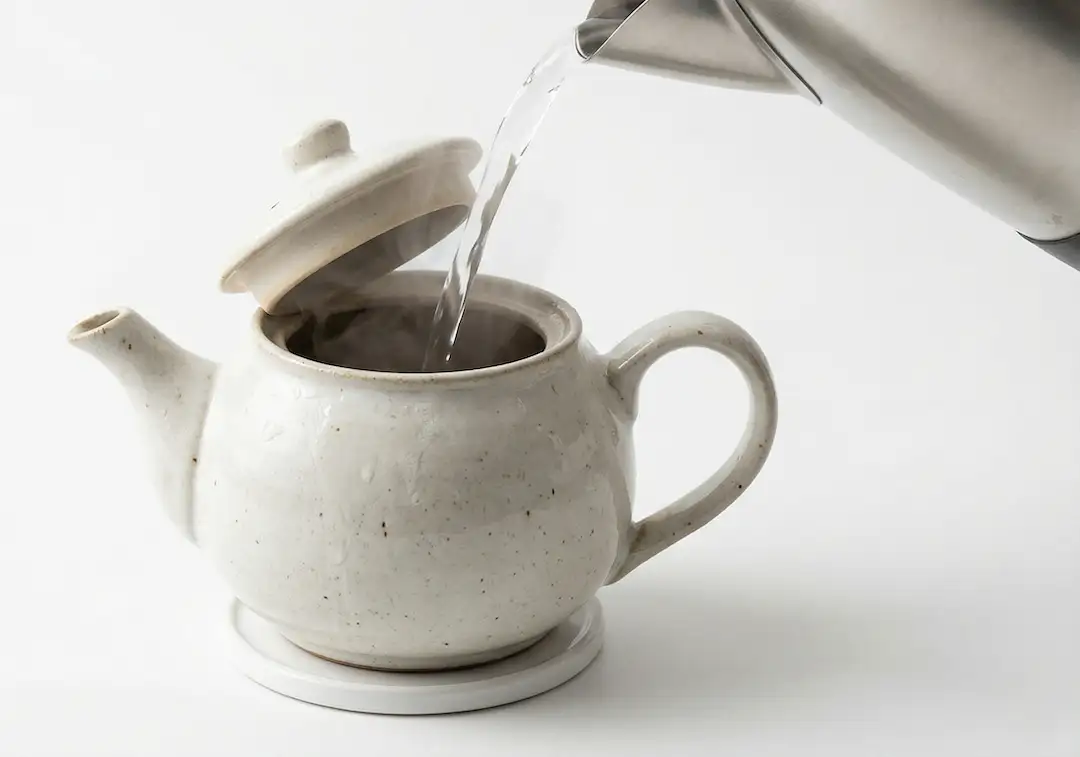
Using a good teapot well does not require theatrical complexity. It requires consistency. A cold vessel steals heat from the water right at the beginning; a tight infuser suffocates the leaf; a filter left in too long prolongs extraction unnecessarily. The ideal tool does not draw too much attention to itself — it works in favor of the tea.
- 1Preheat the teapot or cup with hot water and discard it before steeping.
- 2Use a vessel compatible with the leaf: neutral for exploration, dedicated when the purpose calls for it.
- 3Give the leaves room to expand, especially with greens, oolongs, and voluminous infusions.
- 4Cover the vessel during infusion to preserve heat and aroma when it makes sense for the style being prepared.
- 5Remove infusers or baskets as soon as the time is up to avoid over-extraction.
- 6After use, rinse, dry thoroughly, and store only when the tool is completely free of moisture.
Practical Innovations for Everyday Life
Not every ritual needs to be long to be good. Daily life calls for more direct solutions, and fortunately the tea tool market has evolved a great deal. The key is choosing practical features without sacrificing what truly matters: room for the leaf, control of time and temperature, and ease of cleaning.
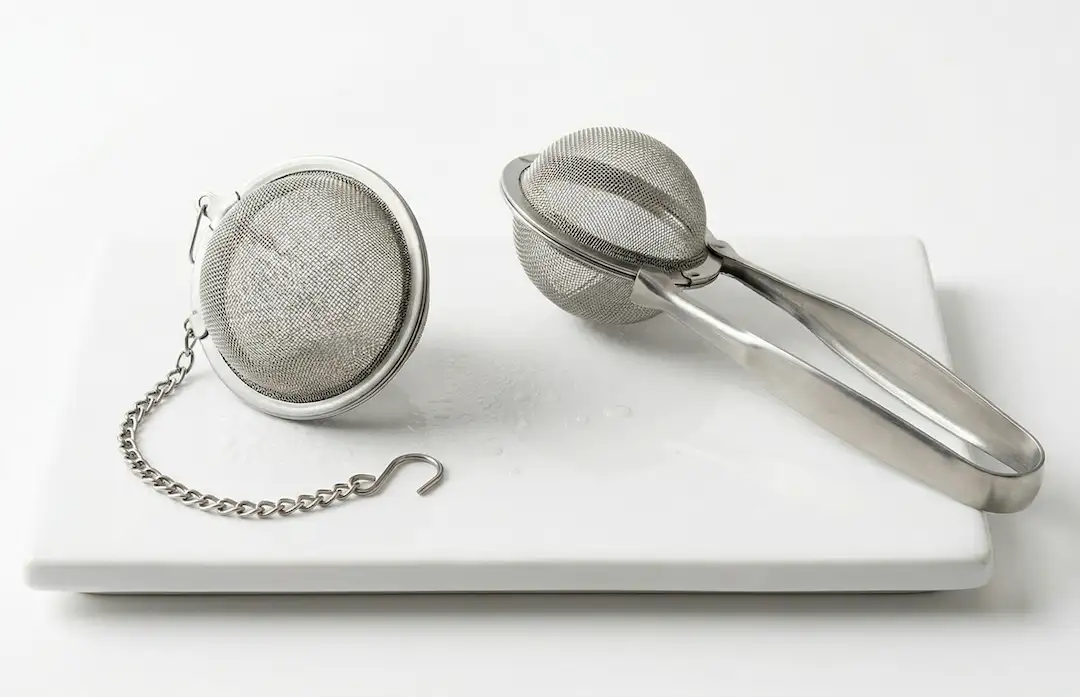
Infusers: Mesh Balls and Tea Tongs
These are simple, compact, and functional options for a single cup, especially when the leaf cut is smaller. The limit appears when the infusion needs space: larger leaves or those that open dramatically tend to perform worse in small, tightly packed capsules.
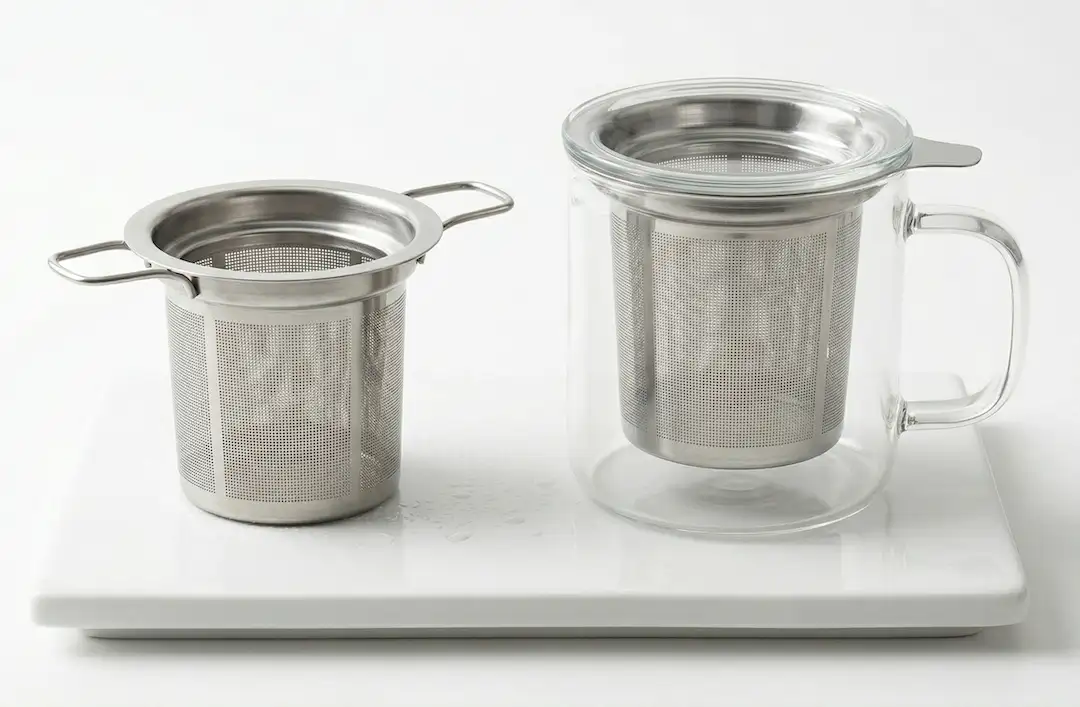
Infusers: Baskets and Mug Infusers
For those who prepare tea at work or at home without wanting to build a complete ritual, removable baskets are one of the best solutions. They let water circulate better, allow the leaf to open more freely, and make it easy to stop extraction at the right moment. In many cases, they deliver a more faithful experience than small mesh balls.
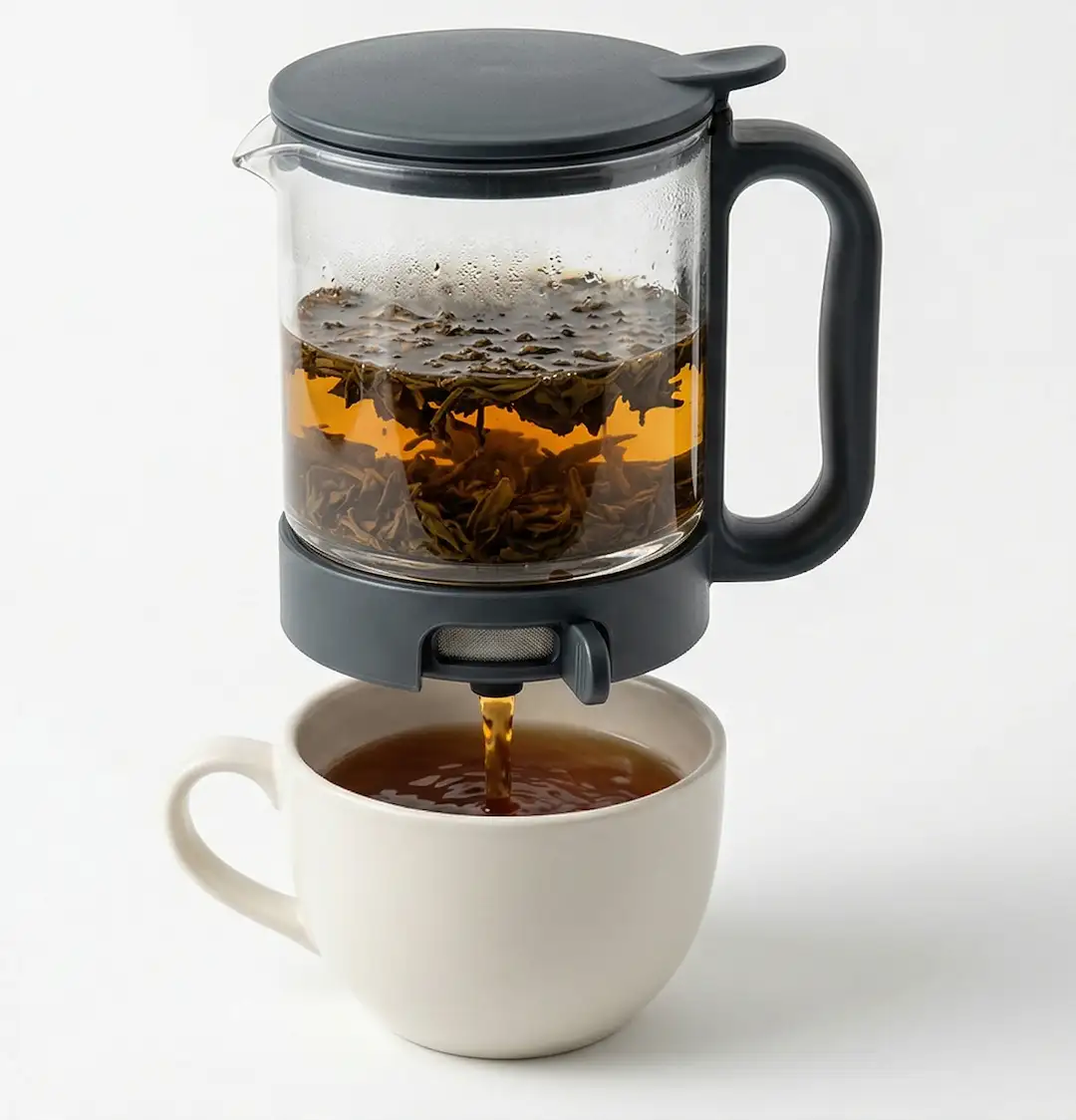
Gravity Infusers
They have gained space for a legitimate reason: they combine cleanliness, comfort, and good performance. The leaf stays loose in the upper chamber, water circulates freely, and when the vessel is placed over the mug, the tea filters down. For those who want practicality with a certain elegance, it is one of the smartest formats in the modern routine.
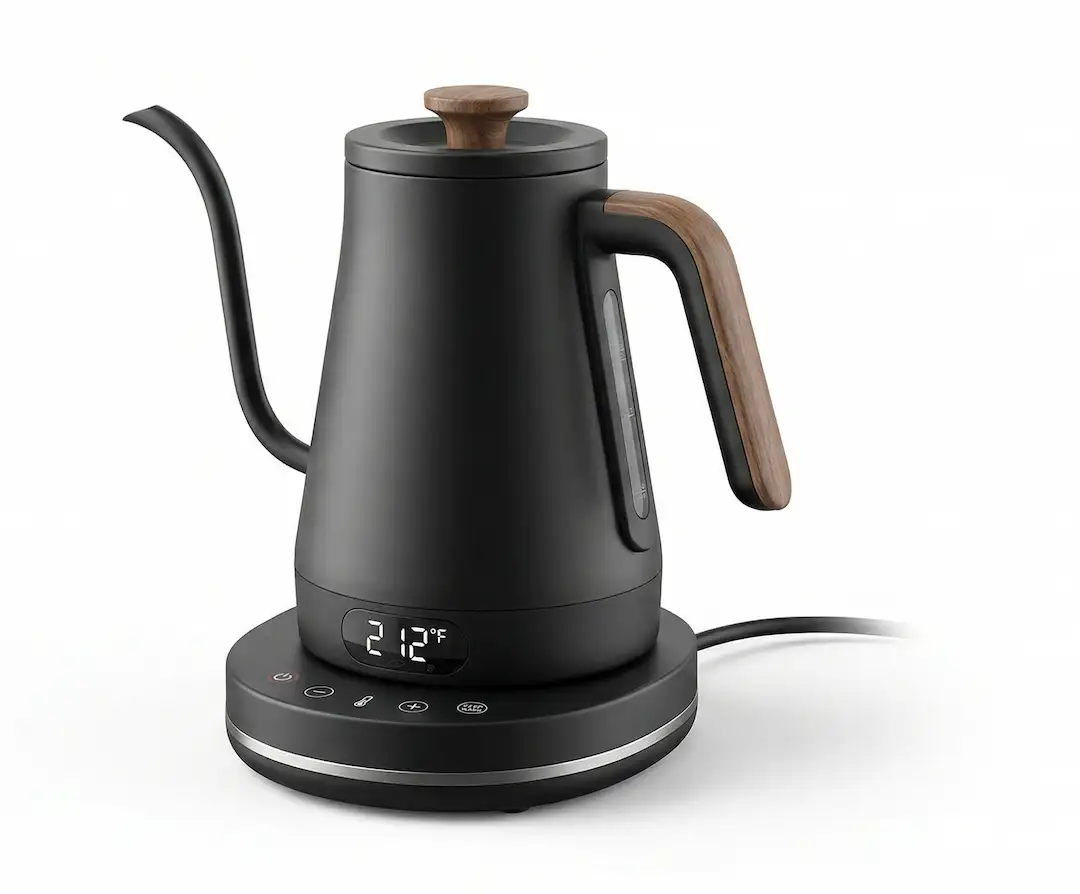
Temperature-Control Kettles
Among all contemporary tea tools, this may be one of the most useful investments for anyone who prepares tea frequently. Temperature control reduces guesswork, improves repeatability, and makes life much easier for those who alternate between delicate greens, oolongs, blacks, and botanical infusions. More than technology for its own sake, it is about consistency.
In the end, the best tool is the one that respects the leaf and fits your real life. Some invite contemplation; others solve daily life intelligently. What matters most is understanding that every vessel changes the conversation between water and tea. And when that conversation finds the right object, the experience stops being merely functional and begins to carry form, memory, and presence.