A great cup rarely happens by accident. It comes to life when water, temperature, measurement, and time work in harmony, each in its proper place, without excess. That is why two people can use the same leaf and still arrive at completely different results. In tea preparation, small choices matter deeply: heat can reveal or damage, water can support or flatten, measurement can bring depth or heaviness, and time decides whether the drink opens beautifully or closes before its moment.
Practical rule: choose fresh, filtered water and heat only what you need for the infusion. Reheating water does not make it unusable, but it often leaves the cup less vivid and less elegant in flavor.
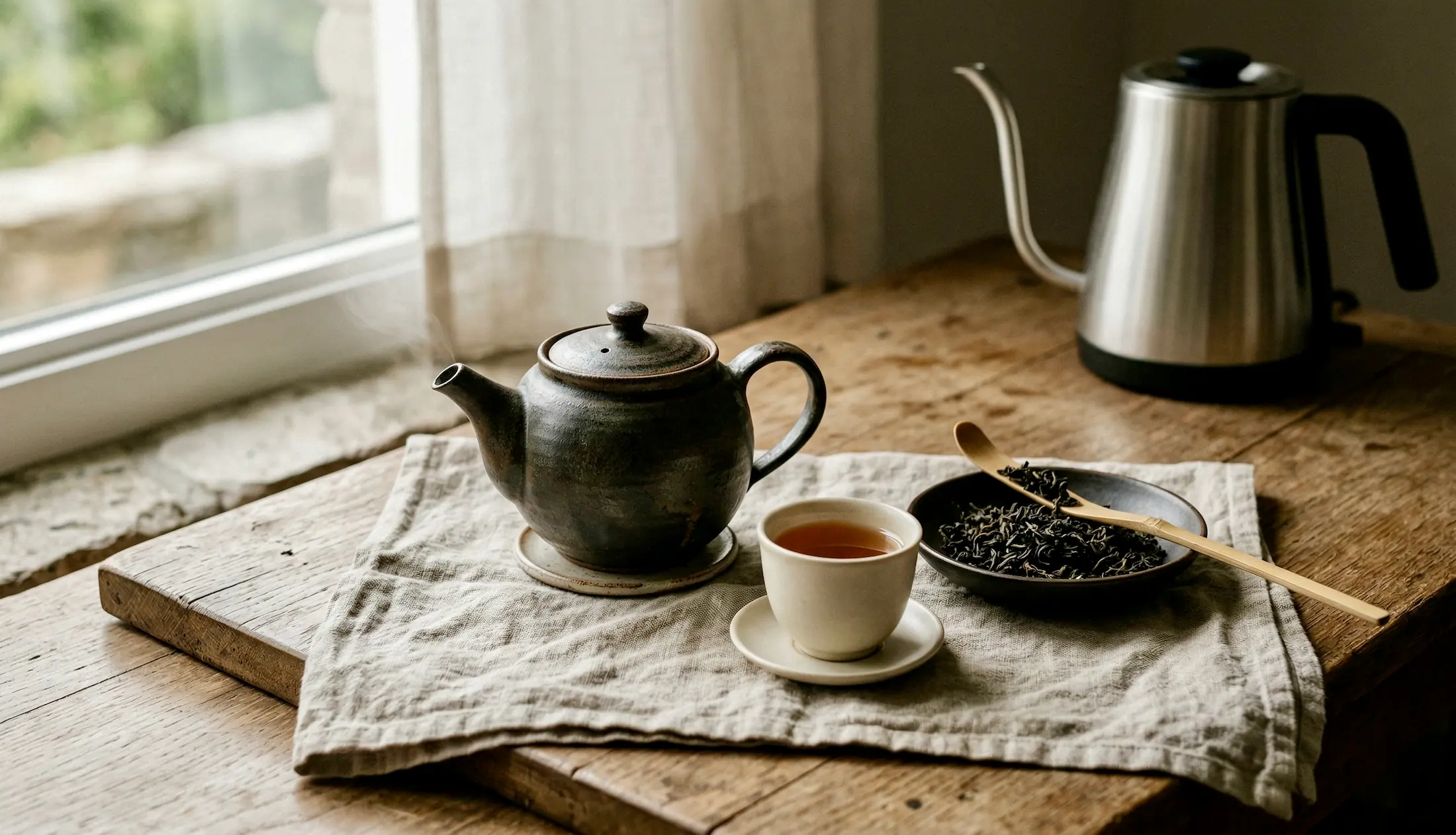
The 4 Pillars of the Perfect Infusion
- 1Water quality
- 2Temperature suited to the leaf style
- 3A measurement proportional to the cup
- 4Steeping time without excess
1. Water: The Invisible Foundation of the Cup
Since the drink is mostly water, everything begins there. When the water has a strong smell, too much chlorine, or a mineral profile that feels too heavy, the tea loses clarity. The aroma feels more closed, the texture may turn dull, and delicate notes disappear before they even have a chance to appear. That is why using fresh and, when needed, filtered water is a small detail with enormous impact.
It is also worth remembering that good water does not serve only to “stay out of the way.” It helps the leaf express itself more clearly. In a well-prepared cup, you notice more distinction between a vegetal green tea and a soft white tea, between a full-bodied black tea and a rounded rooibos. When the foundation is right, the flavor does not have to fight to be heard.
2. Temperature: The Right Heat Reveals, Excess Hides
Not every leaf calls for boiling water. Black teas and more robust infusions usually handle very hot water with ease. Green teas, white teas, and many oolongs, on the other hand, show more delicacy when they meet temperatures below boiling. Excessively hot water can push the cup toward bitterness, harden the palate, and mute finer nuances.
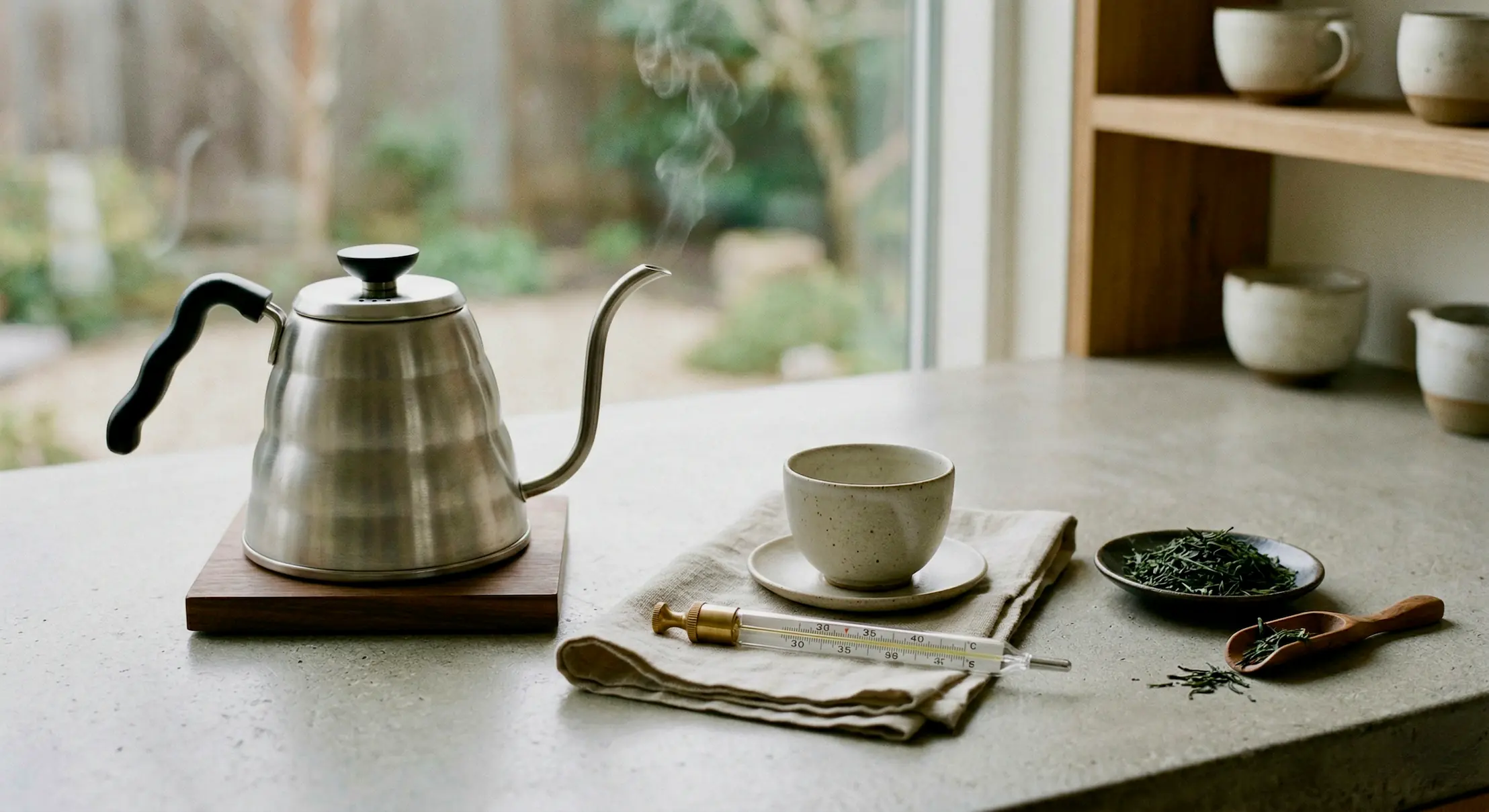
For home brewing, the logic is simple: more delicate leaves ask for gentler heat. If you do not use a thermometer, the kettle can still teach you. After boiling, letting the water rest for a few moments already helps bring it into a better range for sensitive teas, while black teas and botanical infusions generally welcome hotter water without losing structure.
- 1Black teas: generally, 194–208 °F.
- 2Green teas: around 167–185 °F.
- 3White teas: generally, 167–185 °F.
- 4Oolongs: in many cases, 185–203 °F.
- 5Rooibos and herbal or fruit infusions: usually freshly boiled water.
3. Measurement: Intensity Is Not Excess
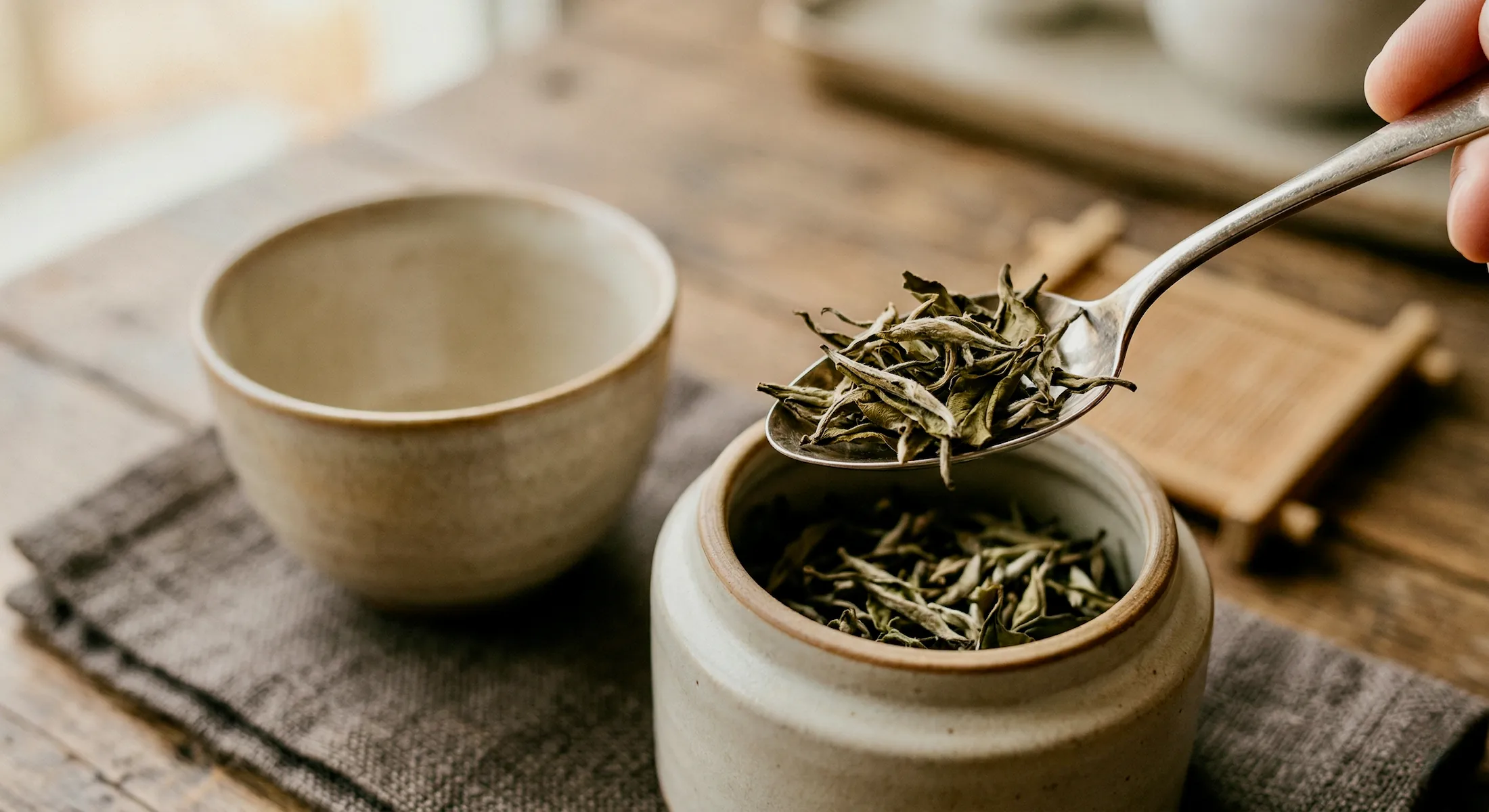
As a starting point, one rounded teaspoon of loose leaves per cup remains a useful and classic reference. But it is only a beginning. Very voluminous leaves take up space without necessarily delivering the same density as a smaller, more compact leaf. Broken leaves or smaller particles, meanwhile, usually extract faster and with greater intensity.
In other words, measuring well is not about following a blind formula, but about respecting the proportion between the leaf, the vessel, and the experience you want to create. When the measurement is right, the drink gains presence without heaviness and intensity without losing definition.
Leaving the leaves in the water longer does not make up for poorly adjusted measurement. An overly long infusion tends to increase bitterness and astringency before it truly improves the cup.
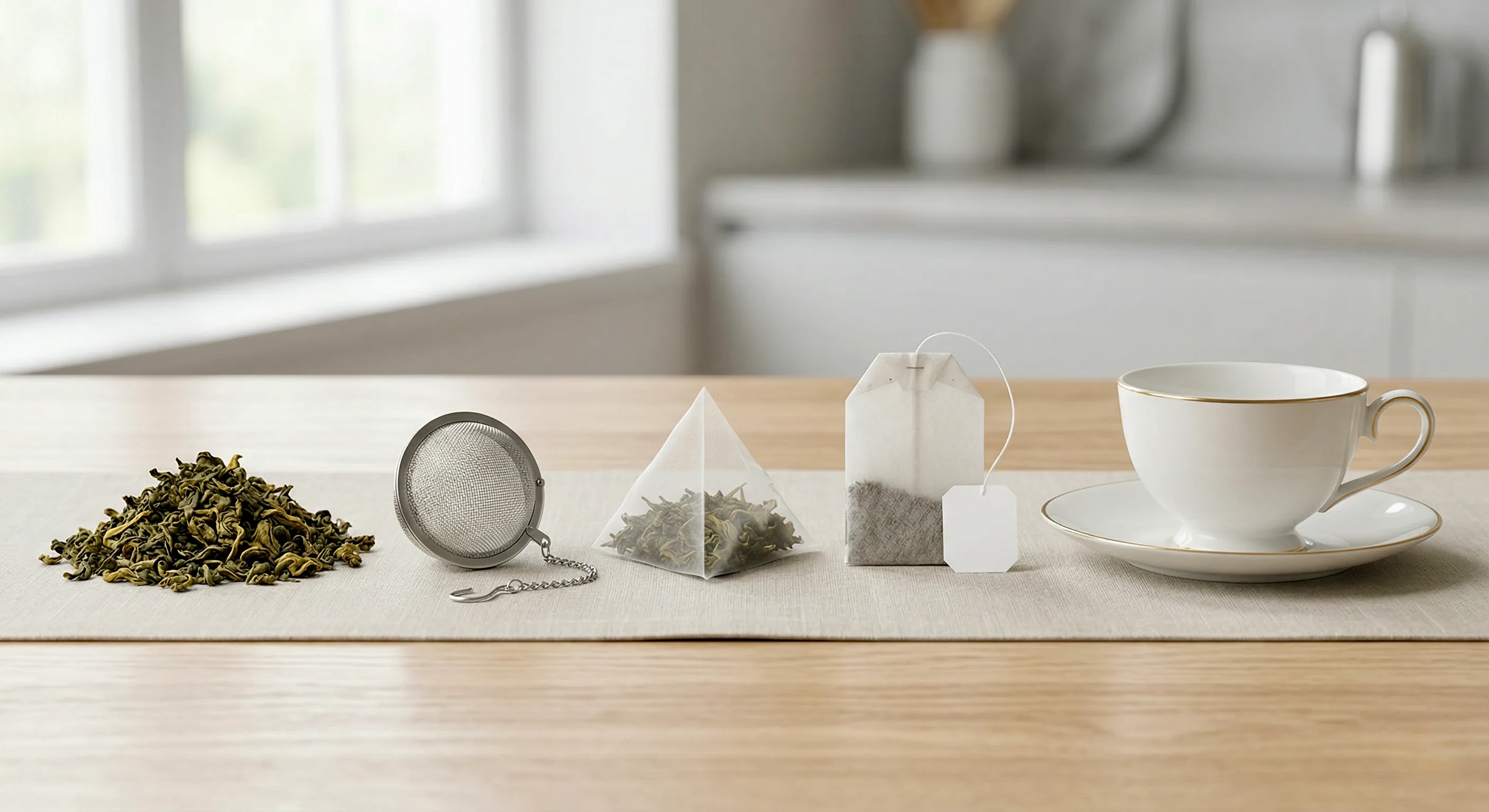
Loose Leaves vs. Tea Bags
This contrast is often treated far too simplistically. The truth is more interesting: there are excellent teas in bags and mediocre loose-leaf teas. What really changes most often is the space the leaf has to expand, the size of the cut, and the speed of extraction.
Larger leaves, when they have freedom to open, usually develop the infusion with more calm and complexity. Smaller particles, common in many tea bags, extract more quickly and can deliver immediate body, though not always with the same aromatic subtlety. Larger tea bags or pyramid-style bags improve water flow and can offer a more generous experience than the traditional format.
That is why the best criterion is not to demonize one format and idealize the other. It is to observe the real quality of the material, the infusion space, and the result in the cup. Convenience and pleasure do not need to be enemies — but indifferent preparation rarely reveals the best of tea.
4. Time: The Point Where the Infusion Is Decided
Time is the pillar least respected by beginners — and often the most decisive. Too little time can leave the drink timid, watery, or incomplete. Too much time tends to pull out compounds that harden the palate and cover what at first seemed promising in the aroma.
This is where technique meets personal taste. Recommended ranges exist to prevent obvious mistakes, but the ideal cup still depends on the leaf style, the cut, the blend, and your own preference. The best preparation is not the most extreme one: it is the one that reaches the point where the drink shows itself fully, before excess takes over.
The Definitive Infusion Guide
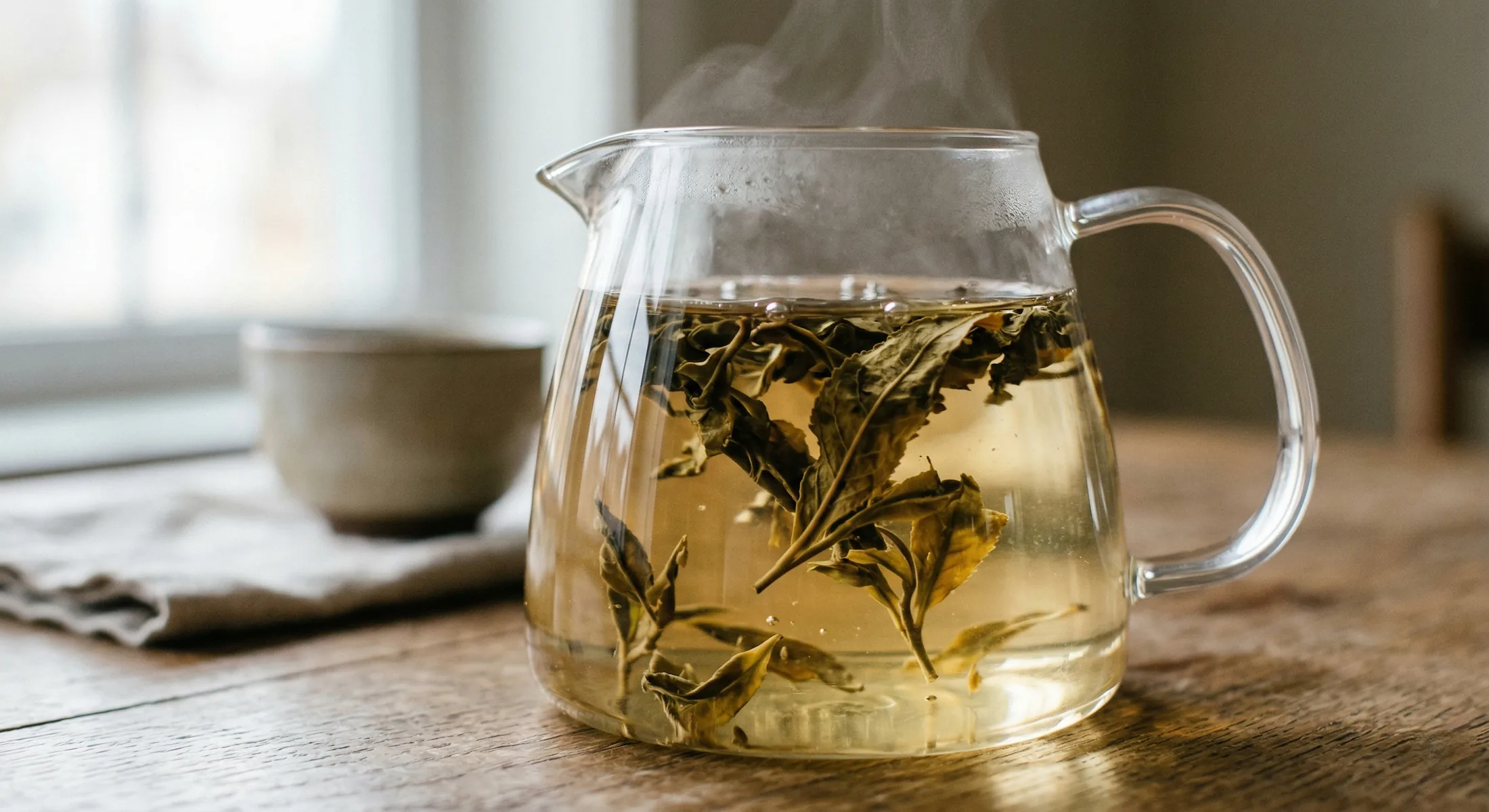
Use this table as a reliable starting point. It helps avoid the most common mistakes and gives you a solid foundation for adjusting the drink to your taste. After that, it is worth observing the producer’s guidance, the size of the leaf, and the sensory response of the cup itself.
| Tea | Temp | Time | Milk |
|---|---|---|---|
| White | 167–185 °F | 2 to 3 min | No milk |
| Green | 167–185 °F | 2 to 3 min | No milk |
| Oolong | 185–203 °F | 3 to 5 min | Usually no milk |
| Black | 194–208 °F | 3 to 5 min | Optional |
| Rooibos | 203–212 °F | 4 to 6 min | Optional |
| Herbal / Fruit | 203–212 °F | 5 to 7 min | No milk |
Milk, Sugar, and Lemon: More Style Than Heresy
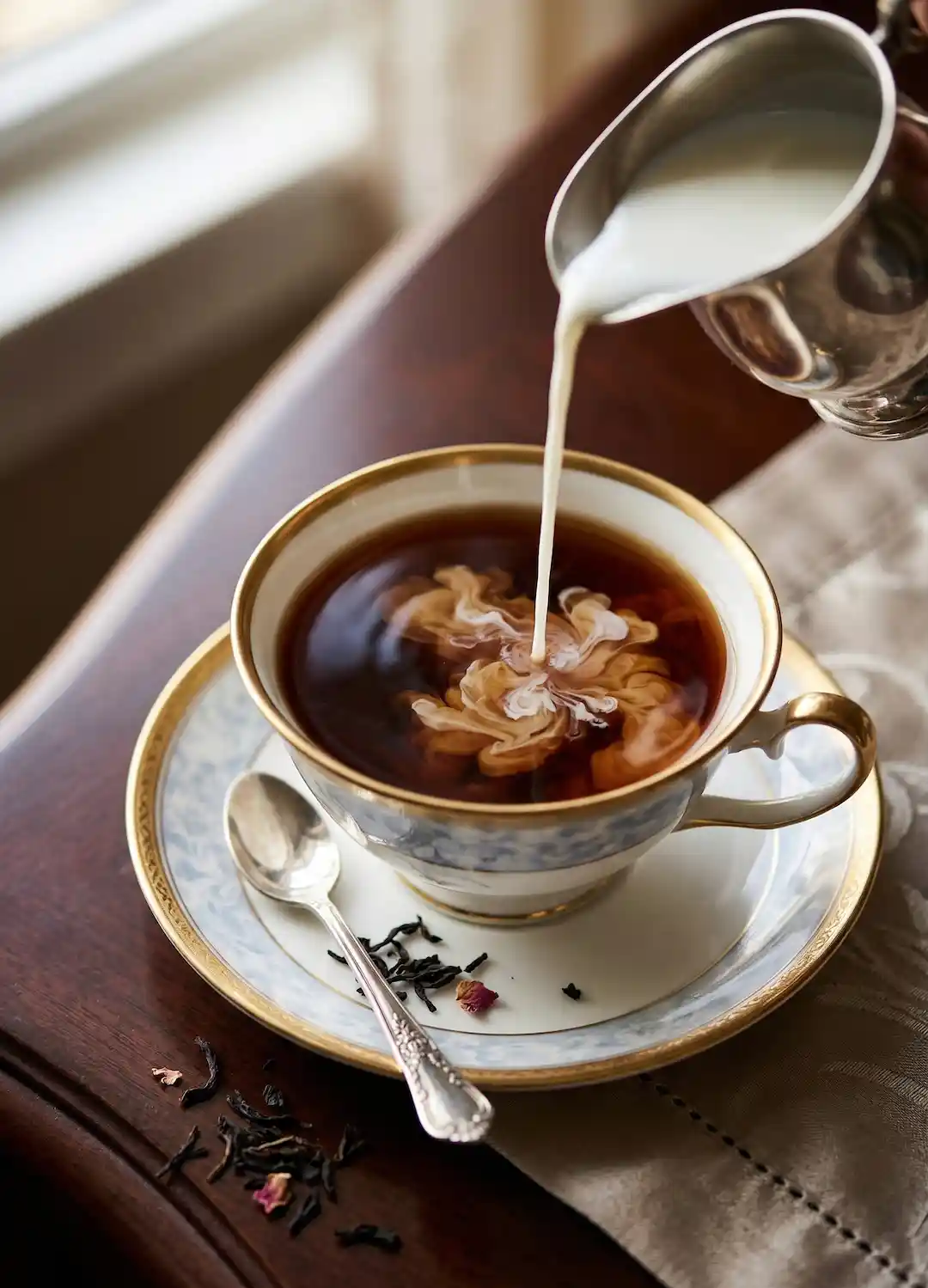
Milk has a real history in British tea culture. In older contexts, adding it first also helped protect more delicate porcelain from thermal shock. In the cup, it works best with full-bodied black teas, breakfast blends, and more malty or spiced profiles.
Sugar and honey change the perception of bitterness and can round out a firmer drink, but they also cover aromatic details in more delicate teas. Lemon, meanwhile, can brighten certain citrusy profiles and lighter black teas, although it often dominates subtler leaves. None of these gestures is forbidden. What exists is sensory consequence.
Once you understand that, preparation stops being a set of rigid rules and becomes a conscious choice. Technique is not rigidity: it is freedom with knowledge.
The best cup is not the strongest or the most elaborate — it is the one that finds, with precision, the exact point between water, leaf, heat, and time.
Mastering the art of preparation does not mean turning tea into an unreachable ceremony. It means realizing that an ordinary pause can gain depth when made with attention. That is how the cup changes scale: it stops being just a beverage and begins to carry presence, care, and memory. At Nature Chá, that is where the ritual begins.