Hosting with tea is a quiet way of saying: stay, slow down, this home has time for you. Perhaps that is why tea moves through so many cultures as a language of welcome. Unlike hurried or purely functional service, it creates a small architecture of presence: hot water, chosen teaware, hands that serve, conversation that finds its rhythm. Hosting well with tea is not about impressing. It is about making someone feel expected.
Golden rule: hospitality with tea does not depend on abundance, but on intention. A simple table, thoughtfully arranged, often welcomes more deeply than an excessive and impersonal composition.
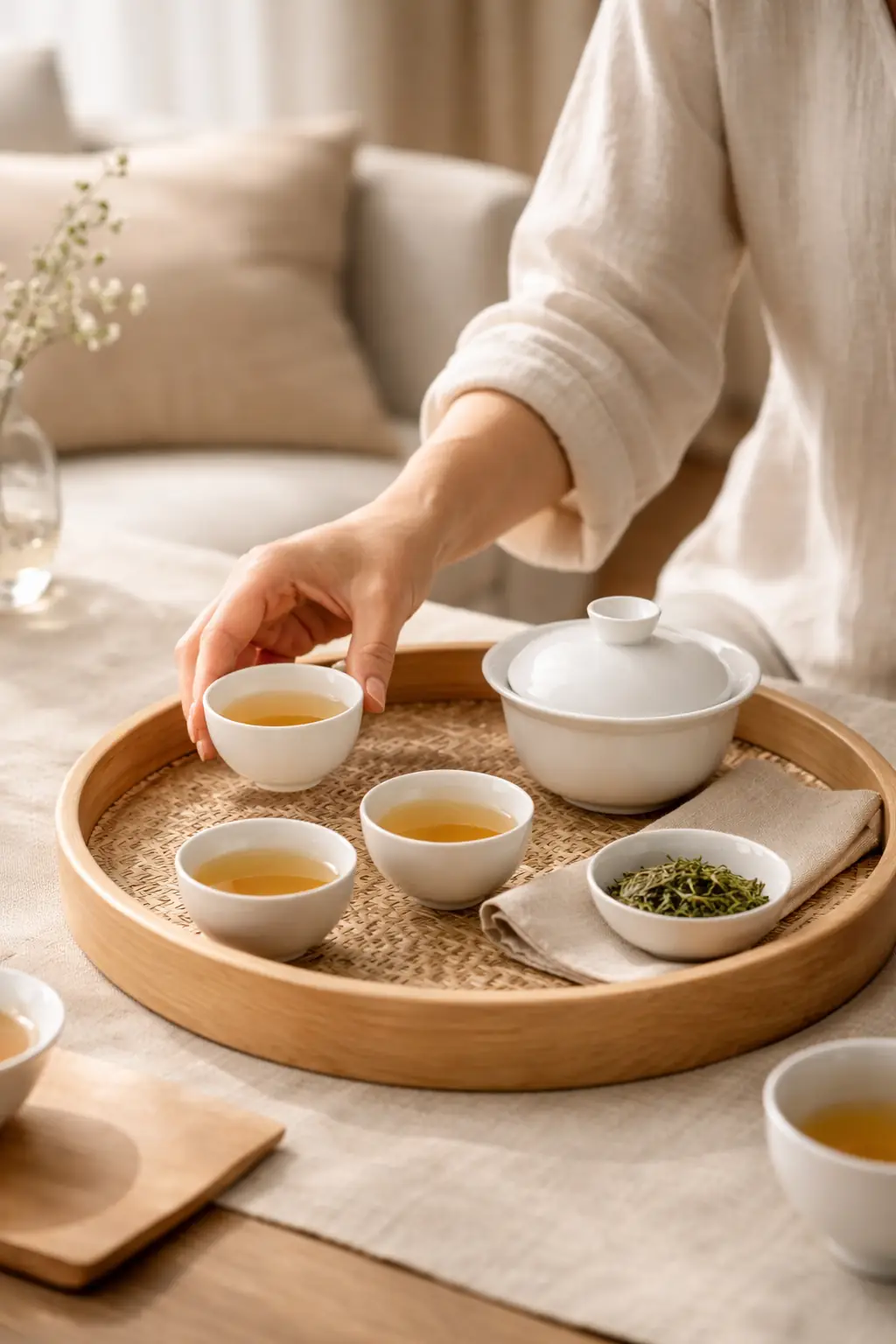
Why Tea Welcomes So Well
Tea has a rare quality: it slows things down without interrupting them. It welcomes without demanding the solemnity of a formal dinner or the scattered informality of a gathering that feels too improvised. In different traditions, from the UNESCO-recognized culture of çay to the sensitivity of Japanese chanoyu, tea is associated with social bonds, respect, attentiveness to others, and a sense of staying. There is something in tea that gives structure to togetherness with gentleness.
That explains why it works so well for visits, long conversations, reunions, delicate requests, quiet reconciliations, or unhurried afternoons. Tea gives the encounter a frame. And when the frame is good, people relax داخل it.
The Emotional Temperature of the Home
Before the teapot, there is atmosphere. Hosting with tea begins with the mood of the home: soft light, a table without excess, places where people can sit without rigid formality, and an overall sense of calm. The aim is not to stage hospitality, but to remove friction. A home that hosts well with tea feels breathable.
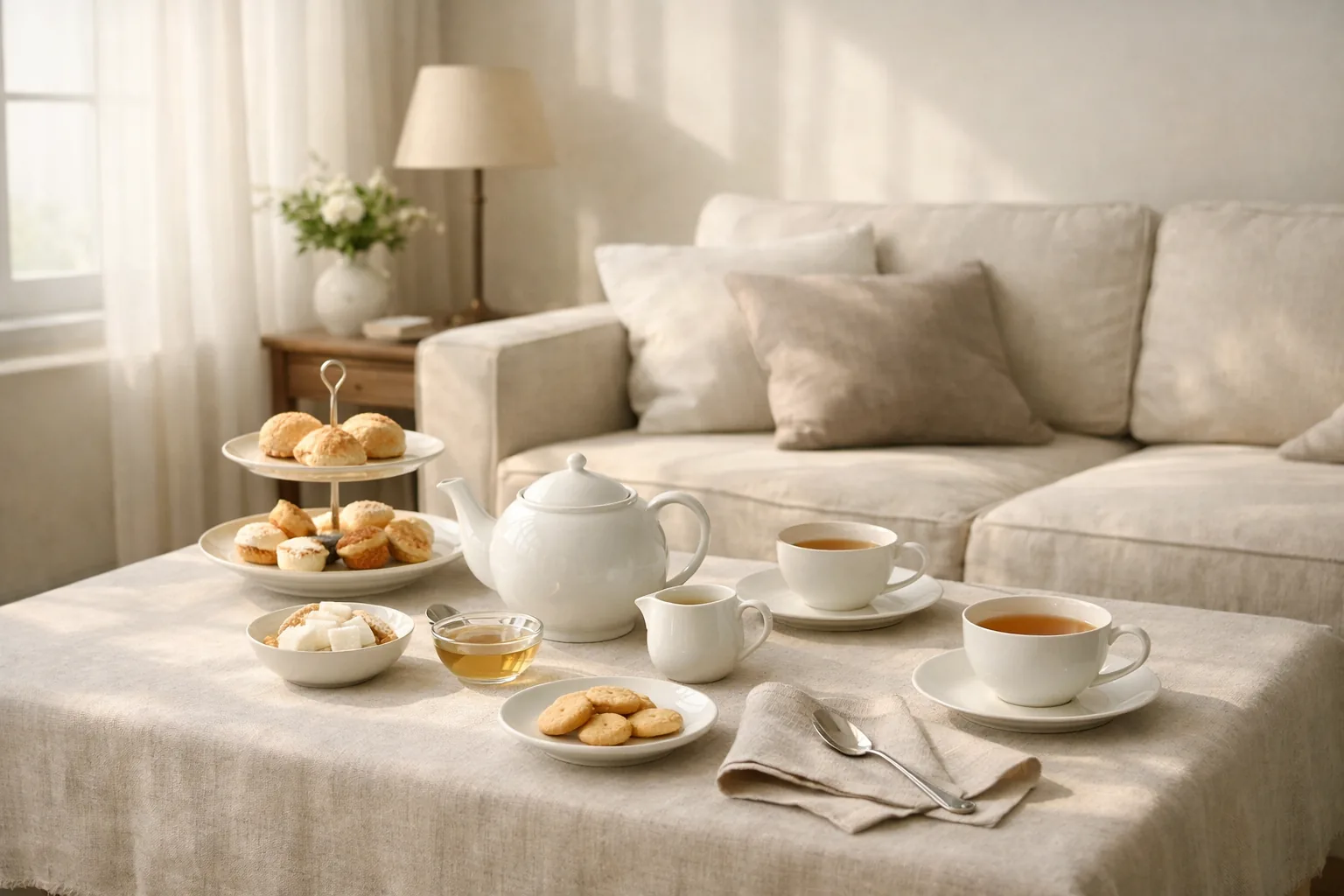
That also means accepting that not every reception needs to look formal. There is a particular elegance in a well-arranged low table, in a tray with a few beautiful pieces, in cloth napkins, in a discreet flower, in a kettle ready at just the right moment. Hosting with tea is about editing away excess until only the essential remains — and the essential here is comfort with beauty.
How to Set a Refined Service
A good tea service does not need to be complicated. It needs to be coherent. Instead of multiplying options and objects, the ideal is to build a simple and beautiful sequence in which the host can serve calmly and remain present in the conversation.
- 1Choose one main tea that matches the time of day and the tone of the gathering.
- 2Offer no more than a second option so the service does not become scattered.
- 3Have water, kettle, cups, strainer, or infuser ready before guests arrive.
- 4Prefer a single tray or arrangement that allows you to serve without constantly getting up.
- 5Serve light, easy-to-handle accompaniments that do not require complex cutting or last-minute assembly.
- 6Think about rhythm: the best service is the one that does not steal the host’s presence.
What to Serve Alongside Tea
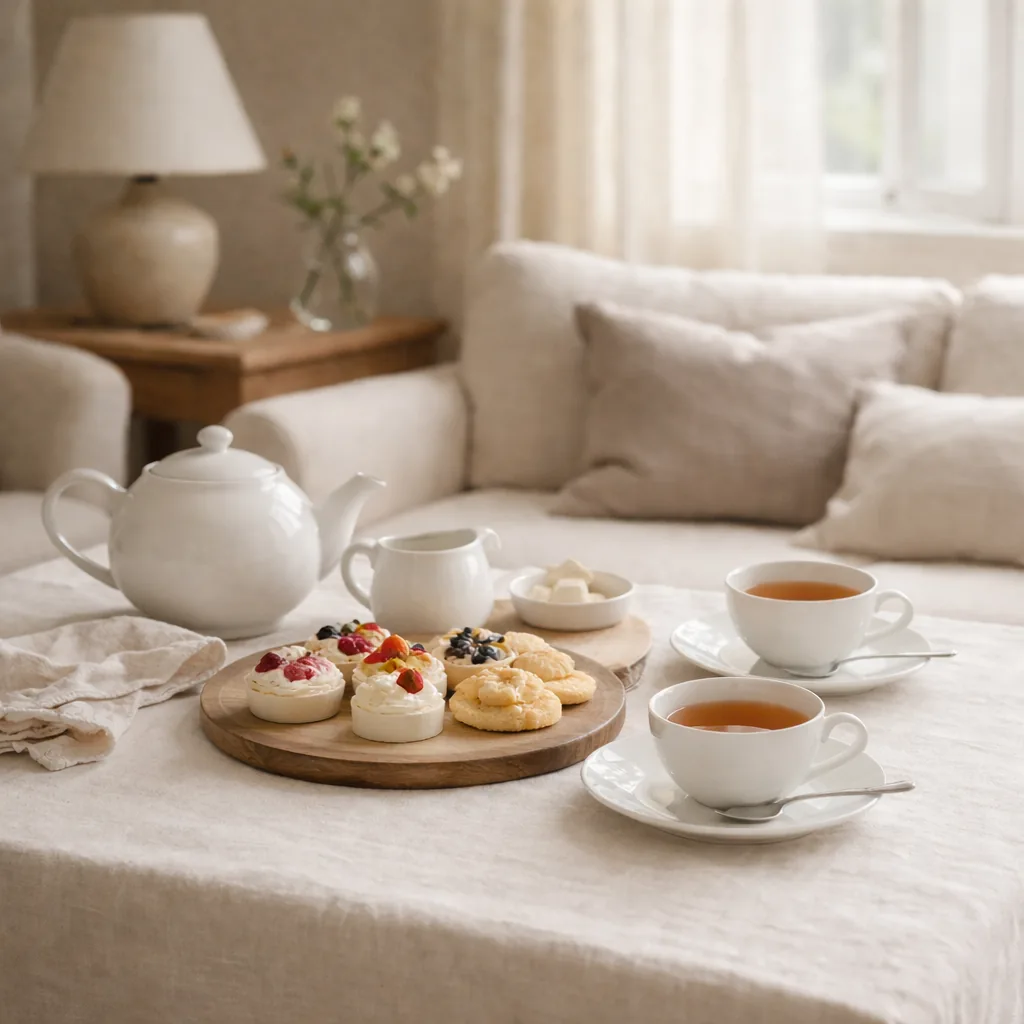
Accompaniments work best when they feel like an extension of the act of serving, not a competition with it. Tea calls for light food, small bites, easy sharing, and visual clarity. Delicate breads, simple cakes, good biscuits, restrained fruit, scones, fine sandwiches, or small tarts tend to feel more elegant than overly sweet or heavy spreads.
Here, less is almost always more. Good hospitality with tea does not try to prove abundance; it tries to create flow. Ideally, the guest can talk, taste, look at the table, and return to the cup without effort.
Soft Etiquette
Hosting well with tea calls for etiquette, but a soft one — almost invisible. It appears in small gestures: serving the guest before oneself, not letting the kettle cool unnoticed, noticing whether someone prefers sugar, not insisting on unnecessary formalities, offering a second cup naturally, and knowing how to end without abruptness. The best table manners are the ones that hardly call attention to themselves.
The most common mistake when hosting with tea is confusing refinement with rigidity. Tea welcomes best when the gathering feels alive, not staged.
Hosting with Tea Today
The most beautiful thing about this ritual is that it fits perfectly into contemporary life. There is no need for antique silver, rare porcelain, or an inherited table tradition. A good kettle, a well-chosen tea, cups pleasant to hold, a small gesture of care, and real time to listen are already enough to transform an encounter.
Hosting with tea is offering more than a drink: it is offering a rhythm in which the other person’s presence matters.
At Nature Chá, we believe the most sophisticated hospitality is not the kind that impresses, but the kind that lets someone leave your home feeling truly welcomed. And few things do that with as much delicacy as a good tea table.