There are days when tea enters not as a habit, but as a companion. Its meaning changes with the light, the mood, the quiet of the house, and the kind of attention the moment asks for. A morning tea does not speak the same way as a late-afternoon tea. A sip between tasks does not offer the same thing as an infusion served when the evening has already begun to slow the body down. Perhaps one of the most beautiful ways to live with tea is precisely this: letting it follow the rhythm of the day without trying to make everything uniform.
Golden rule: not every tea belongs to the same moment. True teas usually contain caffeine in varying degrees, while many herbal infusions without Camellia sinensis usually do not. The best tea for each hour is the one that respects both the mood of the day and your own sensitivity.
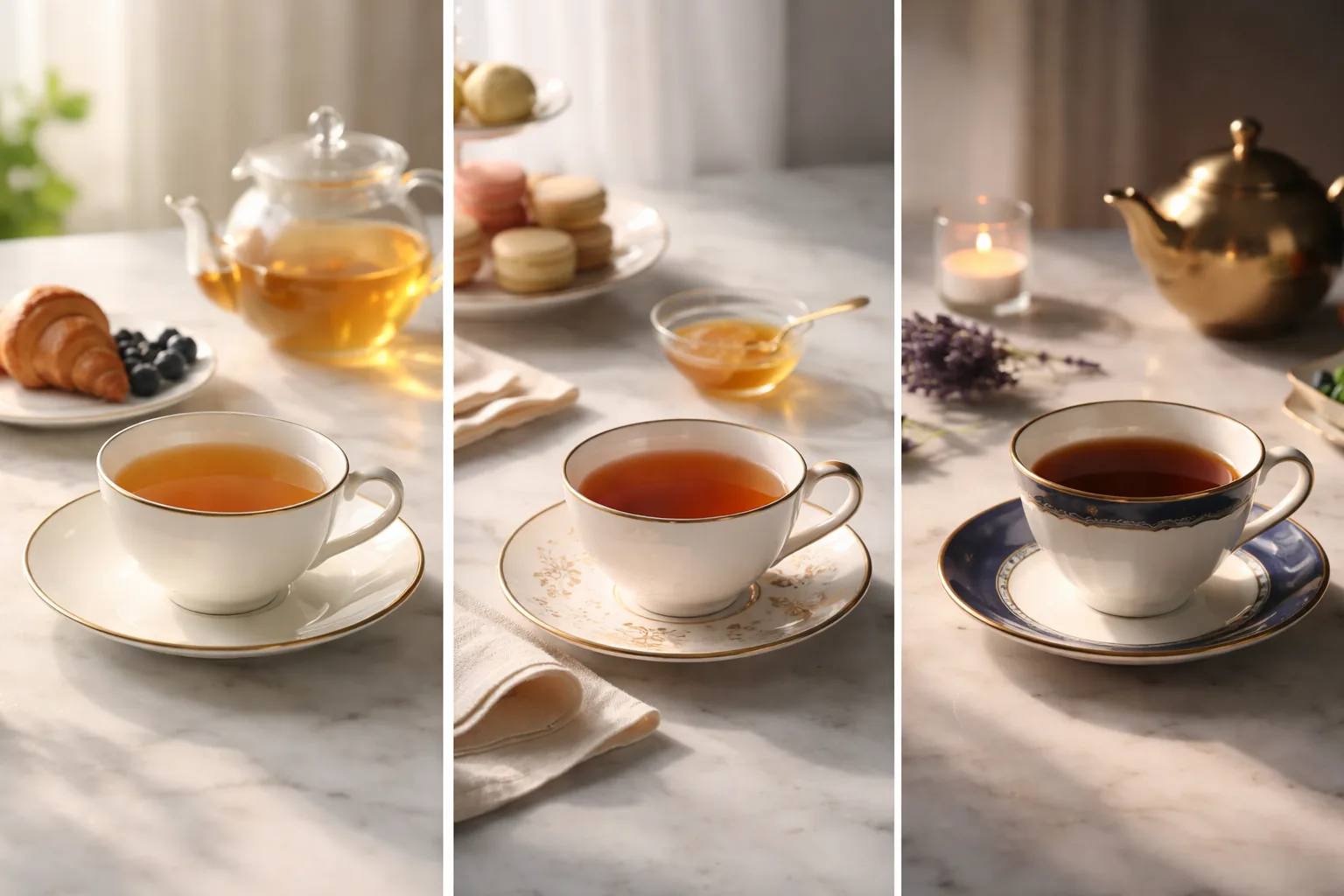
Morning: When the Cup Needs Structure
The beginning of the day usually calls for teas with more presence. Here, firmer black teas, breakfast blends, Assam, English Breakfast, some Ceylons, and even matcha work very well for those who prefer a more direct, vegetal opening. Ideally, the drink should have enough structure to begin the rhythm of the day without seeming too pale against breakfast, haste, or the need for early focus.
But structure does not mean aggressiveness. There are mornings that welcome vigor, and mornings that ask for clarity. For some people, a malty black tea fulfills that role; for others, a brighter green tea or a carefully prepared matcha is already enough. The best morning tea is the one that awakens without feeling like excess.
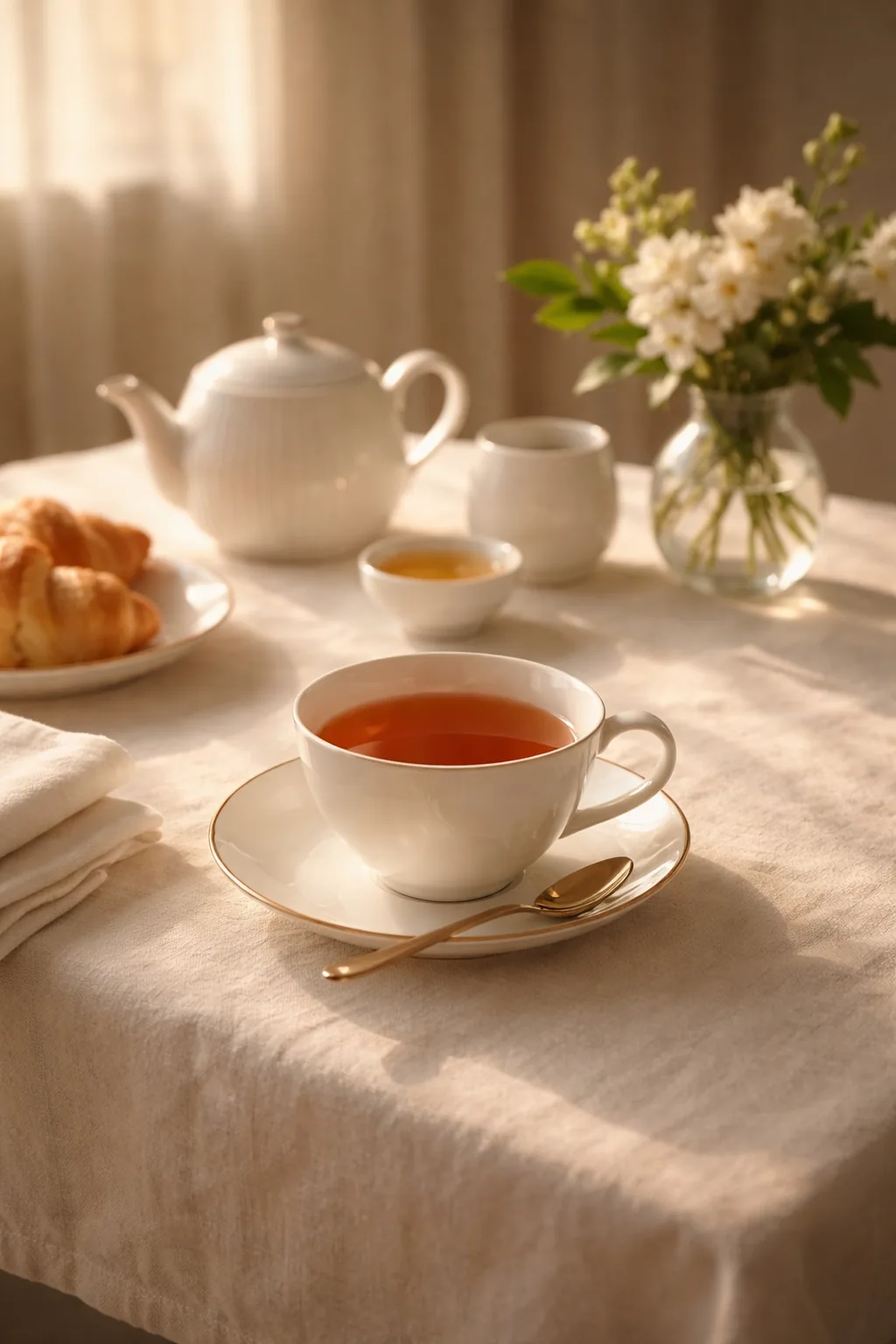
Midday: Clarity Without Weight
Once the morning has already unfolded and the body still needs to stay alert, tea can shift its register. Cleaner green teas, light oolongs, and brighter infusions work beautifully here because they sustain the rhythm without taking over the palate. This is the hour for more transparent cups, the kind that accompany work, reading, movement, or a short pause without asking for ceremony.
- 1Light black teas or bright green teas for those who want to keep the axis of the day without overdoing it.
- 2Delicate oolongs for those seeking a transition between freshness and texture.
- 3Less dense cups for hours when the drink needs to accompany rather than dominate.
- 4Cleaner, less sweetened preparations so the middle of the day does not feel weighed down.
Afternoon: Tea at Its Most Beautiful Hour
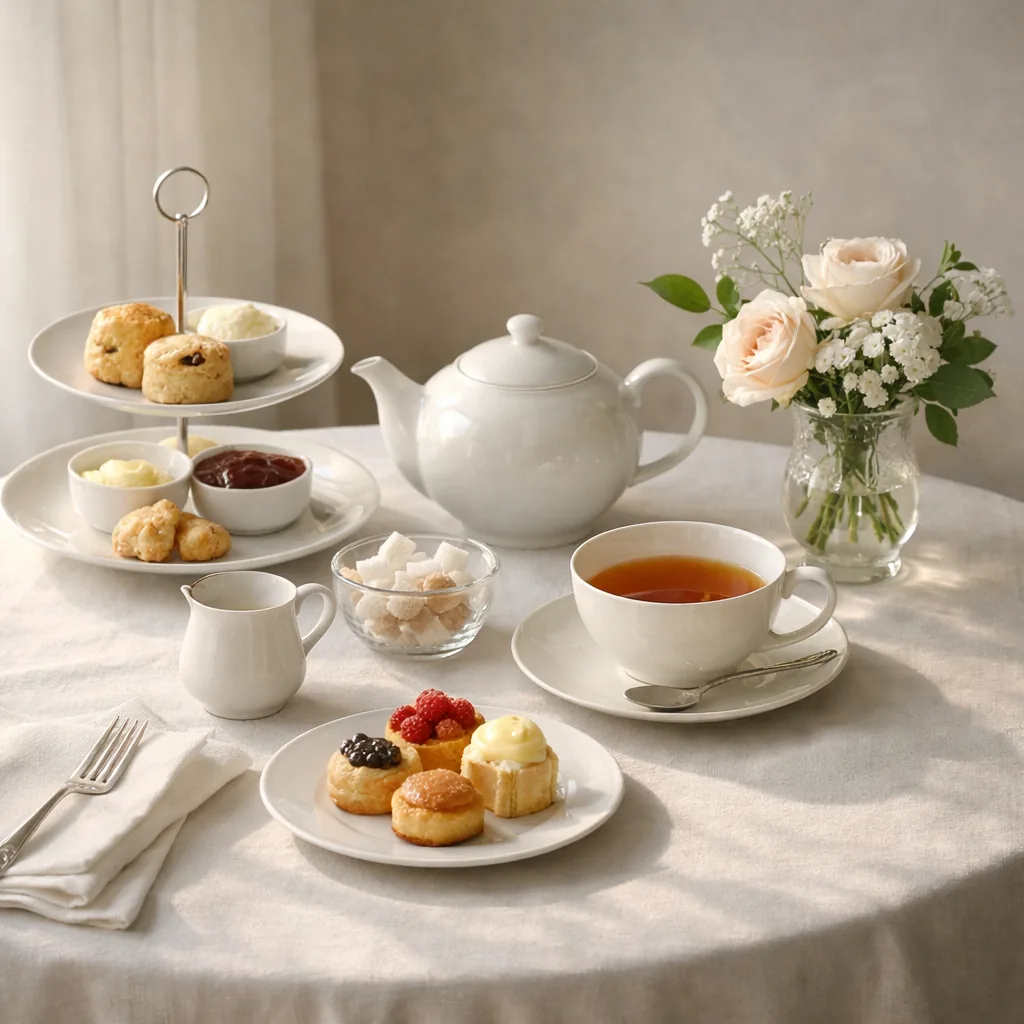
Perhaps no hour suits tea as naturally as the afternoon. This is when the drink stops being merely functional and becomes atmosphere again. Perfumed teas, citrus blends, lighter Darjeelings, floral oolongs, and small tables with something delicate to accompany them create a pause that reorganizes the day without interrupting it completely.
Afternoon welcomes the beauty of service more easily. It is the moment when teaware matters more, the side light feels softer, and a light accompaniment is enough to make the experience feel whole. Afternoon tea does not serve only the body; it gives shape back to time.
Evening: When the Cup Needs to Calm the House
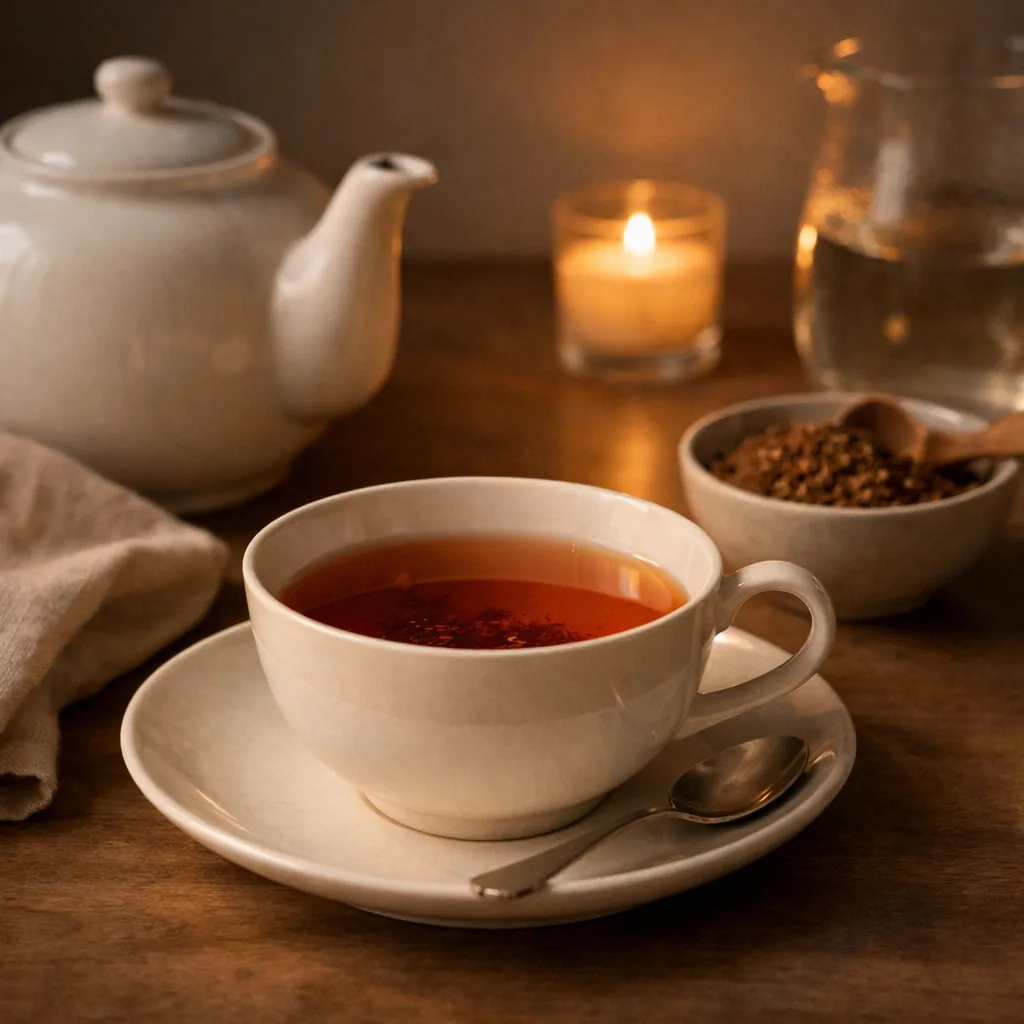
At night, tea changes its role once again. For many people, this is the moment to reduce or avoid caffeine, choosing rooibos, chamomile, mint, lemon balm, or other herbal infusions without Camellia sinensis. Here, the goal is not to energize the house, but to help it lower its tone. The drink becomes less impulse and more comfort.
That does not need to mean a dull cup. On the contrary: evening welcomes aromatic, warm, rounded, almost tactile drinks. What changes is not the beauty of the ritual, but its emotional temperature. Evening tea is a way of telling the body that the day can now begin to move away.
Caffeine sensitivity varies greatly. For some people, a black tea at night is irrelevant; for others, it clearly affects sleep. The best guide is still paying attention to your own body.
Between Hours, There Is Your Own Rhythm
No map of tea across the day should be too rigid. Some begin the morning with matcha, others open it with a delicate white tea. Some can only truly stop at night. Some turn the middle of the afternoon into ritual, while others live tea in small cups scattered throughout the day. This article does not exist to fix absolute schedules, but to offer a vocabulary of choice.
Choosing the right tea for the right hour is less a technique than a way of listening to the rhythm of your own day.
At Nature Chá, we like to think that each moment asks not only for a drink, but for a mood. And when the cup finds that mood, tea stops being repetition: it becomes real companionship.