Learning the families of tea is like receiving the key to a living library. Suddenly, the cup stops being simply pleasant or strange and begins to make sense. What once seemed like a scattered universe starts to organize itself into language: greener or darker leaves, more floral or more roasted infusions, lighter, drier, rounder, deeper drinks. And in the end, all of it still comes from the same plant.
Golden rule: true tea comes from Camellia sinensis. Chamomile, hibiscus, mint, rooibos, and many other infusions can be wonderful, but they belong to the world of tisanes, not to the classical families of tea.
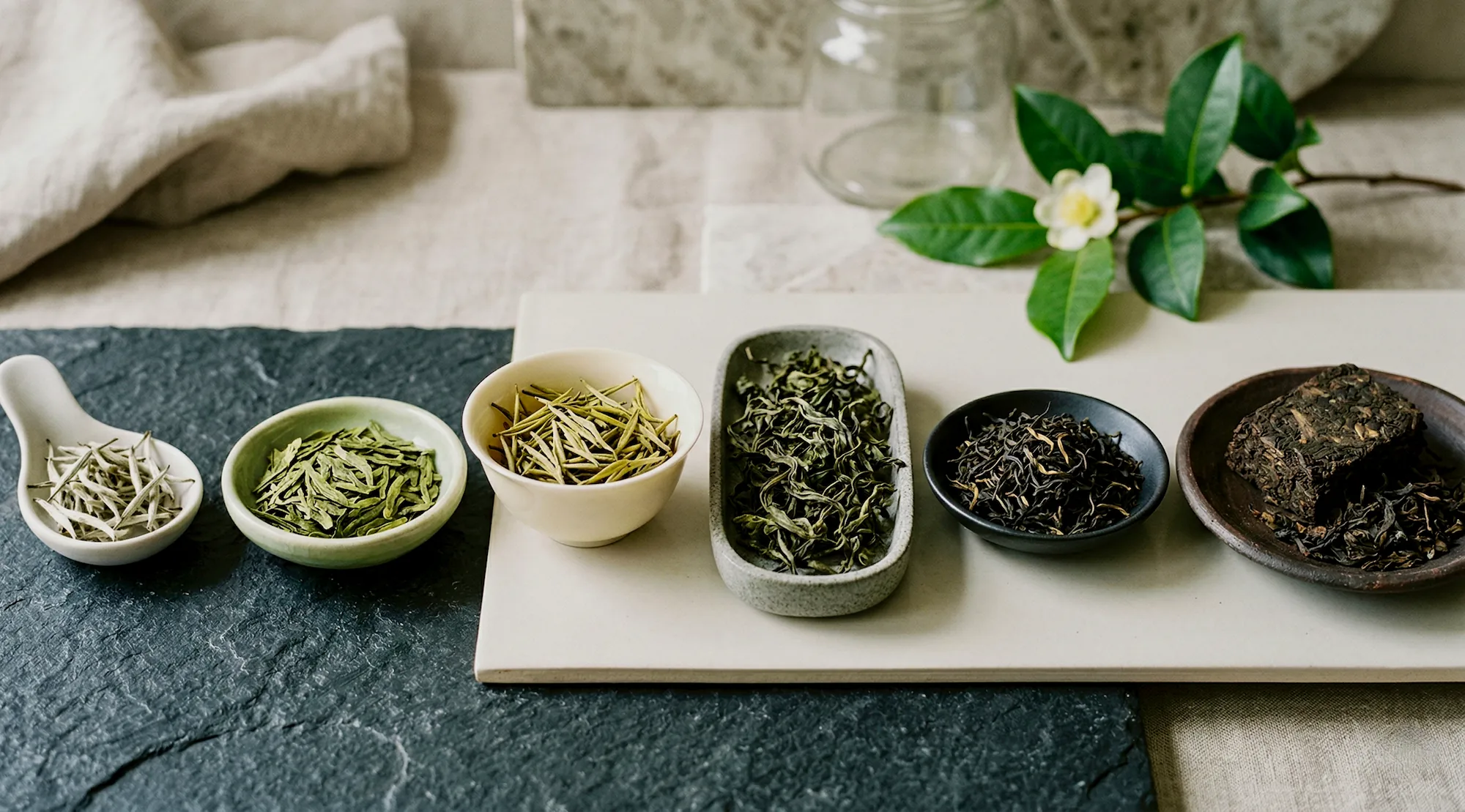
The Same Plant, Many Destinations
All true tea begins with Camellia sinensis, but there is no single way to organize its styles. Depending on tradition and context, classification may be simpler or more detailed. In many contemporary tea maps, especially in the Chinese tradition, people speak of six major families: white, green, yellow, oolong, black, and dark tea. The most important point, however, is this: the difference between them is born from processing.
Oxidation matters a great deal, but it does not explain everything on its own. A tea family also depends on stages such as withering, fixation, shaping, drying, and in some cases aging or microbial fermentation. That is what allows the same leaf to travel from an almost ethereal profile to one that is deep, earthy, or roasted.
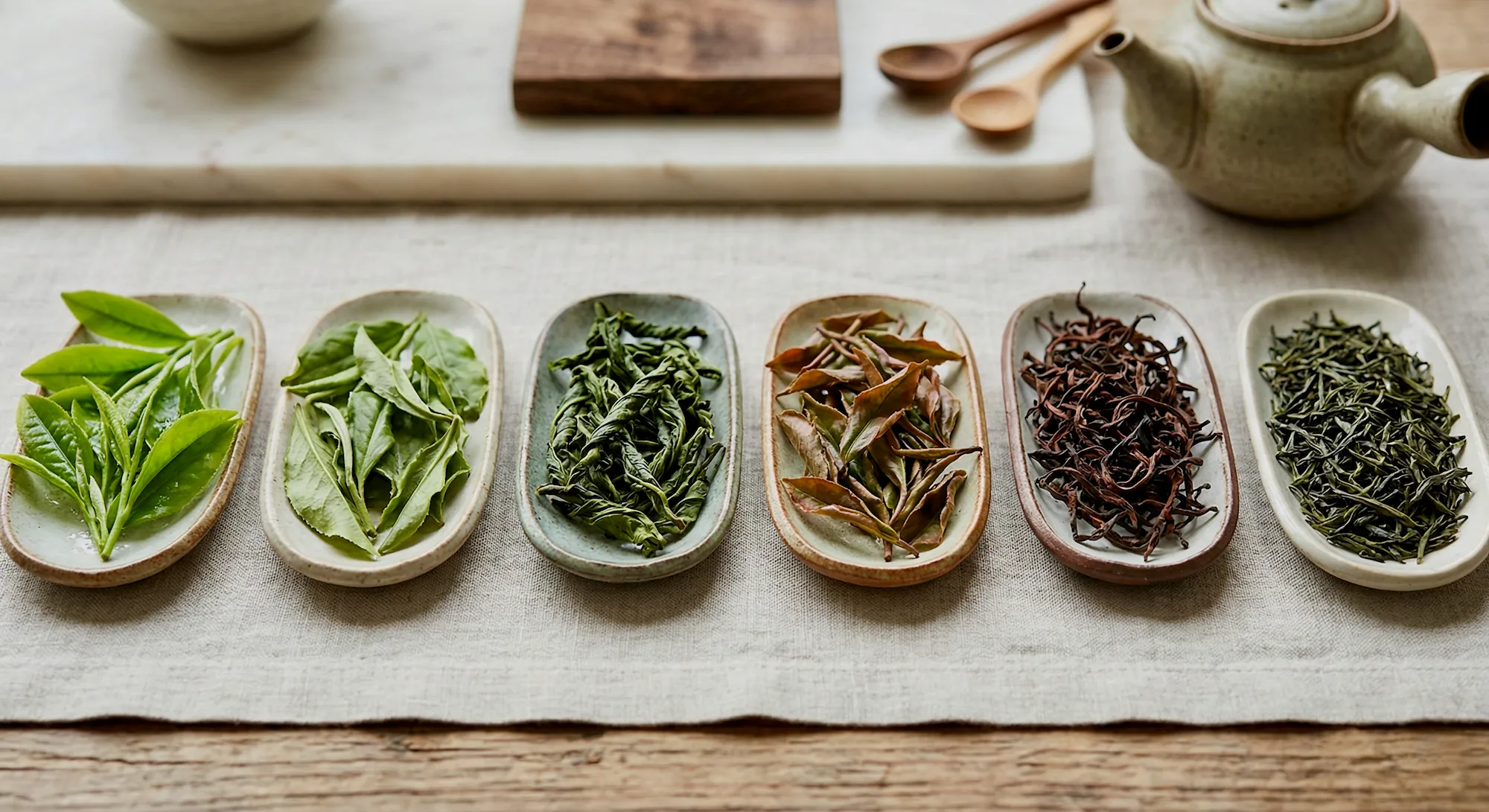
The Great Families of True Tea
Rather than memorizing names as closed labels, it is worth understanding each family as a sensory direction. Some are more direct and transparent; others live precisely through transition, ambiguity, and time.
- 1White: minimally processed, delicate, often floral, and subtly sweet.
- 2Green: unoxidized or barely oxidized, with a profile that can range from vegetal to nutty, depending on style.
- 3Yellow: rare, close to green tea, but with additional processing that softens vegetal rusticity.
- 4Oolong: partially oxidized, broad and mutable, capable of being floral, creamy, mineral, roasted, or fruity.
- 5Black: more oxidized, generally fuller-bodied, with notes that may recall malt, dried fruit, honey, or wood.
- 6Dark tea / Hei Cha: a category of dark teas in which post-processing and, in some cases, microbial action play an important role in the final identity.
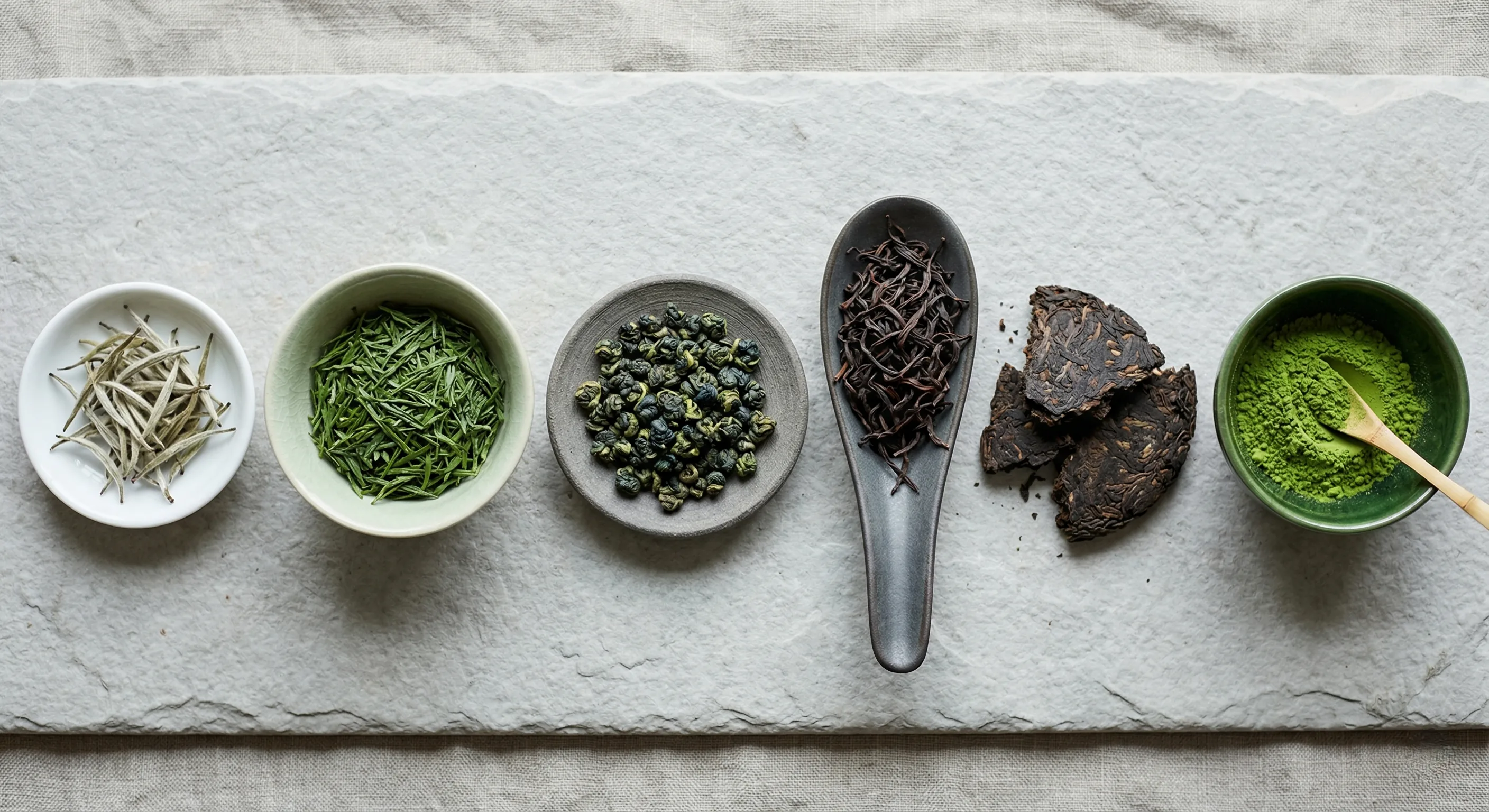
Pu’erh: It Is Not Just ‘Strong and Earthy Tea’
Pu’erh deserves special care because it is often surrounded by myths. It belongs to the world of dark teas and is traditionally associated with Yunnan. Its identity does not come from simple oxidation, but from a path in which sun drying, compression, aging, and, in certain styles, microbial fermentation come into play. That is why speaking about Pu’erh is less about raw intensity and more about transformation over time.
It is also worth avoiding overly romantic or generic images of aging. Not every Pu’erh is automatically nobler just because it is old, and its value depends on raw material, processing, storage, and sensory integrity. The true fascination lies in the way the tea changes, matures, and develops new layers.
Origin Teas, Style Teas
After understanding the families, another layer appears: origin. Assam, Darjeeling, Uji, Wuyi, Yunnan, or Nilgiri are not just beautiful names — they carry climate, altitude, cultivar, tradition, and sensory expectation. Within the same family, origin completely shifts the cup. An Assam black tea does not speak in the same way as a Darjeeling; a high-mountain oolong does not breathe like a more roasted rock oolong.
Orange Pekoe: The Most Persistent Myth
Few expressions create as much confusion as Orange Pekoe. There is no orange in the blend, and the term does not describe a specific flavor. It belongs to the grading vocabulary of black tea and relates to the style and size of the processed leaf, not to a citrus-based recipe.
Demystifying Orange Pekoe: seeing OP on the package does not automatically mean you are looking at the best tea on the shelf. It is a grading term, useful in a technical context, but insufficient to summarize real quality, origin, or complexity.
Blends, Flavored Teas, and Tisanes
When tea no longer appears alone and enters into composition, the map opens even further. There are single-origin teas, blends of different lots and regions, and teas flavored with flowers, fruits, oils, or spices. Earl Grey, for example, is a tea flavored with bergamot; English Breakfast is a blend; traditional jasmine tea usually comes from the contact between tea and fragrant flowers; matcha, meanwhile, is not a separate family, but a specific form of powdered green tea.
Alongside that, there is the large and beautiful territory of tisanes. Rooibos, mate, hibiscus, chamomile, mint, lavender, and many other infusions do not belong to Camellia sinensis, but they have a life of their own, a language of their own, and a legitimate place in the routine of anyone who loves hot, aromatic, ritualized drinks.
- 1Blends: mixtures of teas from different origins, lots, or profiles to build balance and consistency.
- 2Flavored teas: teas that receive added aroma or flavor, such as bergamot, jasmine, or spices.
- 3Matcha: powdered green tea, not an autonomous family.
- 4Tisanes: plant infusions outside Camellia sinensis, such as rooibos, hibiscus, chamomile, mint, and mate.
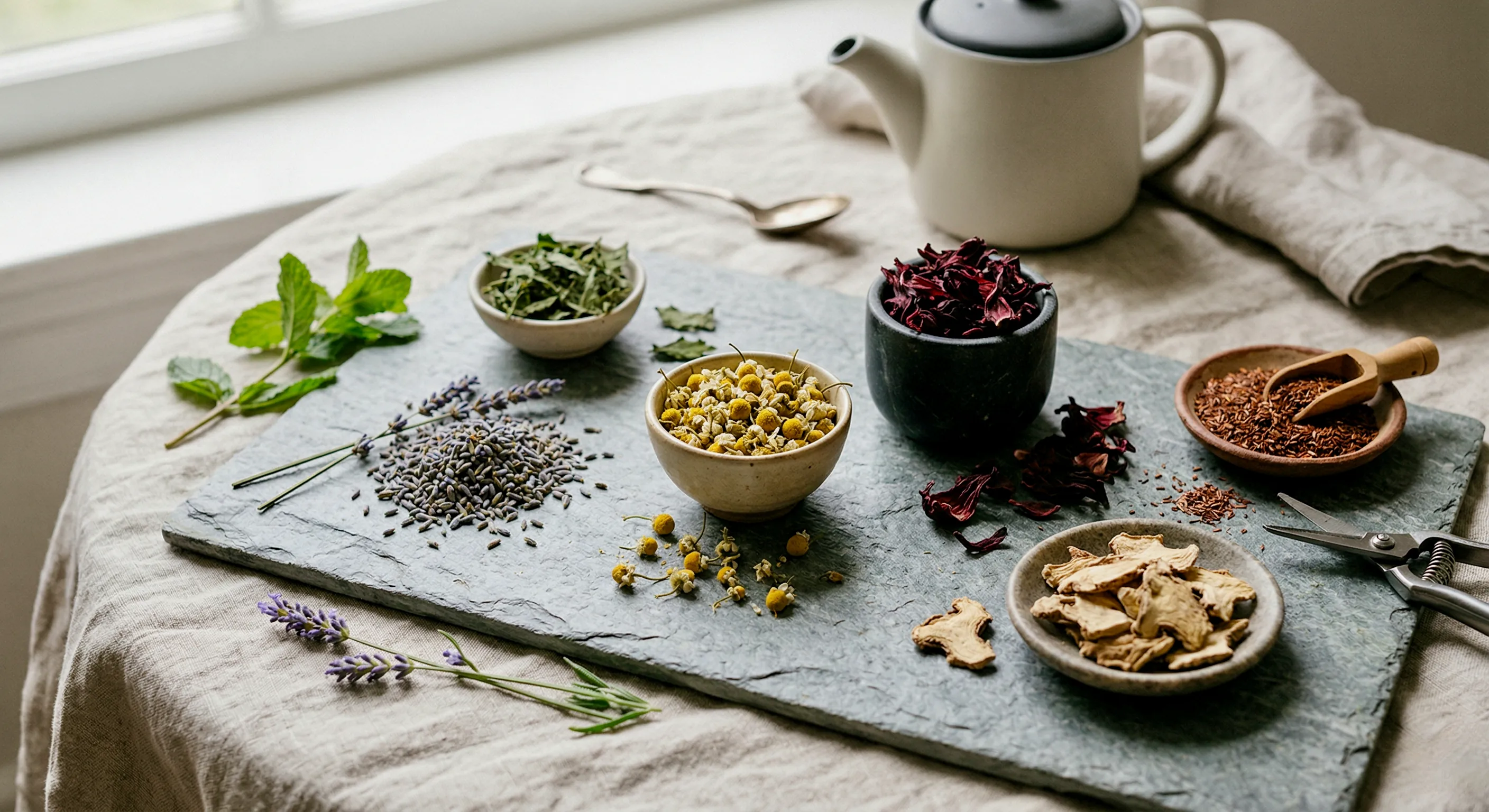
In the end, learning the families of tea is not about memorizing a hierarchy. It is about learning to recognize language. The more you understand what came from the plant, what came from processing, and what came from origin, the more the cup opens. And once it opens, taste stops being just preference: it becomes reading, memory, and discovery.