For a long time, tea was treated at the table as a parallel gesture: comforting, beautiful, discreet. But when viewed through a gastronomic lens, it reveals another calling. Tea can cleanse the palate without aggression, accompany delicate textures, support more toasted dishes, converse with desserts in a sophisticated way, and even offer a more precise pairing experience in contexts where wine would feel too heavy. Instead of playing a supporting role, it begins to act as a culinary language.
Golden rule of pairing: think about intensity, texture, and aromatic family. The best match is the one in which tea and food enhance one another, without competing and without erasing each other.
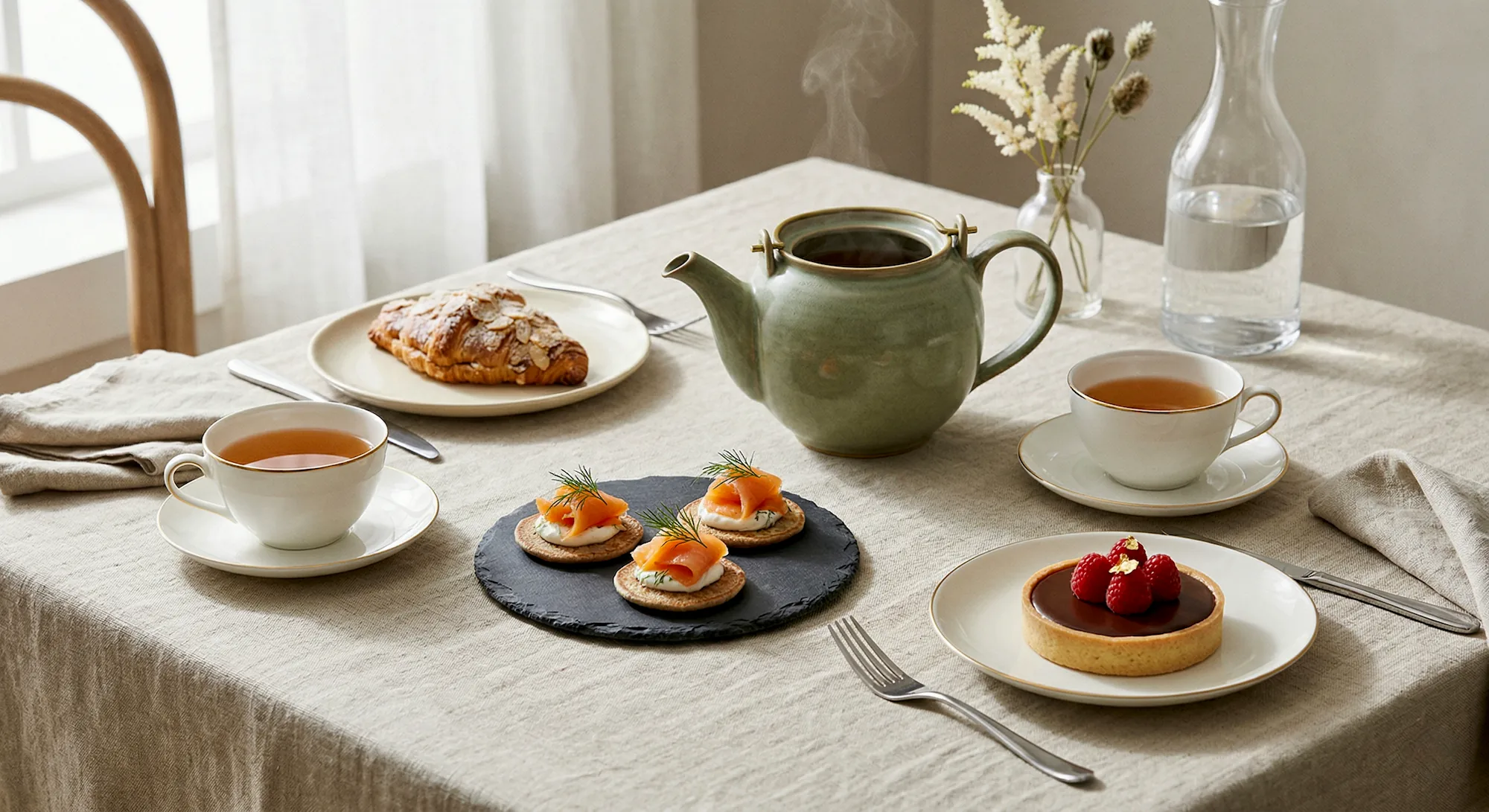
Tea at the Table: A More Subtle Form of Fine Dining
Pairing with tea requires a different line of thought than pairing with wine, but it is no less sophisticated. Tea works with delicate bitterness, astringency, perfume, texture, and temperature in a very particular way. In some cases, it works through similarity — bringing together floral, toasted, citrus, or malty notes. In others, it works through contrast — offering freshness, gentle dryness, or clarity to balance fat, sugar, or density.
That is why tea has found a growing place in tasting menus and non-alcoholic pairings. When chosen well, it accompanies a meal with elegance, without saturating the palate and without interrupting the delicacy of the dish. The result is not an imitation of wine, but another form of sophistication at the table.
How to Think About a Pairing
Before combining, think of the dish in layers. Is it more buttery or fresher? More citrusy, toasted, vegetal, spiced, creamy, or smoky? Then ask the tea what it offers: perfume, dryness, natural sweetness, floral note, toastiness, body, warmth, persistence. When that conversation becomes clear, pairing stops being random trial and becomes sensory construction.
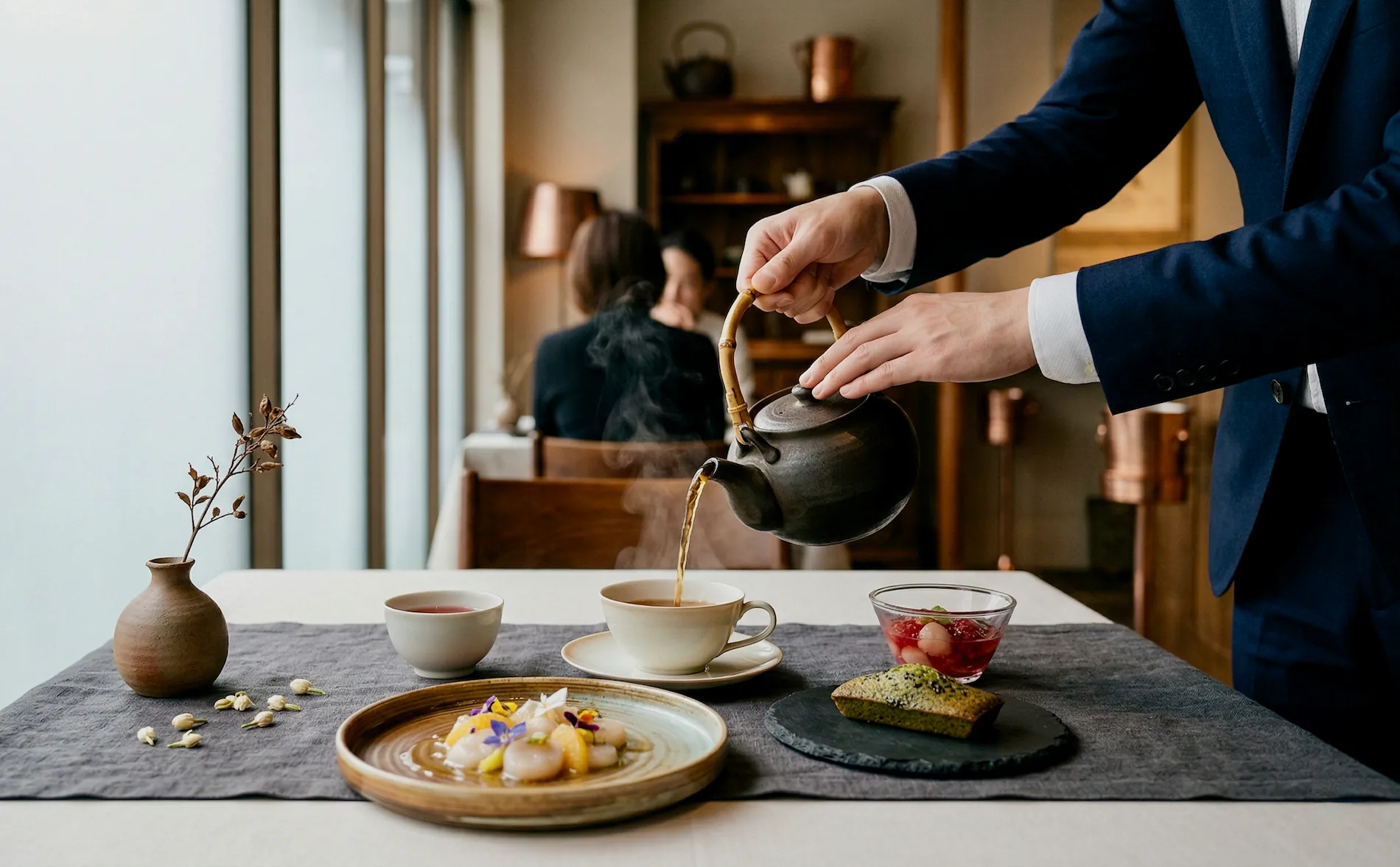
The Sommelier’s Flavor Map
Use this table as a curated starting point. It is not meant to close the subject, but to open your repertoire. The best pairing is still the one that makes sense with the real dish in front of you — in its seasoning, fat, texture, and even the temperature at which it is served.
| Food | Recommended tea |
|---|---|
| Buttery cakes, madeleines, shortbread | Earl Grey, Darjeeling, or a light Ceylon black tea. |
| Dark chocolate and cocoa-based desserts | Assam, Yunnan black tea, or a more roasted Oolong. |
| Delicate fish, seafood, and cleaner preparations | Sencha, a delicate green tea, or a lightly oxidized Oolong. |
| Roasted vegetables, mushrooms, baked dishes | Hojicha, roasted Oolong, or a black tea with a more earthy profile. |
| Lightly spicy and aromatic foods | Jasmine, floral Oolong, or a lighter black tea, depending on the intensity of the sauce. |
| Soft cheeses, semi-hard cheeses, or buttery profiles | Oxidized Oolong, medium-bodied Darjeeling, or a delicate black tea. |
| Afternoon tea with sandwiches, scones, and cakes | Darjeeling First Flush, light Ceylon, or English Breakfast. |
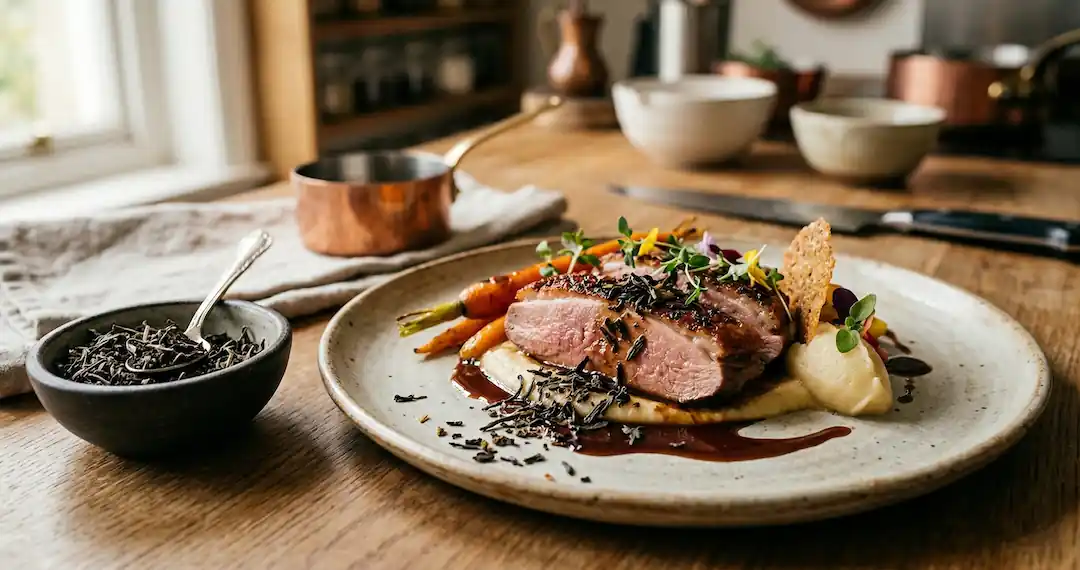
Beyond the Cup: The Leaf as an Ingredient
When the leaf enters the kitchen, tea stops pairing only alongside the dish and begins building flavor from within. This is where tea gastronomy becomes truly special: the drink turns into broth, perfume, infusion, a smoky touch, or an aromatic base for both desserts and savory dishes.
- 1Smoky touch: smoked black teas, such as Lapsang Souchong, can be used in aromatic oils, marinades, and savory preparations to create depth without relying on excessive industrial smoke.
- 2Rice and grains: in Japanese traditions, green tea appears even in rice-based preparations, as in the world of ochazuke, showing that the leaf can also move through everyday cooking.
- 3Infused desserts: Earl Grey works beautifully in milk, cream, and ganache, because bergamot lends citrus sweetness and aromatic elegance to creamy bases.
Desserts, Salt, and Smoke: Three Reliable Paths
If you are just beginning, there are three especially generous entry points. The first is buttery and creamy desserts, where fragrant or citrusy black teas find room to shine. The second is roasted, baked, or mushroom-based dishes, where hojicha, more roasted oolongs, and darker black teas create a natural bridge. The third is the smoky realm, where certain teas enter almost like a spice.
These three paths work because they respect a simple logic: tea does not need to dominate. It needs to converse. The great pairing is not the most obvious one, but the one that makes the dish feel more complete after the sip.
The Dynamics of Temperature
Temperature is also part of pairing. Excessively hot tea can hide aromatic nuances and make the next dish harder to read, just as very cold food can flatten perception for a few moments. In more delicate pairings, it is worth working with teas that are hot, but not scalding, so the palate remains available.
In practice, that means something very simple: serve tea at a point where it still has warmth and presence, but already allows perfume, texture, and finish to be perceived. At a gastronomic table, thermal comfort is also a sensory tool.
Good pairing does not seek only to match flavors — it seeks to make both dish and tea appear clearer in each other’s presence.
When tea meets the right food, the meal takes on a different pace. The dish feels more articulated, the drink more expressive, and the act of serving becomes more conscious. That is the true luxury of pairing with tea: not excess, but precision. At Nature Chá, that is where the premium experience begins.