Every cup of tea may seem small, but it belongs to an immense chain. Before reaching your table, it has already passed through climate, soil, harvest, processing, transport, packaging, and human labor in regions where tea remains a real source of income, stability, and agricultural identity. That is why sustainability here is not moral ornament: it is part of the very quality of what is being consumed.
Golden rule of conscious consumption: a truly good tea should not be judged only by aroma or price, but also by the clarity of its origin, the coherence of its packaging, and the kind of commitment the brand assumes toward those who plant and process it.
A Beautiful Chain — and a Vulnerable One
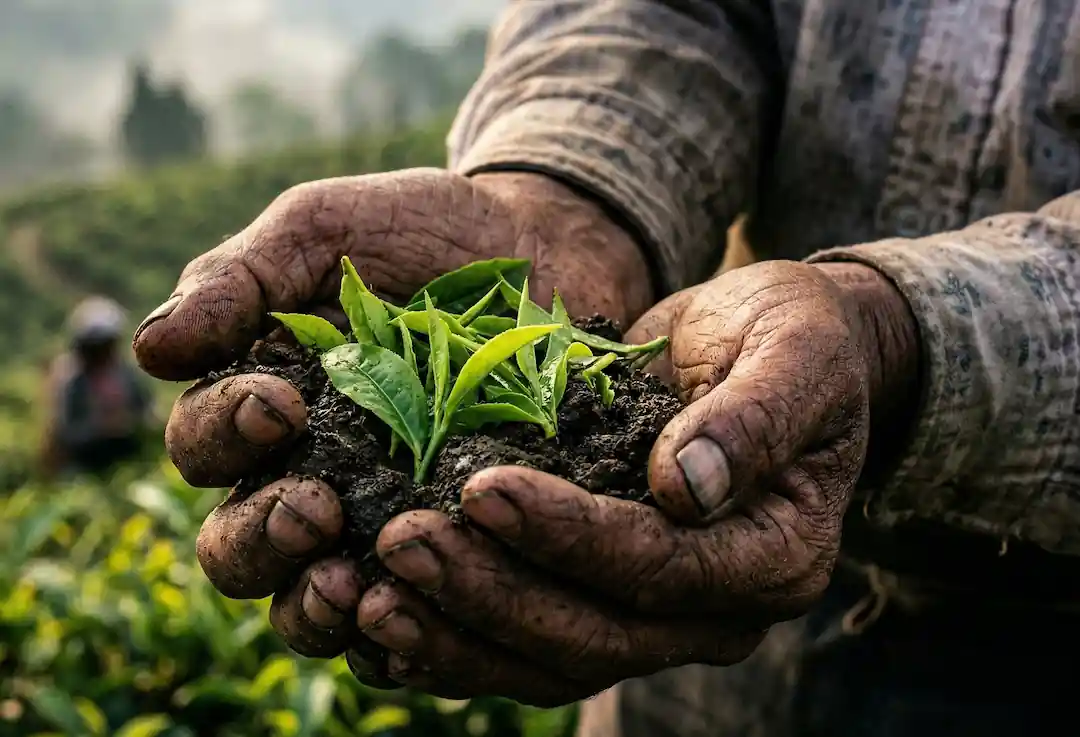
Tea is cultivated in more than 35 countries and supports millions of livelihoods, playing an important role in rural development and food security in several exporting economies. In many places, smallholders and estate workers depend directly on this crop for income, continuity in rural life, and the organization of local communities.
That helps explain why the conversation about sustainability in tea needs to be more serious than green-looking packaging aesthetics. When the sector functions poorly, it is not only flavor that is lost: income, biodiversity, soil, and climate adaptation capacity are lost as well.
Climate: The Risk Is Already in the Leaf
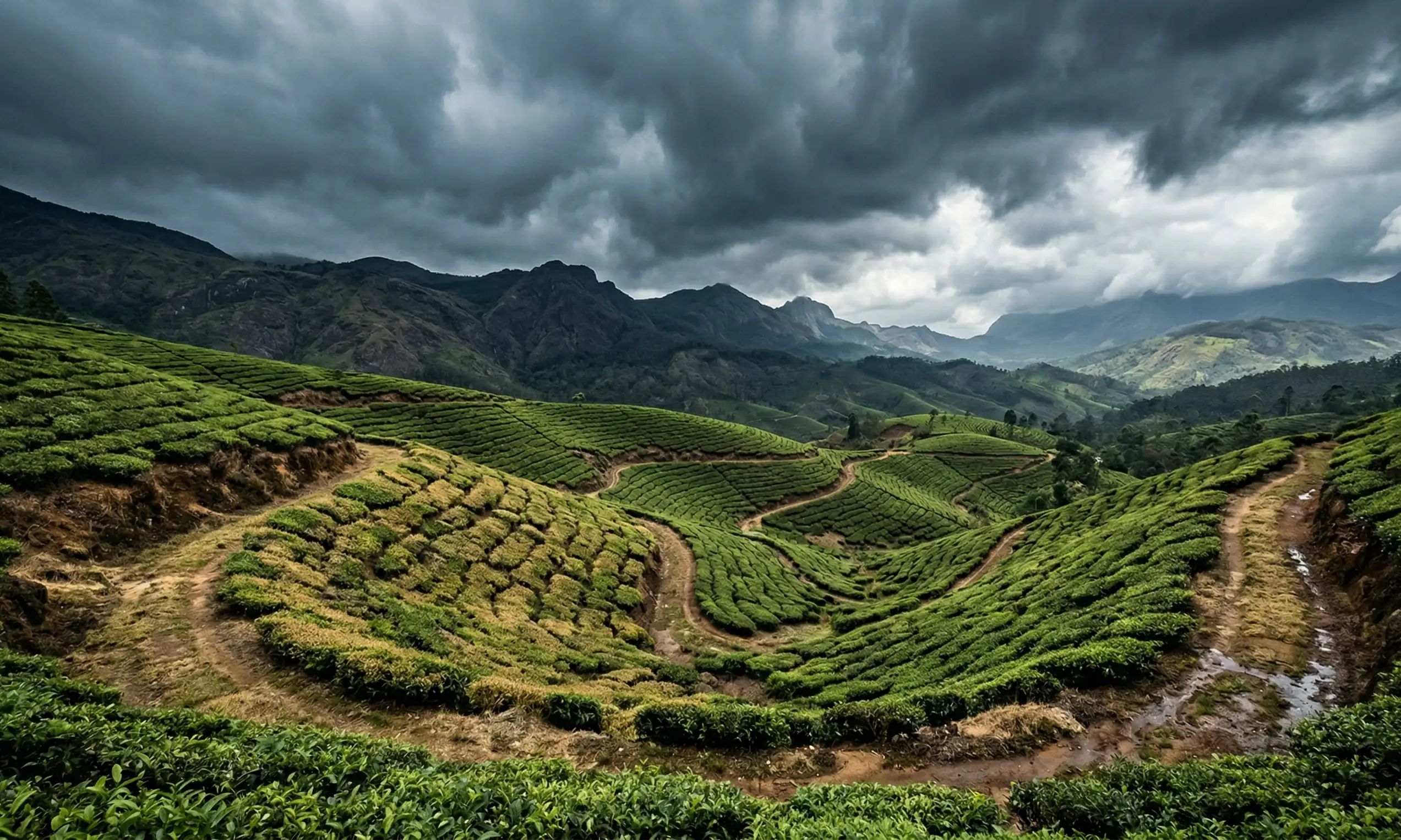
Heat waves, droughts, intense rainfall, hail, frost, and more irregular rainfall patterns are already putting pressure on yield, quality, and harvest predictability in different producing regions. Because a large share of tea is cultivated in systems dependent on climate and natural resources, vulnerability is especially high among small producers.
- 1Heat and drought can reduce vigor and production stability.
- 2Excessive rain and erosion affect soil, field management, and harvest quality.
- 3Climate change increases pressure from pests, diseases, and adaptation costs.
- 4Small producers tend to suffer more because they have less financial margin and less access to technology.
What Ethical Consumption Really Means
Ethical consumption does not mean imagining that one purchase alone will solve the entire chain. It means choosing better within what is possible. Instead of looking for vague promises, it is worth checking whether the brand provides information about origin, producer type, traceability initiatives, verifiable certifications, or participation in serious sector improvement programs.
It is also worth distrusting a discourse that talks a lot about purity in the cup but almost nothing about the people who produce it. Real sustainability appears less in the adjective “premium” and more in the combination of transparency, auditing, long-term commitment, and material coherence.
Certification helps, but it does not replace critical reading. A seal can be a good sign; it does not by itself eliminate all questions about price paid, traceability, packaging, and agricultural practice.
How to Read Seals and Initiatives
Three names appear frequently in the tea world, but they do not do exactly the same thing. Understanding that difference already improves the way you buy.
- 1Fairtrade: works with social, economic, and environmental standards and uses certification with independent auditing; in tea, it also operates with mechanisms such as minimum price and premium in specific contexts.
- 2Rainforest Alliance: certification with annual audits, covering social requirements, livelihoods, water, soil, biodiversity, and climate resilience.
- 3Ethical Tea Partnership (ETP): does not usually appear as a front-of-pack seal; it is a sector organization that works on systemic change related to the economy, equality, and environment in the tea supply chain.
Tea Bags, Plastic, and the Invisible Problem
The discussion about packaging also deserves nuance. Not every tea bag is the same, and not every tea bag is made of the same material. Studies have shown that some plastic tea bags can release large amounts of micro- and nanoplastics into hot water; more recent reviews indicate that this problem can also appear, to varying degrees, in composite materials and even in some alternatives sold as biodegradable.
The most useful reading for consumers is not panic, but clarity: whenever possible, choose loose leaf tea or explicitly plastic-free tea bags, and do not assume that “paper” automatically means the absence of polymers. In sustainability, the material reality of the packaging matters just as much as the brand’s message.
The Revolution Begins on Your Shelf
In practical terms, consuming better is usually less complicated than it seems. Choose less, but choose better. Buy quantities compatible with what you actually drink. Store tea properly to avoid waste. Prefer loose leaf when it makes sense. And value brands that show origin, certifications, or concrete initiatives instead of simply repeating a green narrative without substance.
- 1Prefer clear origin and brands that explain what they are certifying or monitoring.
- 2Consider loose leaf or explicitly plastic-free tea bags when you want to reduce that impact.
- 3Buy a volume that matches your consumption to avoid aging and unnecessary waste.
- 4Store tea well to preserve freshness and avoid waste at home.
In the end, sustainability in tea is not about individual perfection. It is about direction. Every small choice — of origin, packaging, quantity, and attention — helps decide what kind of supply chain continues to exist. And perhaps that is one of the most beautiful meanings of the cup: it connects not only leaf and water, but also future and responsibility.