South America cannot be read through a single leaf. Here, the universe of the cup is divided between two great legacies: on one side, native infusions that run through the continent’s Indigenous memory and everyday life; on the other, true tea, Camellia sinensis, which found soil, labor, and its own identity especially in Brazil and Argentina. That coexistence is what makes the South American map so distinctive: it is less homogeneous than the Asian one, but perhaps for that very reason, so rich in personality.
Golden rule: in South America, not every hot, caffeinated drink is true tea — and that does not make it any less important. Yerba mate is its own universe, with immense cultural weight, while Camellia sinensis follows a different historical and agricultural path.
Two Legacies in the Same Region
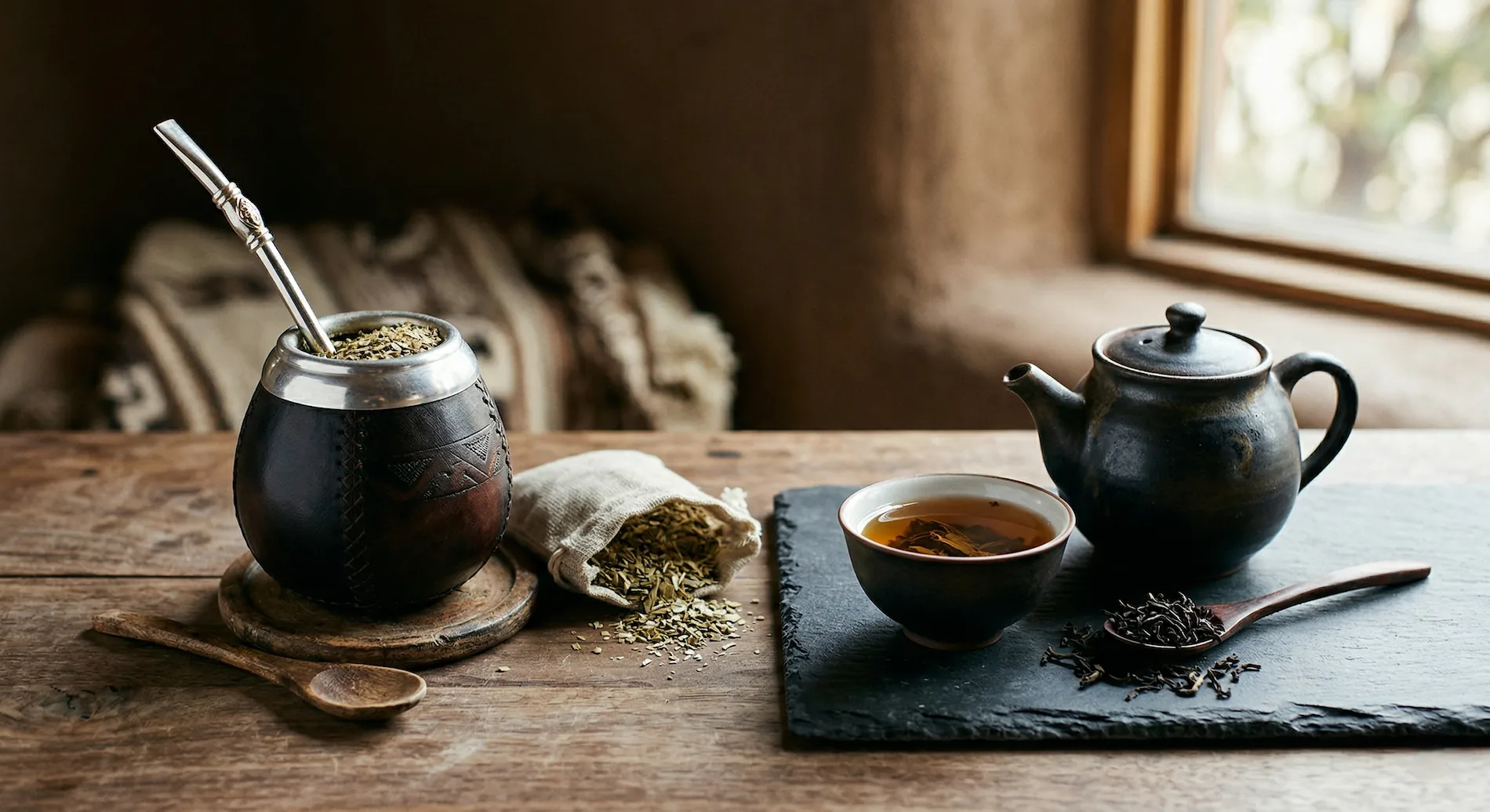
Long before true tea took root in parts of the continent, South America already knew infusions of strong ritual, social, and everyday value. Among them, yerba mate holds a central place. Later, with immigration, agricultural adaptation, and the export market, Camellia sinensis also put down roots in South American territory — especially in São Paulo and Misiones — creating a second axis of identity for the region.
The Green Heart: The Ritual of Yerba Mate
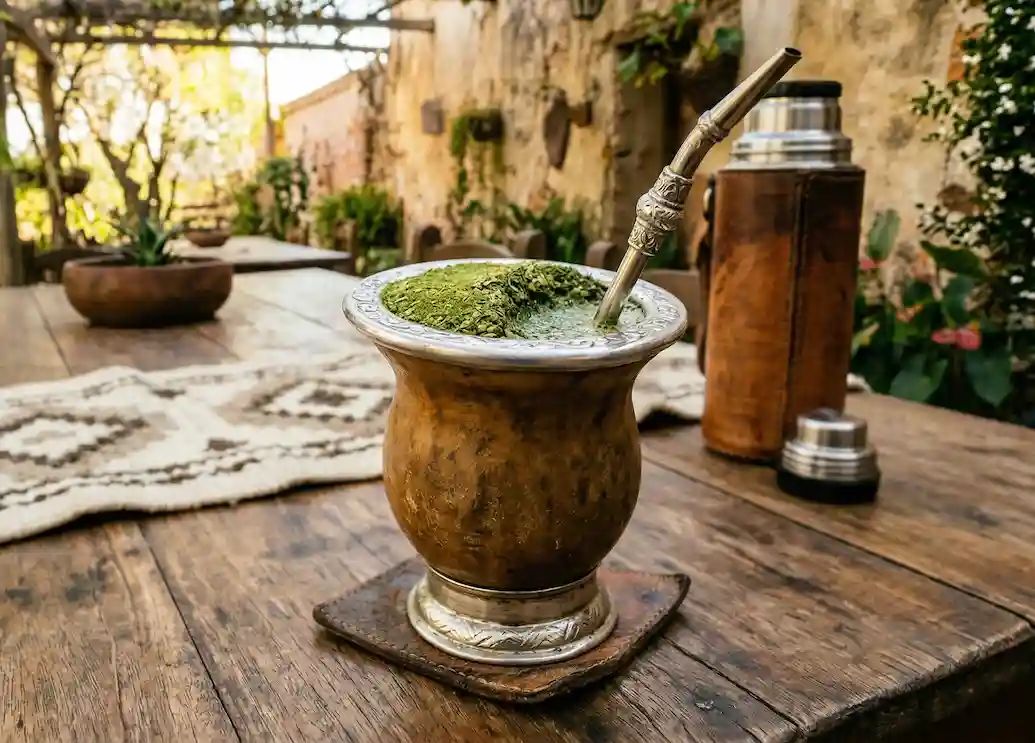
If there is one great symbolic drink of the continent, it is yerba mate. Historically associated with the Guaraní peoples and later spread throughout Argentina, Paraguay, Uruguay, and southern Brazil, it goes beyond flavor and enters the realm of connection. Mate is not just consumption: it is a circle, sharing, repetition, pause, and presence. In many South American contexts, the gourd and the bombilla say as much about togetherness as the drink itself.
That cultural centrality helps explain why, in Argentina for example, the everyday culture of infusion is more closely tied to mate than to true tea, even though the country has an important Camellia sinensis production chain geared toward the export market.
Brazil: Tea from the Ribeira Valley
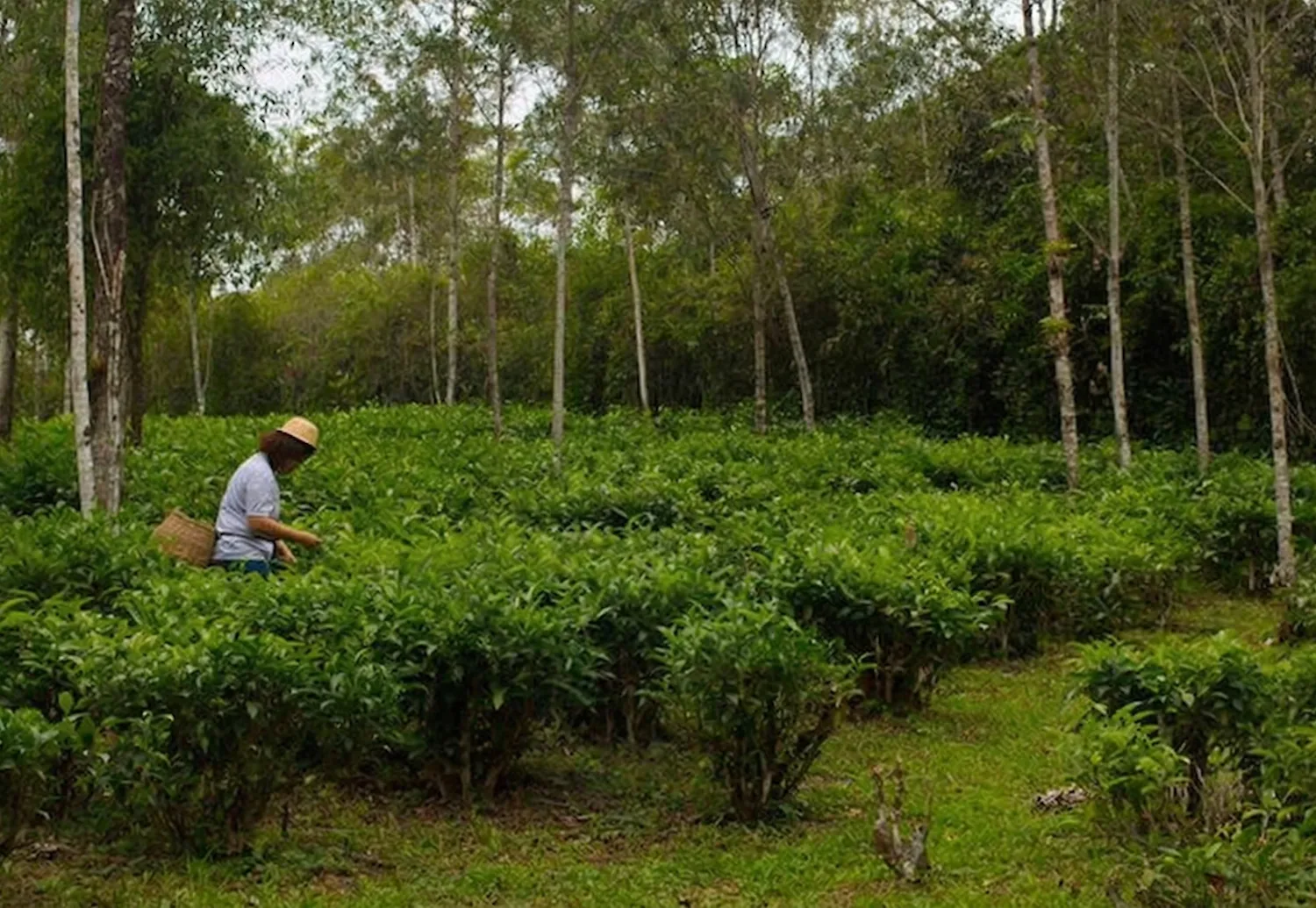
When the subject is true tea in Brazil, the Ribeira Valley stands as an essential reference. The region holds the historic tradition of tea cultivation in São Paulo and maintains a deep connection with Japanese immigration, artisanal processing, and the renewed interest in fine Brazilian teas. In Registro, that legacy has become so important that it now supports a true Tea Route, linking memory, cultivation, tasting, and tourism.
The value of the Ribeira Valley lies not only in producing Camellia sinensis, but in producing continuity. There, Brazilian tea stops feeling like a curiosity and once again sounds like a living agricultural culture, capable of yielding black teas, green teas, oolongs, and artisanal experiences that reposition Brazil on the tea map with an identity of its own.
Argentina: Misiones and Export Tea
If Brazil offers a more artisanal and identity-driven reading, Argentina shows another face of South American tea: scale, export, and industrial functionality. Argentina’s tea-growing region is the southernmost in the world and is concentrated mainly in Misiones, responsible for around 95% of the country’s production. Much of it is black tea aimed at the export market, with a strong presence in blends, iced tea, extracts, and industrial applications.
An interesting paradox: although Argentina is an important tea producer and exporter, the drink that shapes its everyday cultural imagination is still mate. That makes the South American landscape even more singular: a continent where the main infusion culture does not always coincide with the main export crop.
That export-oriented vocation also explains the profile of Argentine tea: it often appears less as an object of single-origin reverence and more as a solid, stable, and useful raw material for cold beverages, commercial blends, and large-scale processing. It is another way of being relevant in the tea world — less romantic, but decisive.
How to Read South America in the Cup
Perhaps the most beautiful thing about the South American map is precisely its duality. Here, the cup may come from a native plant shared in a circle, like yerba mate, or from a Camellia sinensis tradition shaped by immigration, agricultural adaptation, and the market. Instead of choosing which of these stories matters more, the best path is to realize that both expand our understanding of the region.
- 1Yerba mate: ritual, sharing, Guaraní identity, and everyday life in the Southern Cone.
- 2Ribeira Valley: the Brazilian face of true tea, with tradition, producers, and contemporary revaluation.
- 3Misiones: the backbone of Argentine export tea, especially black tea and commercial applications.
Exploring South America through the cup is, in the end, a way of learning again how to look at what is ours without simplifying it. Not everything here is true tea, and that does not make it lesser. Not everything here is ancestral tradition, and that does not make it superficial. Between mate, Camellia sinensis, and landscapes still waiting for wider recognition, the continent offers a language of its own — firm, affectionate, and deeply alive.