In the Middle East, tea rarely enters the scene as a mere detail. It usually arrives first, opens the conversation, sustains the visit, and sets the tone of the encounter. In many homes and social spaces, serving tea is not a secondary gesture of courtesy, but a form of presence. That is why the drink here speaks less of haste and more of welcome.
Golden rule: in this region, tea is above all a social gesture. More than the exact leaf or the ideal utensil, what defines its importance is the way it accompanies hospitality, pause, and togetherness.
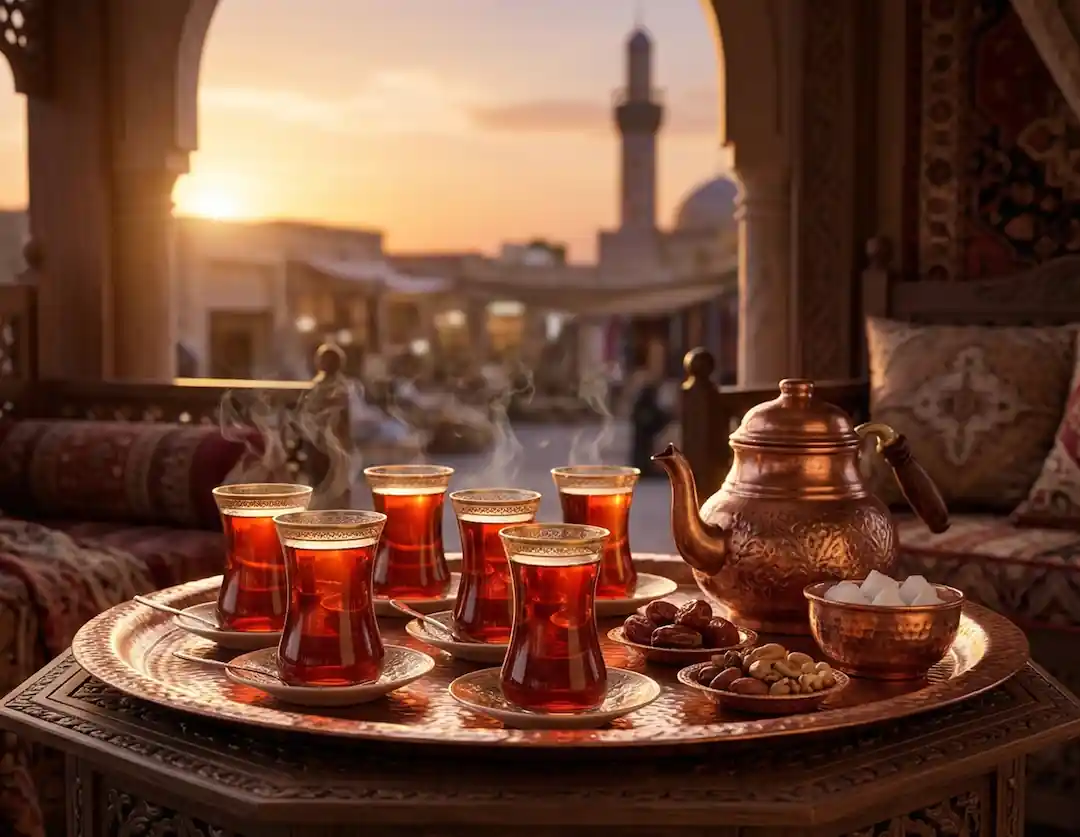
Turkey: The Pulse of Tea on the Black Sea
In Turkey, tea has become one of the most visible expressions of everyday life. The culture of çay has been recognized by UNESCO as a social practice linked to hospitality, the maintenance of bonds, and coexistence among different layers of society. The agricultural epicenter of this story lies on the eastern Black Sea coast, especially in Rize, where economic and cultural life revolves intensely around the leaf.
The service also helps define this identity. Tea is traditionally prepared in a çaydanlık — the double-kettle system — and served in small, narrow-waisted glasses known as ince belli bardak. The transparency of the glass highlights the color of the infusion, while the shape helps make the act of serving immediately recognizable.
- 1Rize is the great symbolic and productive heart of modern Turkish tea.
- 2The most consumed and harvested tea is black tea.
- 3Serving tea in slim, transparent glasses is an important part of the drink’s visual identity.
- 4Tea accompanies the entire day, from morning to night, as an instrument of hospitality and social connection.
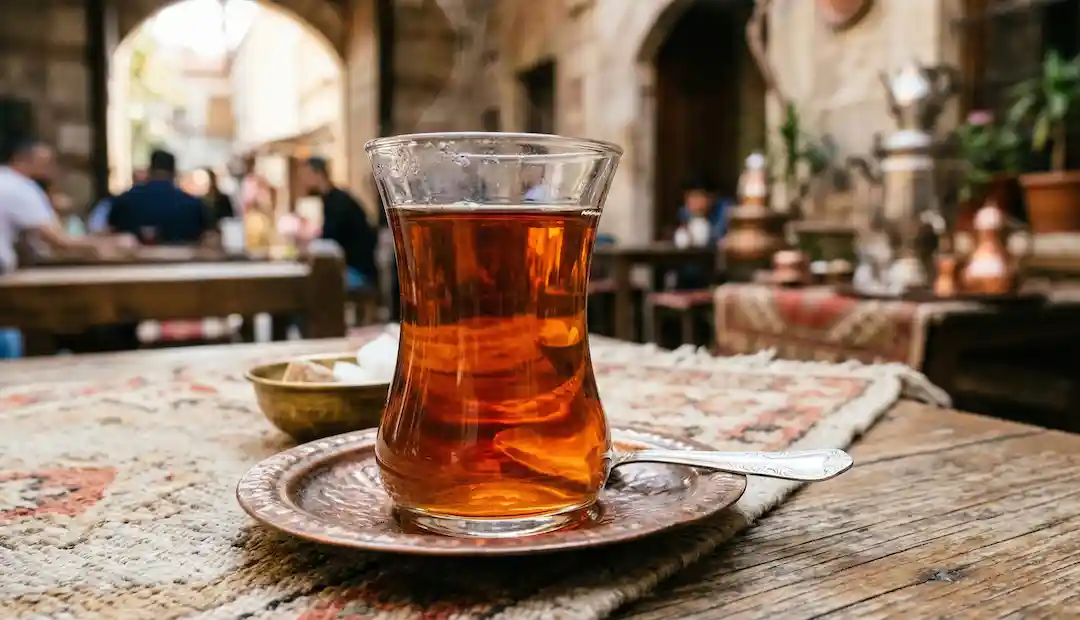
Iran: Samovar, Sugar, and Togetherness
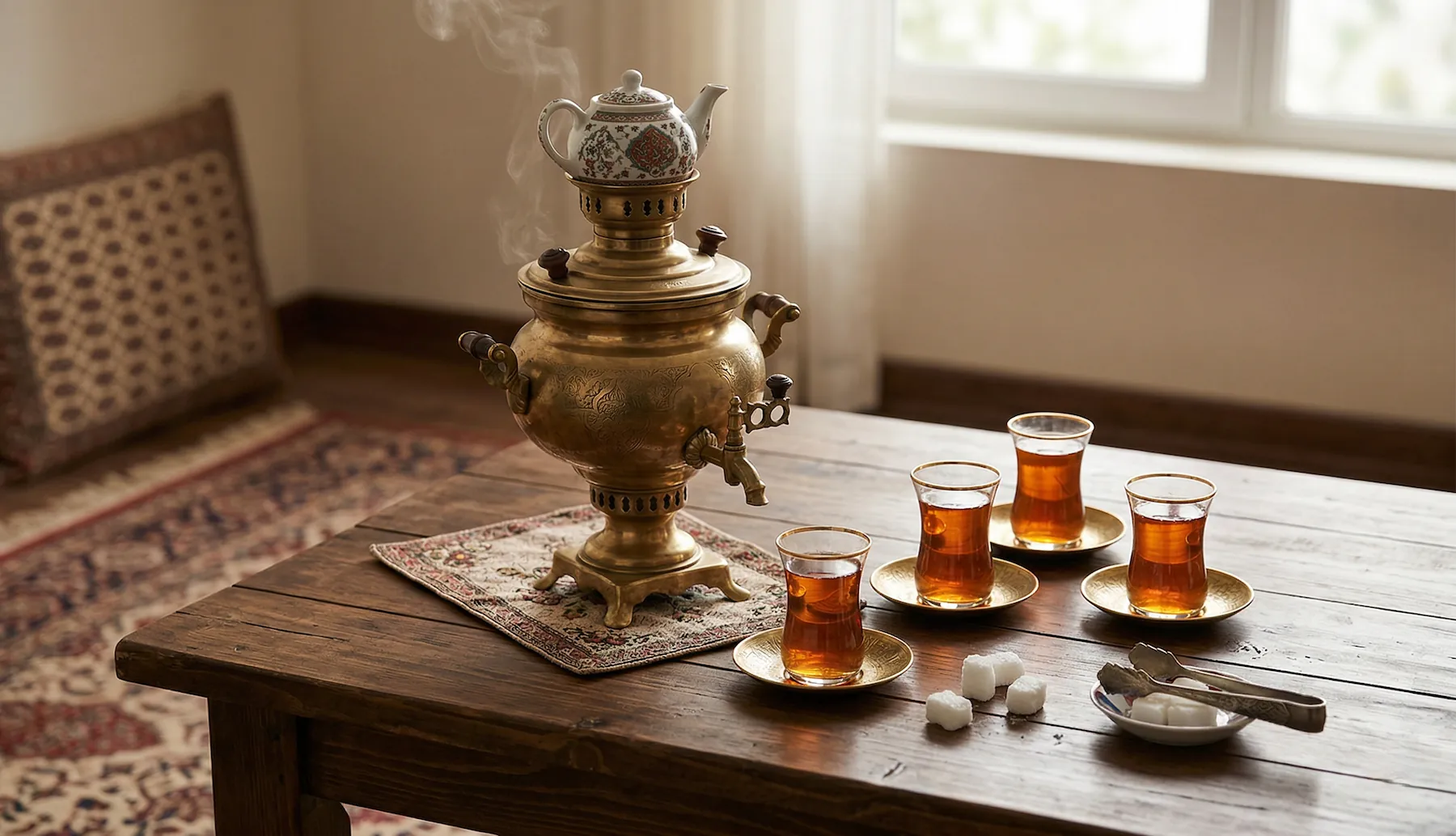
In Iran, tea also holds a central place in social life. A widely cited cultural reference describes it as the national beverage, served hot and simple, usually in small transparent glasses. The traditional custom includes sipping tea through a piece of sugar, qand, held between the teeth, while the samovar remains an important piece for keeping hot water and tea always ready to serve.
Iran and the Caucasus: Continuity and Renewal
If Iran represents cultural continuity, Georgia offers another interesting narrative: that of return. After the collapse of the Soviet Union, the Georgian tea sector entered a sharp decline, but recent initiatives by producers, authorities, and international organizations have been trying to reposition the country as a niche tea origin, with growing focus on quality, sustainability, and tea-related tourism.
- 1In Iran, tea remains deeply tied to domestic life and samovar service.
- 2In Georgia, the sector is going through a phase of revitalization with an emphasis on niche production, quality, and tea culture experiences.
- 3Western Georgia, especially regions such as Guria and Imereti, has regained visibility in this process.
Tradition in preparation does not mean rushing the sip. The health point of attention lies in temperature: drinking very hot beverages, especially above 149 °F, has been associated with a higher risk of esophageal cancer. The issue is the drink’s excessive heat, not tea itself.
Perhaps that is the most beautiful key to reading tea in this region: it does not impose itself as spectacle, but as a habit full of meaning. Between the slender Turkish glass, the Iranian samovar, and the Georgian revival, tea appears as a form of everyday civility — a way of saying stay, sit down, talk a little longer.