A tea package may promise delicacy, luxury, purity, mountains, tradition, and rarity — all at once. But a label only becomes truly interesting when it stops being seduction and starts becoming information. To read a tea well is to learn how to distinguish what genuinely helps you understand the product from what merely wraps it in a beautiful story.
Golden rule: a good label is not the one that looks most sophisticated at first glance, but the one that offers the most clarity. The more precise the information, the more trustworthy it tends to be.
The First Level of Reading: What This Product Says It Is
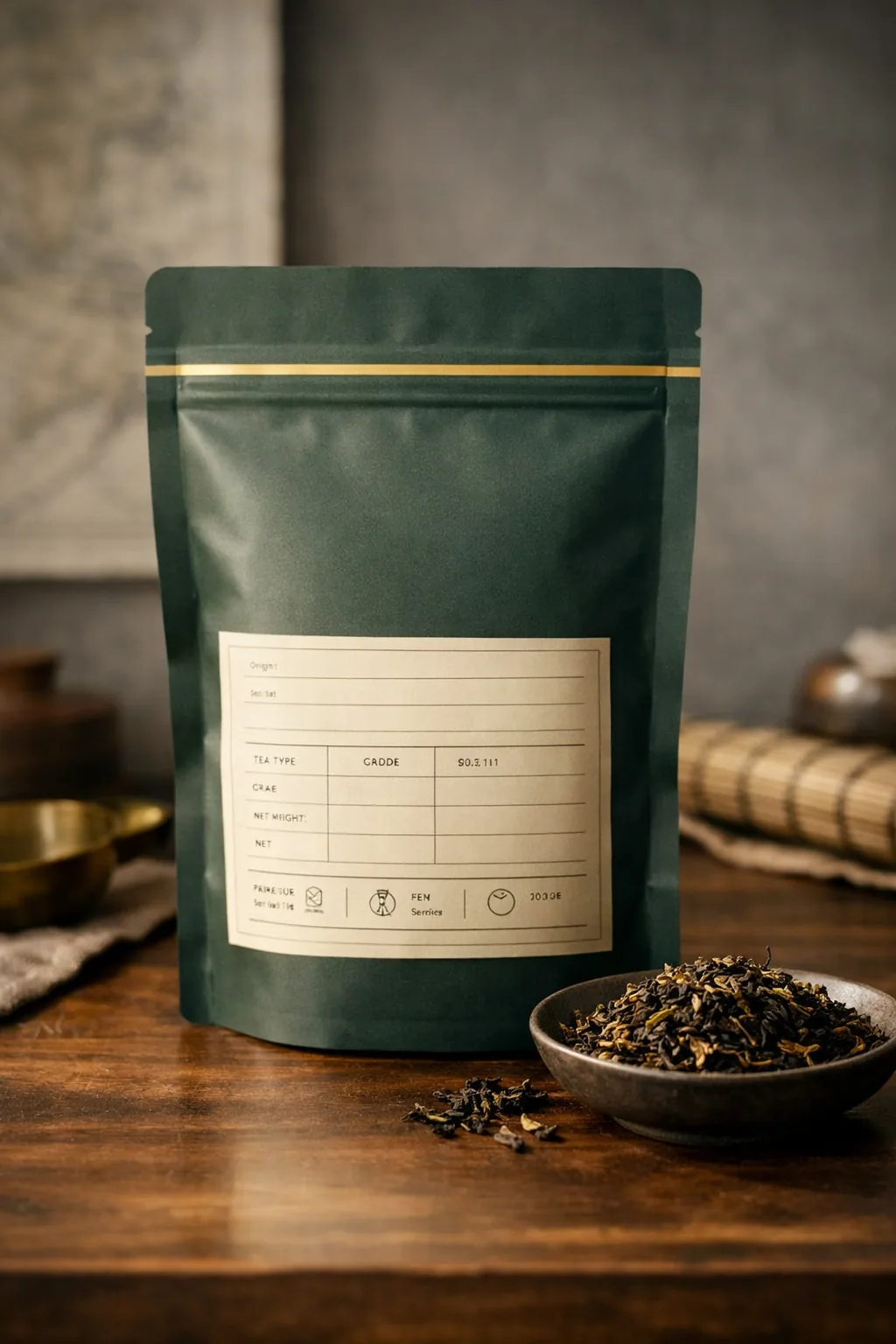
Before looking for terroir, flush, or storytelling, it is worth checking the basics: is this pure tea, a blend, flavored tea, or a tisane? The product name itself should already help answer that. If the package says only 'premium tea' without explaining what is inside, it gives less than it seems. The clearer the type of drink, the better the conversation begins.
It is also worth looking at the ingredient list. In a pure tea, it tends to be simple. In blends and flavored teas, it may reveal whether there are spices, flowers, fruits, oils, aromas, or only vague expressions such as 'flavor' or 'natural flavors.' That does not automatically make a product worse, but it changes the way you read what it is really offering.
Origin: When Place Truly Matters
A clear origin is often a very good sign. Not every fine tea needs a long terroir narrative, but a label that states region, country, or garden already shows a higher level of transparency than one that repeats generic language such as 'exotic mountains' or 'ancestral tradition.' In the premium market, the more precise the origin, the more likely it is to carry sensory and commercial meaning.
Lot, Code, and Traceability
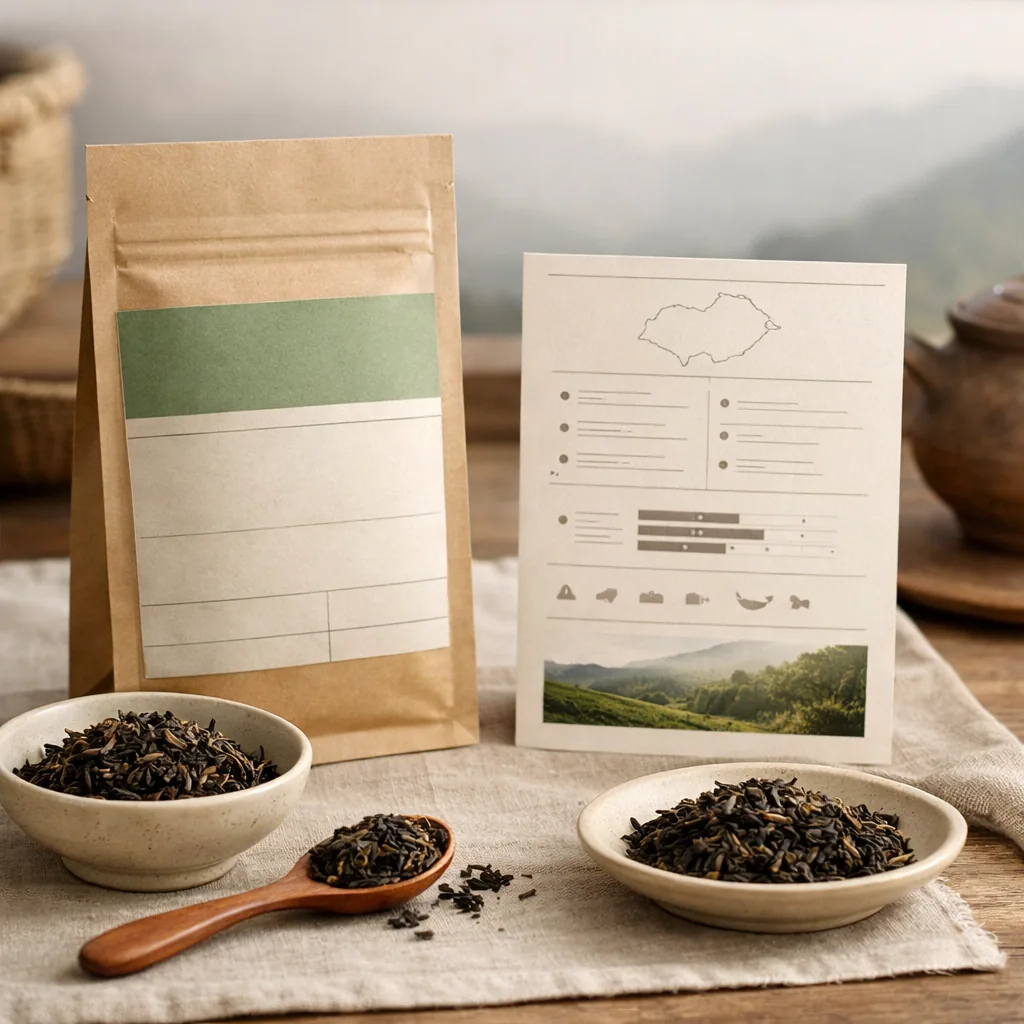
Many people ignore the lot code, but it is one of the most serious parts of the package. A lot or lot code is the identifier that allows that product to be traced within the supply chain. To the average consumer, this may seem invisible. To someone who reads the market more carefully, it is an important sign of organization, responsibility, and the possibility of control.
A lot is not an irrelevant bureaucratic detail. It shows that the tea exists as an identifiable batch, and that already separates curation from improvisation.
Seals and Marks of Authenticity
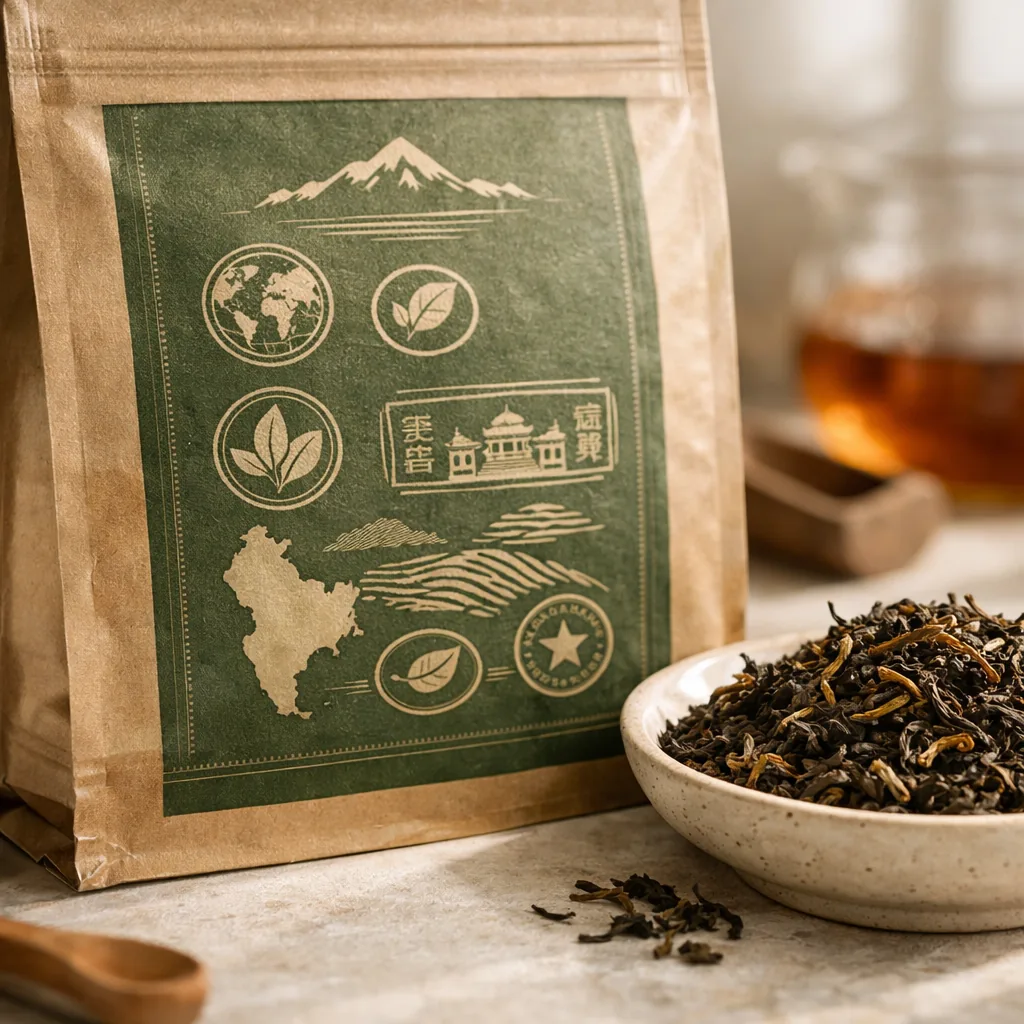
Some symbols truly mean something verifiable. The Darjeeling seal from Tea Board India, for example, is tied to the authentication of regional origin. The Lion Logo from the Sri Lanka Tea Board guarantees 100% Pure Ceylon Tea packed in Sri Lanka. The USDA Organic seal, meanwhile, is an official mark protected and supervised by the National Organic Program. These signs do not solve everything on their own, but they do help distinguish vague claims from verifiable systems.
- 1Look for a clear origin when the label hints at terroir or exclusivity.
- 2Give more weight to official seals or marks than to generic marketing phrases.
- 3Read certifications as additional information, not as the sole proof of excellence.
- 4When 'organic' appears, check whether it refers to an official seal and not just to the word being used loosely.
Technical Terms That Sound More Mysterious Than They Really Are
Part of tea vocabulary sounds sophisticated precisely because the consumer has not been trained to read it. Orange Pekoe is the classic example. The term does not indicate orange flavor, nor does it guarantee on its own that the tea is extraordinary. It belongs to the leaf grading system, especially in the world of black teas. The same applies to terms such as BOP, fannings, and dust: they refer to the size and cut of the processed material, not to an absolute hierarchy of pleasure.
That does not mean grading is useless. It simply means it needs to be read in the right context. In some categories, a long whole leaf may suggest a certain kind of experience; in others, smaller particles are perfectly coherent with the intended style and method of preparation.
What a Good Label Usually Delivers
- 1A clear product name: pure tea, blend, flavored tea, or tisane.
- 2An ingredient list that is readable and free from unnecessary confusion.
- 3Net weight or quantity stated clearly.
- 4Origin, or at least country/region, when that is part of the tea’s proposition.
- 5A lot, batch, or code that allows traceability.
- 6Brewing instructions coherent with the type of leaf.
None of this guarantees that you will love the cup. But it guarantees something very important before that moment: that the product presents itself more honestly. And honesty, in the tea market, is already a valuable criterion.
Reading a label well means learning to recognize when packaging informs — and when it merely seduces.
At Nature Chá, we like to think that curation begins before the water touches the leaf. It begins when the consumer’s eye learns to read with more calm, more discernment, and less haste. And that is the moment when a label stops being surface and becomes language.