Tea carries an ancient history of care, attention, and presence. In China, it crossed centuries as a cultural beverage, a gesture of hospitality, and also part of practices linked to the world of traditional medicine. Today, however, speaking seriously about health requires a different posture: less promise, more precision. The cup does not need to be treated as a miracle to remain extraordinary.
Golden rule of well-being: tea can be part of a healthy routine, but it should not be presented as a cure, medical treatment, or shortcut to performance. The drink’s real value lies in consistency, quality preparation, and honest expectations.
Between Tradition and Evidence
Tea did not begin as a simple comfort drink. Throughout Chinese history, it was also linked to medicine, hospitality, and daily life. That cultural heritage helps explain why tea is still seen, in so many traditions, as something that accompanies balance and attention.
But tradition is not automatically the same as scientific proof. Today, the most responsible evidence suggests the following: tea is a beverage rich in interesting plant compounds, with promising results in research, especially observational research, but still with many limitations when the question is a direct, specific, and guaranteed effect on human health.
What the Leaf Actually Delivers
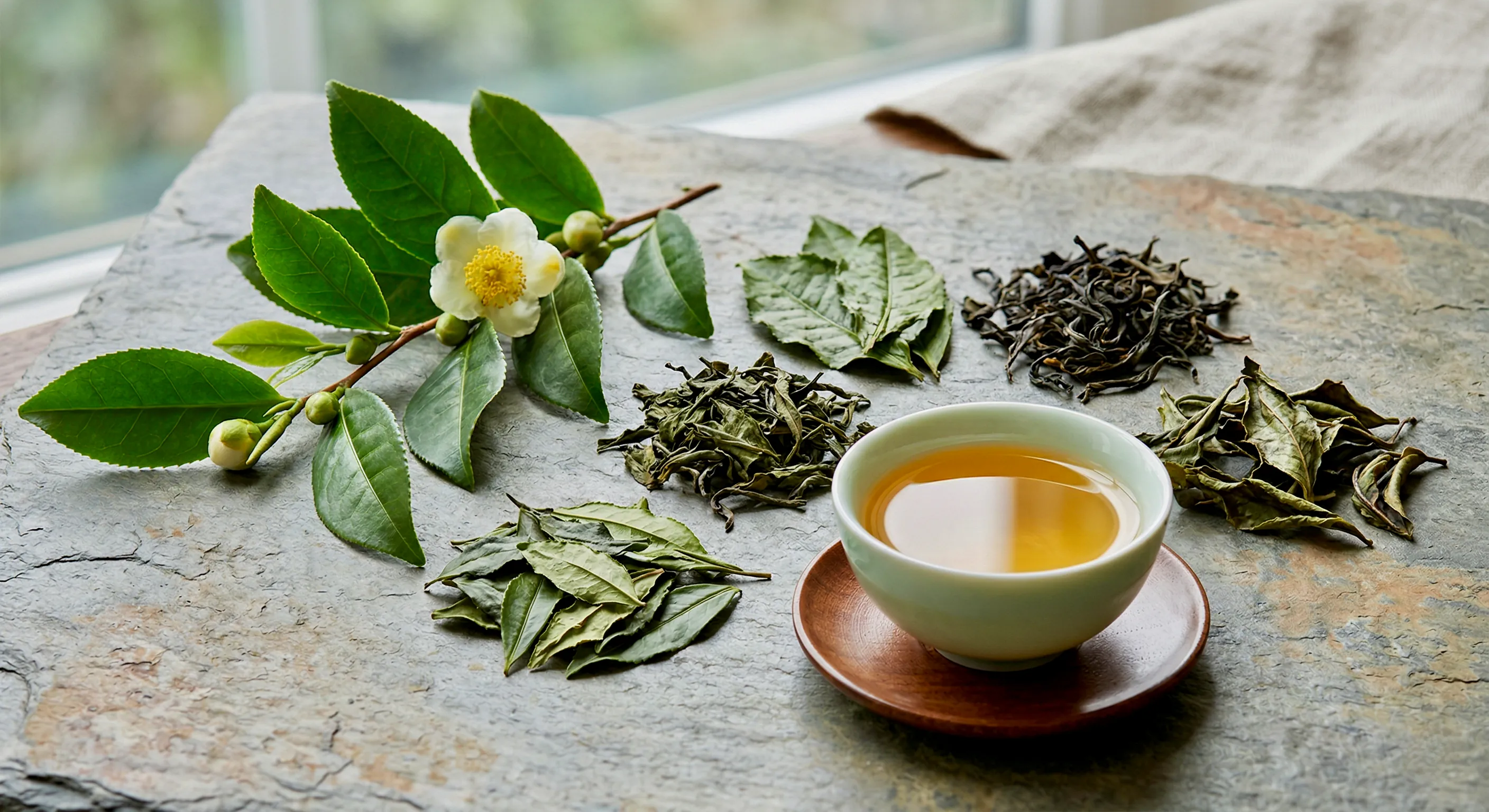
In traditional teas made from Camellia sinensis — such as green, white, oolong, and black tea — the greatest scientific interest centers on polyphenols and caffeine. They help explain both flavor and part of the interest surrounding tea in health literature. Green tea, for example, preserves catechins at higher levels because it undergoes less oxidation than black tea.
At the same time, it is important to correct a common myth: tea should not be sold as a major source of mineral nutrients. Its value does not lie in functioning as a nutritional supplement, but in being a complex, relatively light beverage, rich in plant compounds and capable of replacing sweeter or less interesting options in daily life.
- 1Polyphenols: help explain the scientific interest in tea, especially in studies on oxidation, inflammation, and cardiometabolic health.
- 2Catechins: stand out in green tea and its extracts, although results in humans vary according to dose, context, and form of consumption.
- 3Caffeine: all traditional teas contain caffeine, in amounts that vary considerably depending on the type of leaf and the preparation.
- 4Habit: drinking unsweetened tea at home can be a more interesting daily choice than highly sweetened or highly stimulating beverages.
What sets green tea apart is not a universal promise of healing. What science allows us to say more safely is that it concentrates catechins of biological interest and that some studies show modest effects on markers such as LDL cholesterol and blood pressure.
Focus, Energy, and the Kind of Alertness Tea Offers
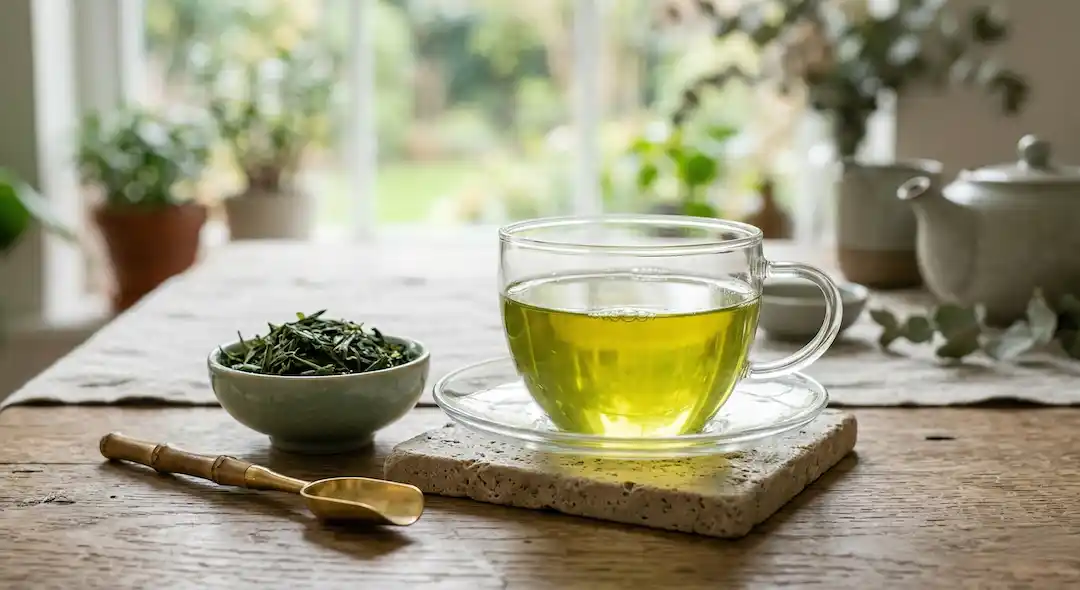
When people describe tea as a cleaner or steadier kind of energy, there is a plausible basis for that perception. The clearest immediate effect on attention comes from caffeine. At the same time, the literature on L-theanine, an amino acid naturally present in tea, discusses a possible contribution to calmer attention and alertness when combined with caffeine, although the strength and consistency of these effects still vary across studies.
For that reason, the best editorial path is not to promise “super-focused zen,” but to describe tea as a beverage that may offer gentler wakefulness for many people, depending on the type chosen, the dose, individual sensitivity, and the time of day.

Quantity, Sensitivity, and Context
Dose also matters. For most adults, the FDA cites 400 mg of caffeine per day as an amount not generally associated with negative effects, but tolerance varies greatly from one individual to another. In other words, it makes no sense to turn a general rule into a blind recommendation. The same tea that feels gentle to one person may leave another feeling jittery, speed up the heart, or interfere with sleep.
This also dismantles another common exaggeration: white tea should not be treated as automatically the most potent or the lightest. All true tea contains caffeine, and what reaches the cup depends on cultivar, harvest, leaf shape, and brewing method.
Real Health Also Includes Limits
A serious article about well-being does not speak only about desirable compounds. It also speaks about care. Drinking tea that is too hot is not an innocent detail: the risk observed in research is related more to the excessive temperature of the drink than to tea itself. Letting the cup cool a little before drinking is a simple but sensible gesture.
It is also important to distinguish the beverage from concentrated extracts. The habitual consumption of tea as an infusion is one thing; green tea extract supplements are another. It is especially in this universe of extracts and weight-loss products that the most consistent warnings about rare, but real, liver injury appear.
In the end, the best relationship between tea and health does not come from exaggeration. It comes from a routine in which the drink fits intelligently: less sugar, more attention to preparation, respect for one’s own caffeine sensitivity, and genuine pleasure in the act of drinking. When that happens, the cup stops promising too much and starts delivering what it can truly offer: companionship, focus, pause, and possible well-being.