Some gifts impress. Others remain. Tea belongs to the second category. It does not arrive with the immediate impact of excess, but with another kind of delicacy: the ability to offer pause, warmth, aroma, and a future presence. Anyone who gives tea as a gift is not offering only a beautiful object — they are offering an experience that is still to come.
Golden rule: a good tea gift should never feel generic. It needs to convey curation — the sense that someone thought about the person, their rhythm, their taste, and the kind of moment that cup might create.
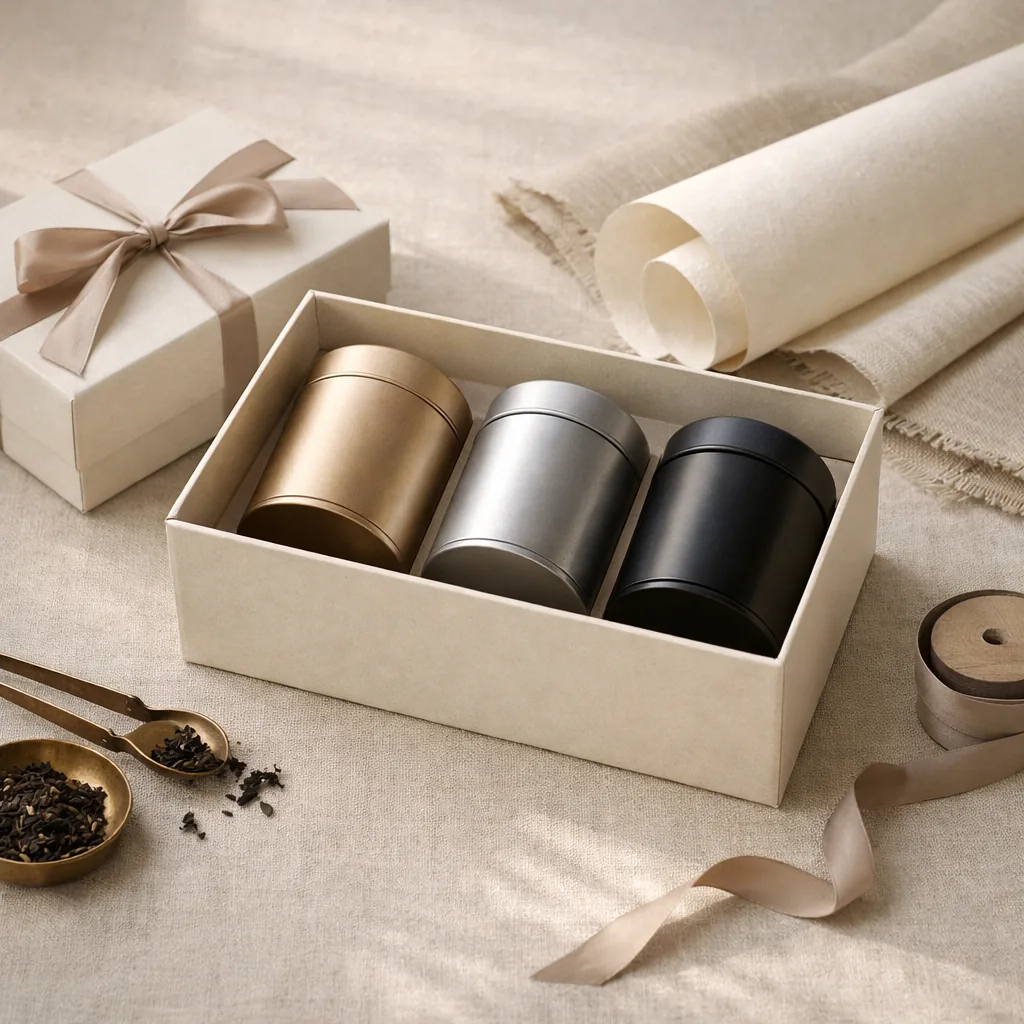
Why Tea Makes Such a Meaningful Gift
Giving tea as a gift makes sense because tea is already born connected to the idea of welcome. In different traditions, it accompanies hospitality, encounter, calm, and attentiveness to others. UNESCO describes çay as a social practice that expresses hospitality and strengthens bonds; in the chanoyu tradition, Urasenke preserves the idea of “harmony, respect, purity, and tranquility” as the spirit of tea. In other words, tea already carries within itself the language of care.
That also helps explain why objects from the world of tea have historically been treated as meaningful gifts. The British Museum notes that, in samurai culture, tea utensils were precious objects used to affirm bonds, taste, and hierarchy; and the Royal Collection preserves, for example, a travelling breakfast service decorated by Queen Charlotte and sent as a gift to her sister.
What Makes a Tea Gift Elegant
Elegance here does not lie in exaggerating quantity. It lies in editing well. A tea gift works best when it feels considered, not accumulated. Sometimes a single beautiful tin of an excellent tea says more than a large, scattered set. At other times, a small, well-composed pair — such as a tea and a handwritten card, or a tea and a special cup — already creates a far more memorable experience than an overly assembled kit.
- 1Choose a profile that relates to the person, not only to the aesthetics of the packaging.
- 2Prefer a few good elements over many mediocre ones.
- 3Think of the gift as a lived experience: what will this person feel when opening, preparing, and drinking it?
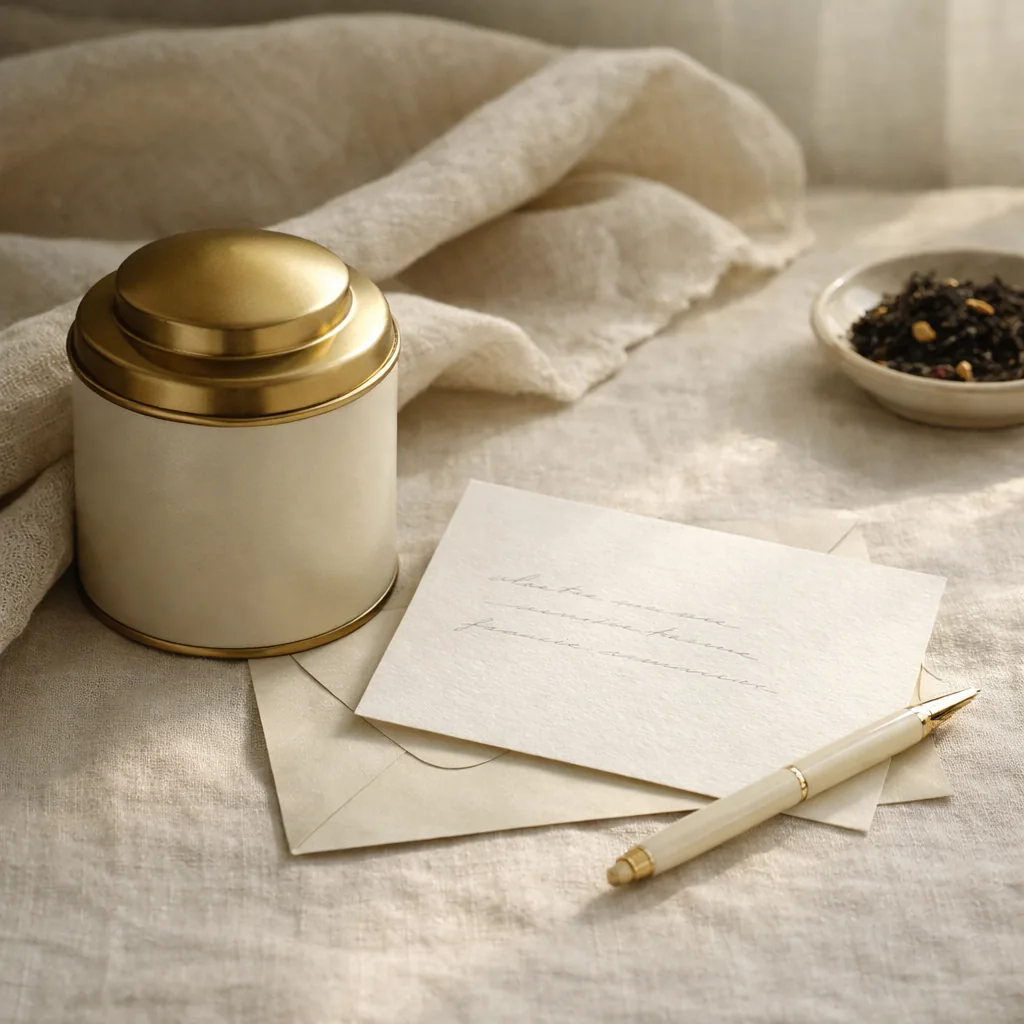
- 4Include a human detail — a note, a dedication, or a suggestion for the kind of moment that cup might suit.
How to Choose the Right Tea for Each Person
The best gift is not the rarest in the abstract — it is the most suitable. For someone who enjoys firmer mornings, a well-chosen black tea can be beautiful. For someone more drawn to delicacy and fragrance, floral blends, light Darjeelings, or gentle oolongs may make more sense. For evening visits, heartfelt thank-yous, or people more sensitive to caffeine, herbal infusions, rooibos, or calmer compositions tend to speak more naturally to the moment.
Giving tea as a gift is, at heart, about observation. There are gifts for those who love ritual, for those who adore a beautiful table, for those who need pause, for those who collect aromas, for those who prefer simplicity. Curation begins with the other person’s taste — not the taste of the buyer.
Four Beautiful Ways to Give Tea
- 1A host gift: an elegant tin or a small signature blend with a brief, warm note.
- 2A thank-you gift: a delicate tea accompanied by a handwritten card, dried flowers, or a light textile.
- 3A birthday gift: a more personal selection, with two or three cups suited to different moments of the day.
- 4A seasonal gift: a composition with tea, honey, fine biscuits, jam, or a small piece of teaware that speaks to the season.
Packaging Tells the Story Too
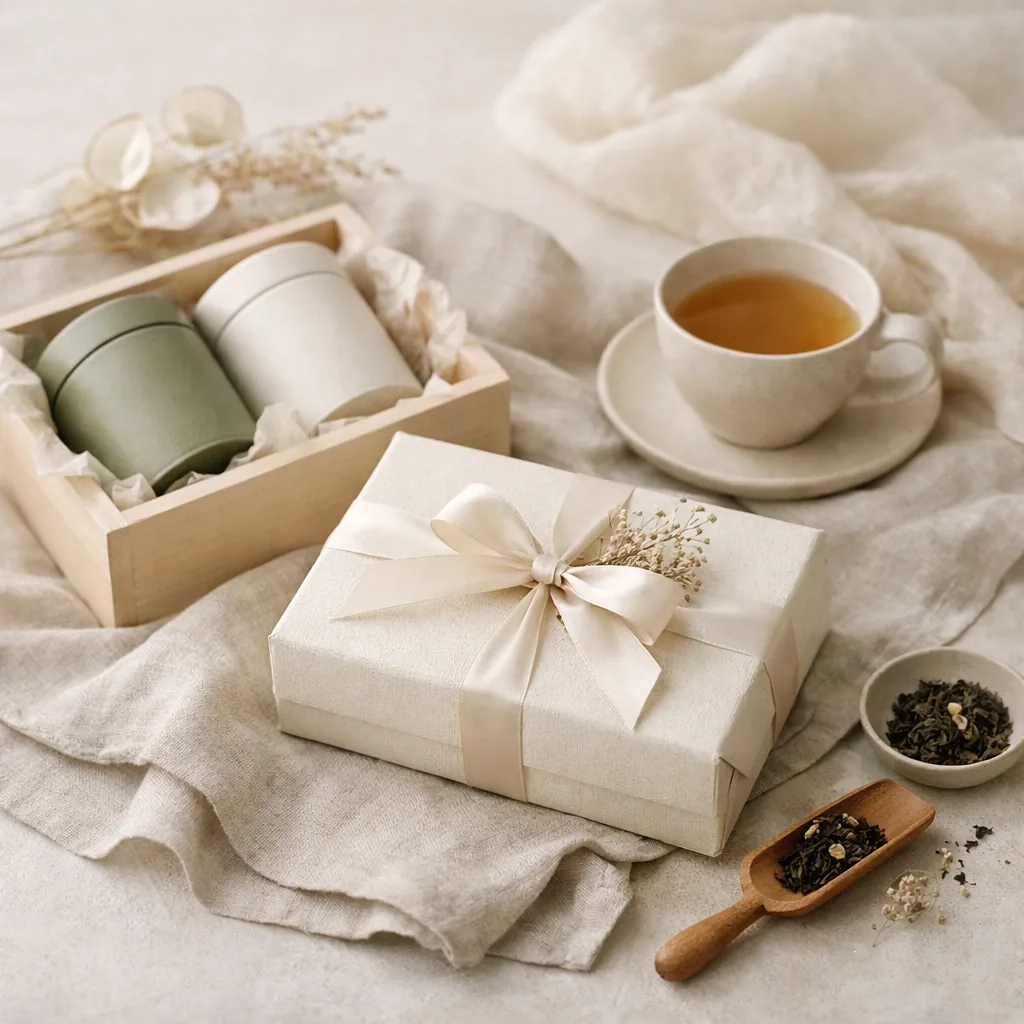
A tea gift almost always gains strength when its packaging feels tactile and serene. Natural fabrics, paper with good weight, discreet bows, rigid boxes, simple labels, and handwritten cards tend to work better than overly showy compositions. Ideally, the presentation should suggest refinement without shouting luxury.
Visually, tea pairs especially well with materials that suggest calm: linen, well-finished kraft, soft green, cream, amber, discreet gold, dried flowers, glass, and light wood. The packaging should not steal the tea’s experience — it should extend it.
Giving Tea Is Giving Time
Perhaps that is the rarest aspect of all. Many gifts offer things. Tea offers time: a future moment of opening, aroma, heated water, hands around a cup. It asks for preparation and, at the same time, returns attention. It is not a gift meant only to be received; it is a gift meant to be lived.
Giving tea as a gift is an elegant way of saying: I thought about your time, your taste, and the kind of pause you deserve.
At Nature Chá, we like to believe that the most sophisticated gifts are not the most expensive ones, but the ones that seem unmistakably right for that person. And few things unite beauty, care, usefulness, and memory with as much delicacy as a well-chosen tea.