One of the most fascinating facts in the world of tea is also one of the most transformative for those beginning to study it: from the most delicate white tea to the fullest-bodied black tea, all true tea comes from the same botanical species. What changes radically from one cup to another is not the plant itself, but the combination of variety, climate, altitude, agricultural practices, harvest timing, and processing.
Golden rule of this journey: once you understand that tea does not begin in the cup, but in the field and in the factory, flavor stops seeming accidental and starts making sense.
One Species, Many Expressions
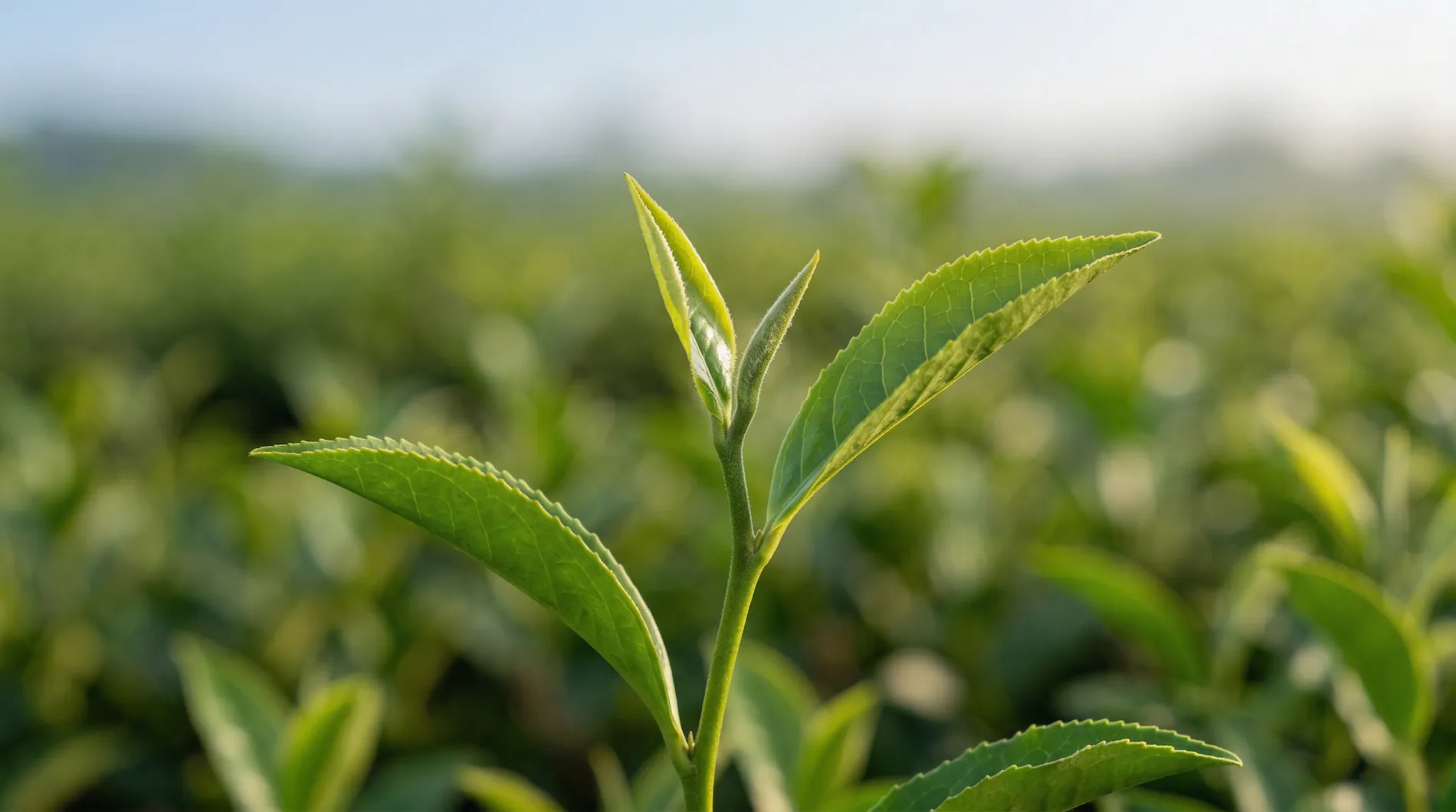
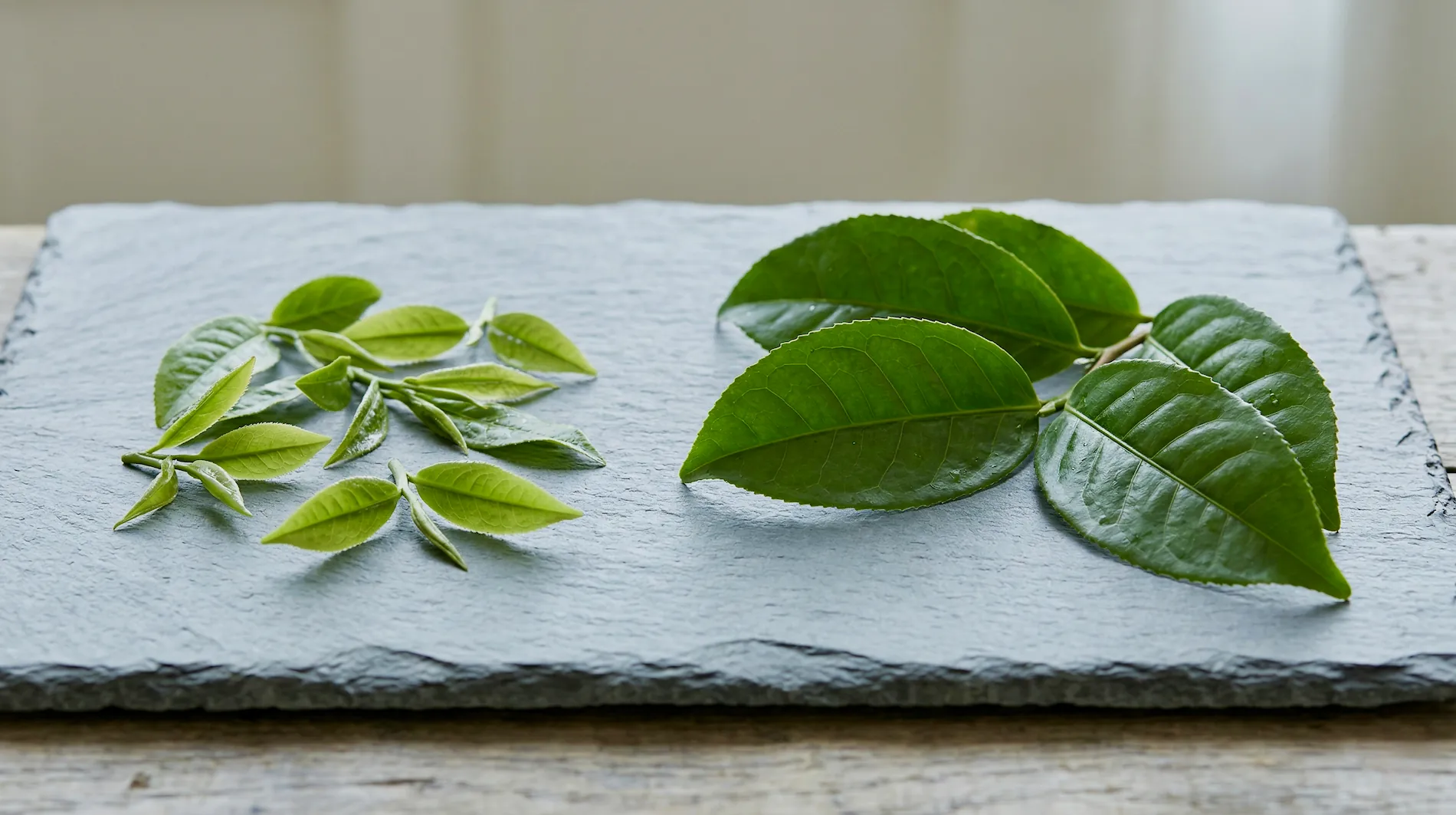
The botanical foundation of tea is Camellia sinensis. From it, two main varieties became especially important in commercial production: var. sinensis, associated with smaller leaves and better adaptation to colder conditions, and var. assamica, with larger leaves and more vigorous growth in warm, humid regions. Between them, there are also hybrids and a huge diversity of cultivars that expand the complexity of the tea map even further.
That is why simply saying “green,” “oolong,” or “black” never tells the full story. The identity of the drink does not arise only from the final style, but from a conversation between plant material, environment, and human touch.
The Leaf Dynasty: Sinensis and Assamica
Var. sinensis became historically linked to Chinese regions and colder mountain environments, producing smaller leaves and opening the way to many teas with a more delicate profile. Var. assamica, with its larger leaves, finds striking expression in warm and humid regions such as Assam, where it often contributes to fuller, more intense, and in many cases more malty cups.
But this distinction should not be read as a rigid rule of flavor. In the real world, cultivation, clone, altitude, soil, shade, harvest, and processing can bring results much closer together or much farther apart. What these lineages offer, above all, is a field of possibilities.
First Flush: The Moment the Harvest Begins Again
In the tea market, few terms carry as much prestige as First Flush. Broadly speaking, it refers to the first harvest of the growing season; in places such as Darjeeling, it has become a powerful cultural reference, associated with young leaves, aromatic brightness, and spring character. It is not a magical seal of universal superiority, but a harvest moment highly valued for its delicacy and freshness.
The Art of Fine Harvesting
In cultivation, the plant is usually kept low through pruning to encourage budding and make it easier to harvest the youngest parts. In many quality-focused production contexts, the most valued plucking standard is still the bud with the two youngest leaves. This choice is not mere romanticism: older leaves tend to reduce the finesse of the final result.
Of course, the market does not operate only within this fine standard. There are productions aimed at scale, industrial blends, and different cutting styles, and that is also part of the tea world. But when the goal is delicacy, precision, and greater sensory sophistication, careful harvesting remains one of the foundations of what later reaches the cup.
Rather than setting manual and mechanical harvesting against each other in a caricatured way, the central point is this: the broader and less selective the harvest, the greater the chance that the finesse of the leaf entering processing will decline.
From Garden to Factory: Where Tea Style Is Decided
After harvesting, tea enters a phase in which agriculture and craftsmanship begin to work together. This is where the same botanical species can turn into radically different drinks. The secret does not lie in a single fixed recipe, but in the decisions made about moisture, cell rupture, oxidation, shaping, and drying.
That is why thinking of processing as a universal and identical sequence for all teas oversimplifies reality. Each tea family follows its own combination of stages and intensities.
- 11. Harvesting: everything begins with the selection of plant material coming from the field.
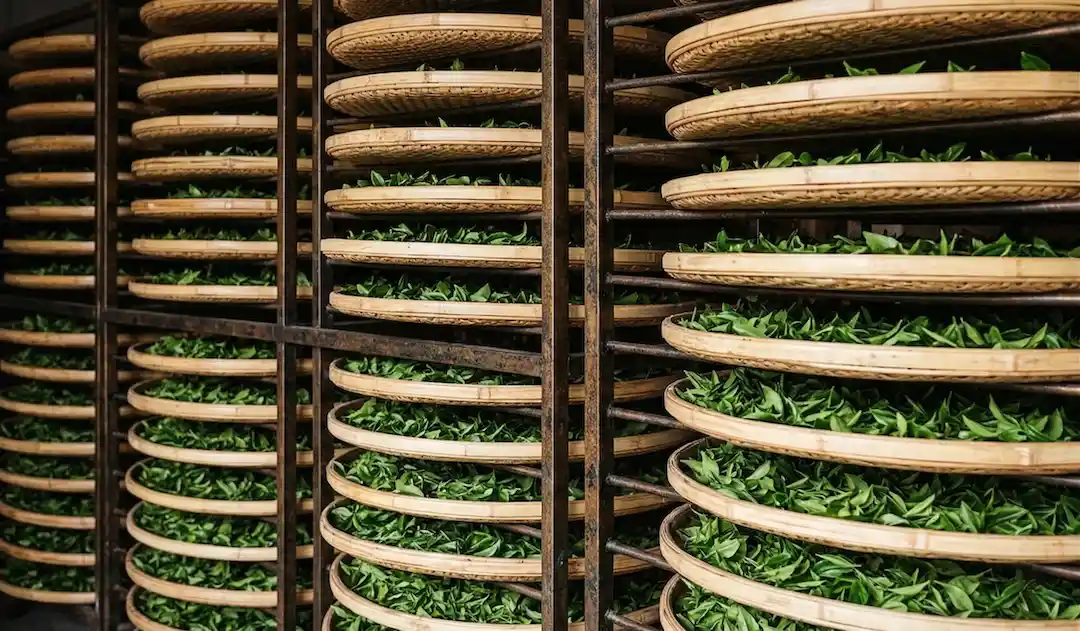
- 22. Withering: the leaf loses part of its water and gains flexibility for the next stages.
- 33. Fixation (when the style requires it): in green tea, heat by steam or pan inactivates oxidative enzymes and preserves the unoxidized profile.
- 44. Rolling, shaping, or rupture: the leaf may be shaped, twisted, rolled, or more intensely macerated, depending on the style.
- 55. Oxidation (when the style requires it): a crucial stage for black teas and part of the oolong family, in which the leaf changes color and develops different aromatic profiles.
- 66. Final drying: stabilizes the tea and ends the main reactions before sorting and packaging.
White, Green, Oolong, Black: What Really Changes
White tea is one of the clearest examples of apparent simplicity: in general, it goes through minimal processing, centered mainly on withering and drying. Green tea follows another path: oxidation is stopped early by heat. Black tea, meanwhile, takes a fuller route of withering, rolling, oxidation, and drying. Oolong occupies a broad territory between these extremes, with highly varied degrees and styles.
That is exactly why the idea of “true tea” is so fascinating. The species is the same, but the cup never is. Between the field and the tin, every decision shifts aroma, color, texture, and depth.
When you understand this journey, the drink gains cultural depth. The cup stops being merely hot, beautiful, or comforting — and begins to carry botanical variety, climate, harvest, labor, and time. At Nature Chá, that entire path is where the enchantment begins.