Buying well is only half the journey. The other half begins when tea enters your home. It is there, far from the counter and already out of its retail packaging, that quality can either be preserved intelligently or quietly lost. A beautiful, aromatic, fresh leaf does not stay that way by accident: it depends on attentive selection, the right container, and a coherent storage routine.
Golden rule of storage: dry tea absorbs odors easily and loses freshness when exposed to too much air, heat, moisture, and light. Always keep it away from coffee, strong spices, and hot areas of the kitchen.
Buying Well Is Already the Beginning of Good Storage
The difference between a rushed purchase and a good one is not always the price. It usually appears in the clarity of the information and the care given to the leaf. A serious seller can explain what they are selling, how that tea is presented, whether its profile is more delicate or more intense, and how it should be stored after opening. When the packaging only promises “premium” without explaining much else, the appeal may be greater than the substance.
This also helps put the old contrast between supermarket and specialty shop into perspective. The point is not the sales channel itself, but the real quality of the selection, stock turnover, the integrity of the packaging, and the level of information offered. Even so, in the world of traditional teas, whole leaves and orthodox-style production usually deliver more nuance than the very small cuts often found in many common tea bags.
What to Notice Before You Buy
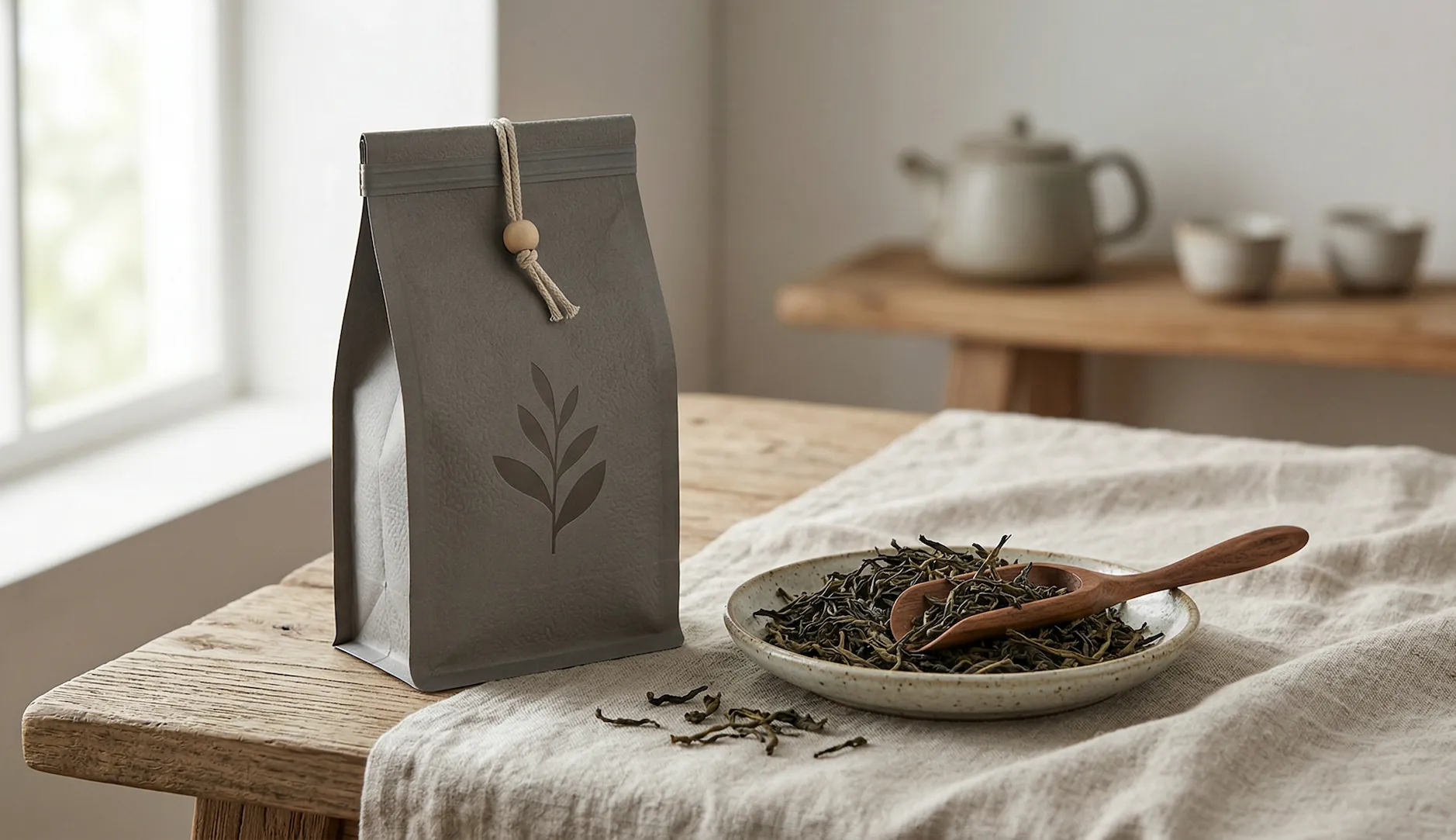
Before buying, it is worth observing three simple things: whether the packaging is intact, whether there is at least some useful product information, and whether the tea seems to have been treated as a delicate food rather than as a generic shelf item. Whenever possible, choose products with good sealing, a clear style description, and signs of care in how they were packed. The more transparent the tea’s origin and identity are, the better the buying experience tends to be.
The Visual Quality Test
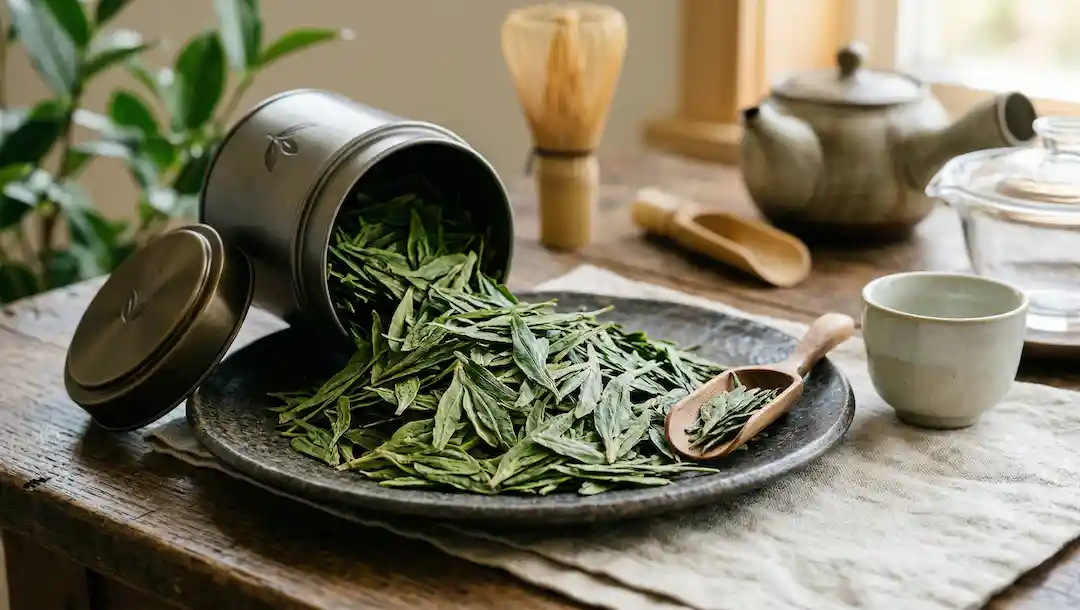
Your eyes help a great deal, as long as you look calmly. In many loose teas, relatively whole leaves, a clean appearance, little dust, and a pleasant dry aroma tend to be better signs than a blend that looks overly broken, dull, or tired. That does not mean every smaller leaf is bad — some styles are naturally rolled, broken, or compacted — but too much powder, many fragments without clear purpose, and a lack of fragrance are legitimate warning signs.
Your Tea’s Mortal Enemies
After purchase, storage begins to decide what remains of that initial freshness. At home, degradation rarely happens because of one dramatic mistake; it is usually the result of small repeated exposures, almost always ordinary ones.
- 11. Air: frequent contact with oxygen accelerates the loss of freshness and weakens aromatic compounds. The less unnecessary exposure, the better.
- 22. Light: direct light and continuous exposure tend to speed up unwanted changes in color, aroma, and flavor. Tea does not like a sunny display shelf.
- 33. Heat: high temperatures and thermal fluctuations accelerate chemical reactions and reduce the leaf’s liveliness.
- 44. Moisture: dry tea absorbs water from the environment easily. This affects texture and aroma and, in bad scenarios, can encourage mold.
- 55. Strong odors: dry leaves capture surrounding smells with ease. Coffee, garlic, onion, spices, and cleaning products should stay far away.
Important exception: not every tea ages poorly in the same way. Green teas and more delicate teas tend to lose freshness more quickly, while some styles — such as certain pu’er and some white teas — can evolve in a more interesting way when stored correctly.
Containers: What Really Works
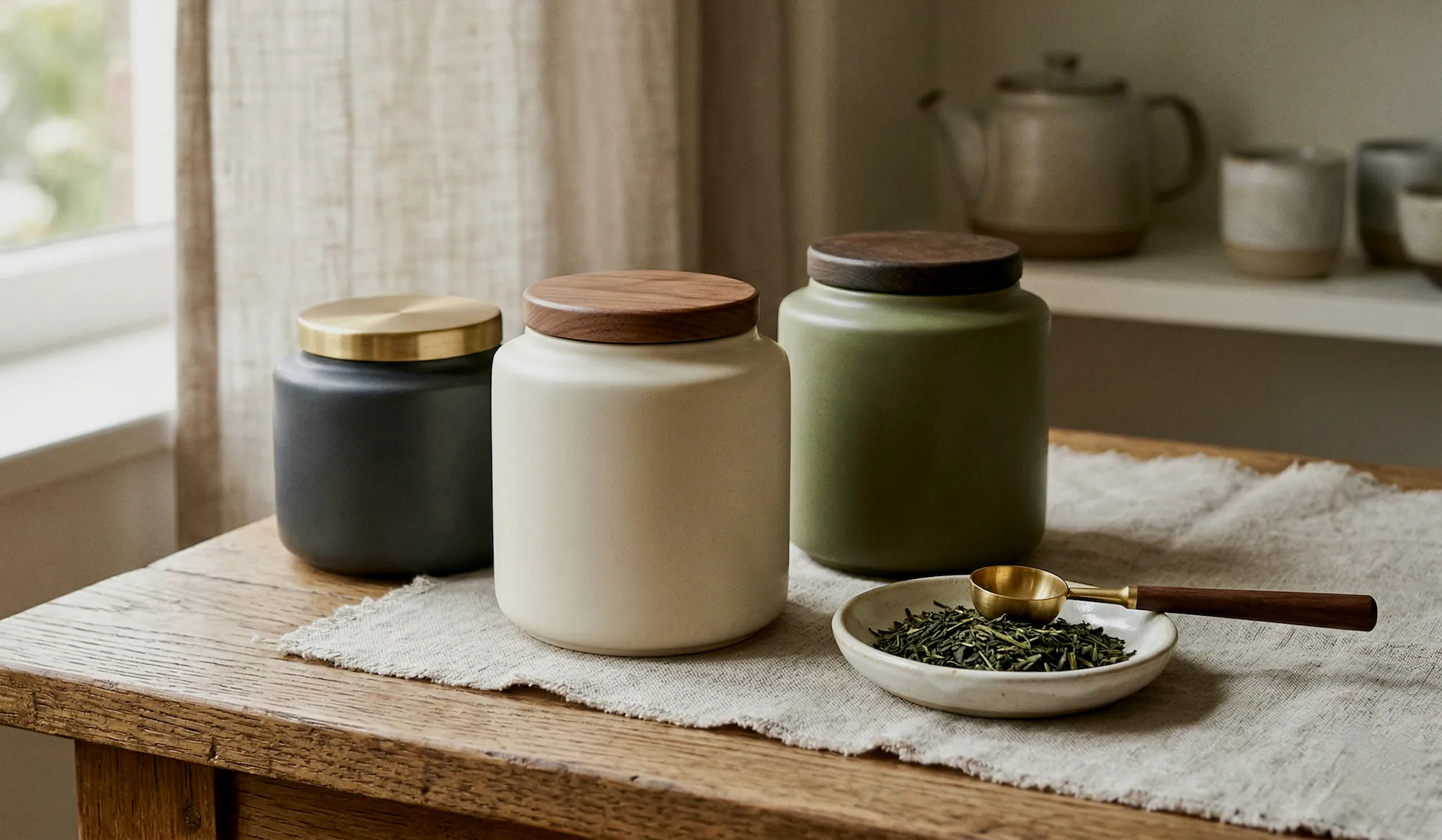
In practice, opaque, well-sealed, odor-free containers are the safest route. Metal tins with a good seal, glazed ceramic, and high-barrier packaging work well because they limit the entry of light, air, and outside odors. For most teas, that matters more than any countertop aesthetic.
It is also worth adjusting a common exaggeration: plastic is not automatically forbidden in every situation, but low-barrier containers, containers with residual odor, or poor sealing are bad choices for an aromatic and sensitive product. When in doubt, a well-closed opaque tin remains one of the simplest and safest solutions for home use.
The Matcha Exception
Matcha deserves extra care. Because it is such a fine powder, it suffers more quickly from air, moisture, light, and temperature. While unopened, it may be refrigerated for better preservation. When taking it out of the refrigerator, it is best to wait until it reaches room temperature before opening, to avoid condensation. Once opened, it should remain very well sealed, in an opaque container, with little contact with air and relatively quick use.
Storing tea well is not domestic paranoia. It is a quiet form of respect for the ingredient. When you buy with discernment and store with attention, the leaf reaches the cup closer to what it could truly offer: clearer aroma, cleaner flavor, and a sense of care that begins even before the infusion.