Drinking tea can be a habit. Tasting it, however, is something else entirely: it means replacing haste with attention. When you observe the color of the liquor, take in the aroma calmly, and notice how the tea touches the mouth before you even swallow, the cup stops being merely good or bad. It begins to have texture, structure, rhythm, and memory.
Golden rule of tasting: in technical tastings, slurping tea with a little air is not bad manners — it is method. That gesture spreads the liquid more effectively across the mouth and expands aromatic perception.
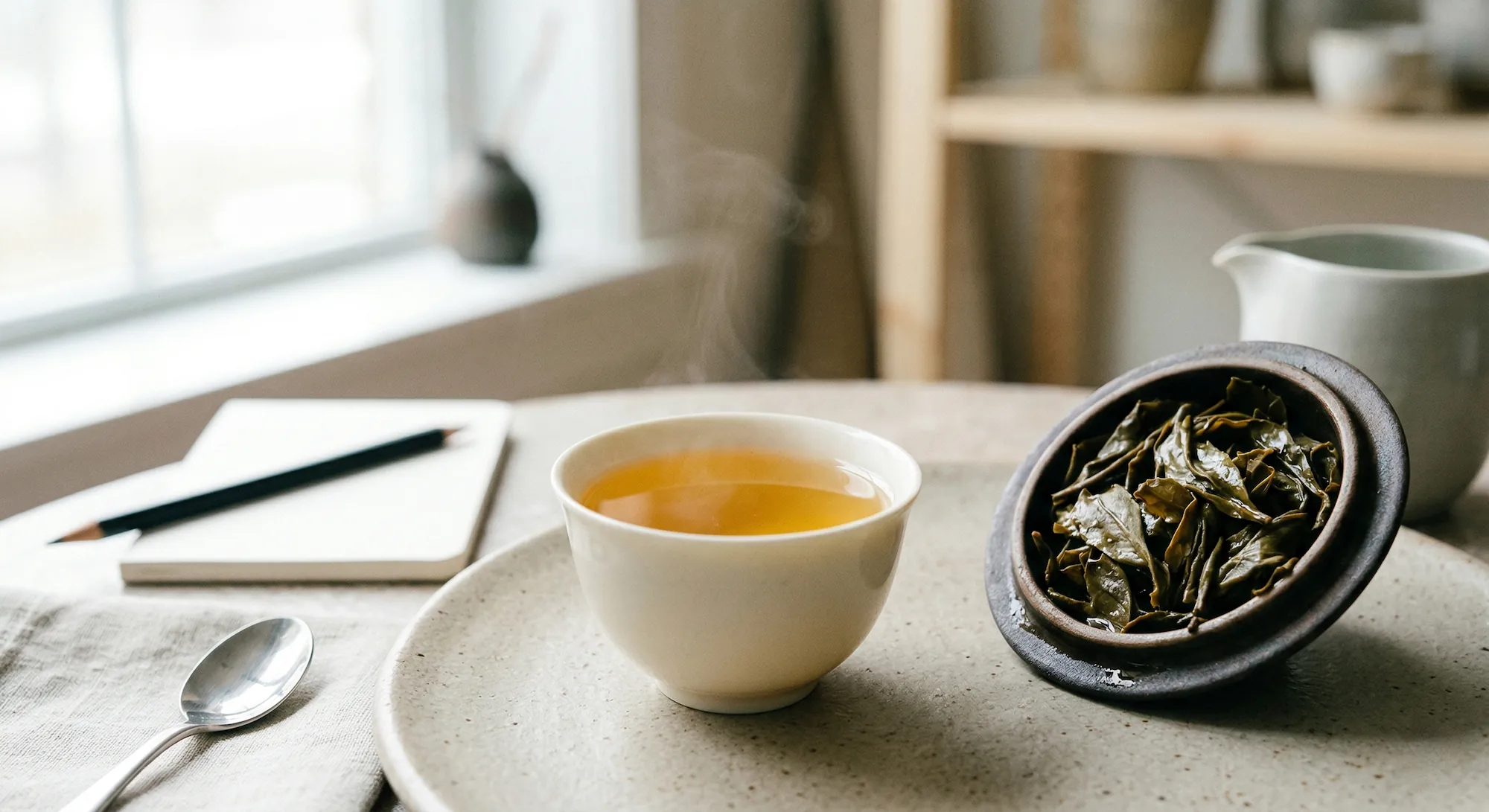
Tasting Means Observing, Not Just Drinking
In the sensory evaluation of tea, the sip is only one part of the process. Before it comes the look at the dry leaf, the reading of the liquor’s color, the analysis of the aroma, and, after infusion, the observation of the wet leaf. All of this helps you understand not only whether the tea is pleasing, but how it is built sensorially.
At home, you do not need to reproduce a rigid cupping protocol to learn from this. It is enough to create a small ritual of attention: serve the tea in good light, bring the cup close to your face before sipping, smell the infused leaf, and note what remains after swallowing. That is how the palate begins to gain vocabulary.
Before the First Sip
Start by observing the liquor. Is it bright or dull? Light or deep in color? Transparent, golden, amber, copper, pale green? Then bring your nose to the cup and notice whether the aroma feels floral, vegetal, toasty, malty, citrusy, resinous, or more earthy. Next, smell the wet leaf: very often it reveals the tea’s character more clearly than the liquor already served.
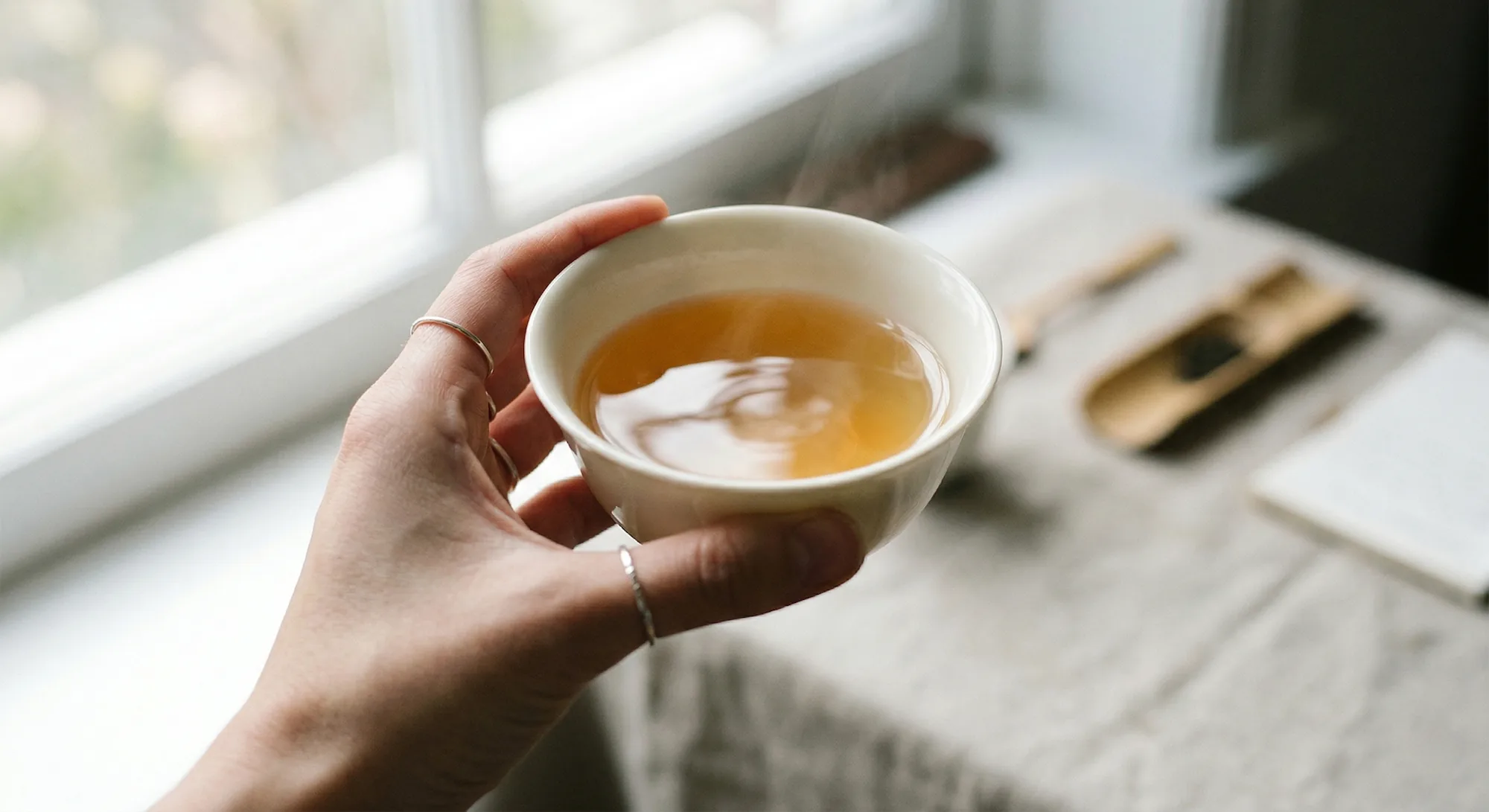
Temperature: When Tea Begins to Reveal Itself
Scalding tea can hide details. In tasting, it is worth waiting for the point at which the liquor is still hot but already comfortable to sip with attention. It is in that interval that texture, finish, and aromatic nuances become easier to read. In formal evaluation protocols, even the tasting temperature itself may be controlled so excessive heat does not interfere with sensory analysis.
Do not try to evaluate tea while it is still burning your mouth. Tasting requires fine perception, and fine perception does not go well with scalding liquid.
The Professional Technique of Slurping
Slurping with a bit of air makes sense because it spreads the tea across the mouth and carries aromatic compounds toward the retronasal olfactory pathway. In practice, this helps you perceive both flavor and aroma more clearly. There is no need to exaggerate the gesture: what matters is allowing the liquor to touch more areas of the mouth and open up sensorially.
After the sip, it is worth noticing the tea’s path: does it disappear quickly or leave a trail? Does the mouth feel clean, dry, soft, full, refreshed? This post-sip moment is a central part of tasting, and it is often what separates a merely correct drink from a truly memorable cup.
The Vocabulary That Changes the Experience
When you leave behind vague judgments such as “tasty,” “strong,” or “weak,” the experience expands. Technical vocabulary is not there to make you sound sophisticated; it is there to help you perceive better.
- 1Body: the weight and presence of the tea in the mouth. It may be light, round, full, delicate, or denser.
- 2Aroma: the set of olfactory impressions from the liquor and the wet leaf. It may be floral, vegetal, toasty, fruity, woody, resinous, or spicy.
- 3Velvety / Silky: a smooth, soft texture without noticeable roughness.
- 4Astringency: a sensation of dryness and contraction in the mouth. It is not the same as bitterness; in good balance, it can bring liveliness and freshness.
- 5Malty: a note typical of many black teas, especially Assam, recalling toasted grain, dark honey, warm bread, or deep caramel.
- 6Finish / Persistence: what remains after the sip — whether the tea fades quickly, lingers, turns sweet, dry, fresh, or aromatic.
Tannin, Bitterness, and Astringency Are Not the Same Thing
This is one of the points that most confuses people who are beginning to taste tea. Bitterness is a taste. Astringency is a tactile sensation of dryness, contraction, or roughness. In many teas, it appears when polyphenols interact with proteins in the saliva. When balanced, it can be pleasant and refreshing; when excessive, it hardens the drink and dulls its delicacy.
That is why a tea can be low in bitterness and still quite astringent. It can also be structured, vivid, and dry in a beautiful way. The point is not to eliminate all astringency, but to understand whether it is serving the cup or dominating the experience.
When you learn to look, smell, slurp, and name what you feel, tea changes scale. The cup stops being an automatic gesture and begins to carry intention. At Nature Chá, that is the invitation: drink less on autopilot and feel more, with repertoire, presence, and pleasure.