Afternoon tea is not simply a delicate meal placed between two hours of the day. It is a way of slowing time down. There is something deeply elegant in the act of interrupting the rush to serve a beautiful tray, heat the water with care, choose light porcelain, and transform an ordinary pause into an experience of welcome. When thoughtfully arranged, afternoon tea seems to do what few routines can: give shape and beauty back to the interval.
The golden rule of afternoon tea: its charm lies in balance. Nothing should feel excessive — not the amount of food, not the weight of the table, not the sweetness, and not the formality. True refinement here is born from lightness.
How Afternoon Tea Was Born
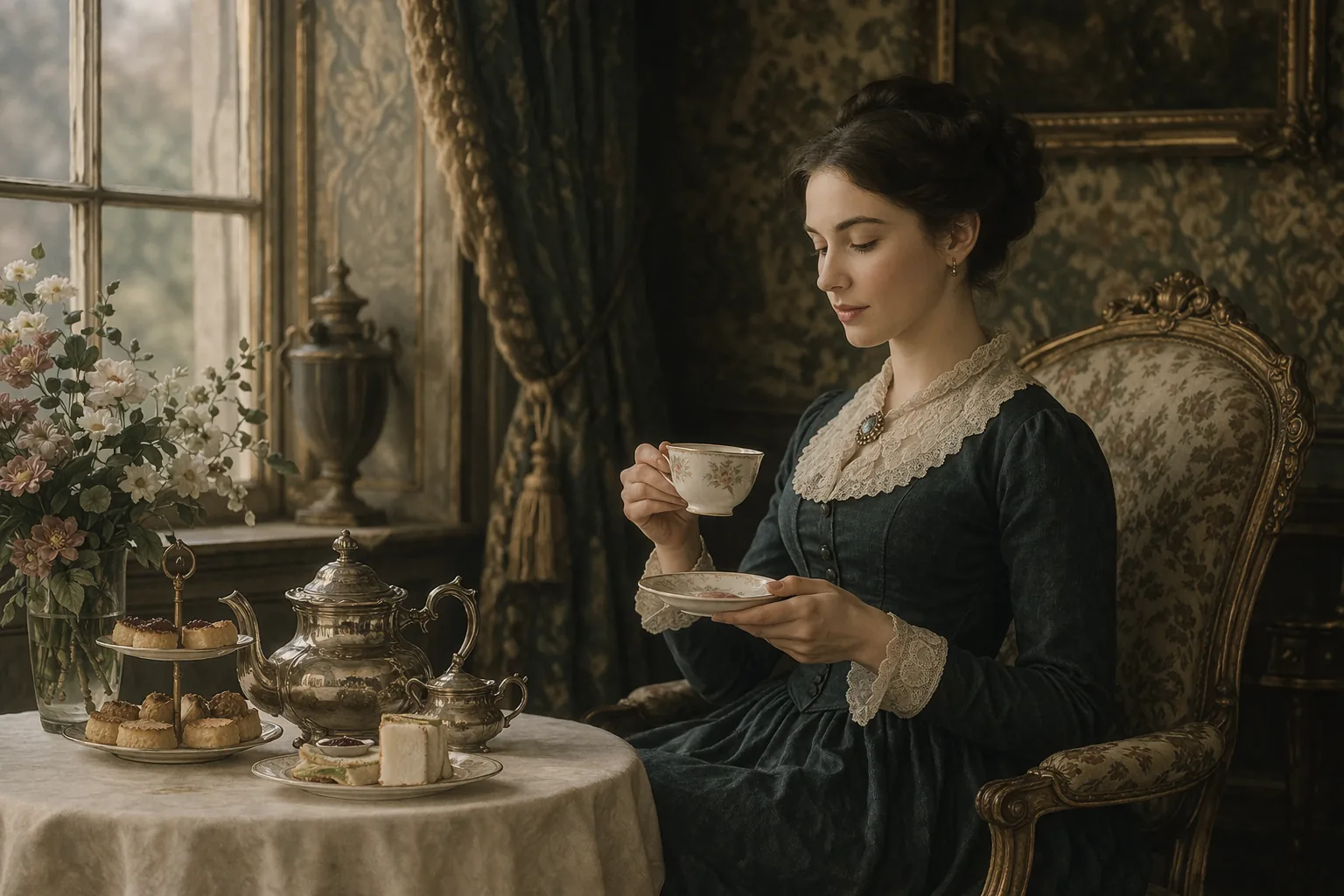
Afternoon tea took shape in nineteenth-century England as a response to the uncomfortable gap between luncheon and a late dinner. The gesture attributed to Anna Maria Russell, Duchess of Bedford, was simple: to ask for tea, bread and butter, and cake in the late afternoon. But what began as a private solution to hunger between meals soon became an elegant, social, and imitable ritual.
This custom, however, did not arise out of nowhere. England had already absorbed tea into aristocratic life much earlier, when the drink gained prestige at court and among the wealthy. Afternoon tea emerged precisely from this meeting point between courtly habit, Victorian sociability, and the pleasures of the table.
What Makes a True Afternoon Tea
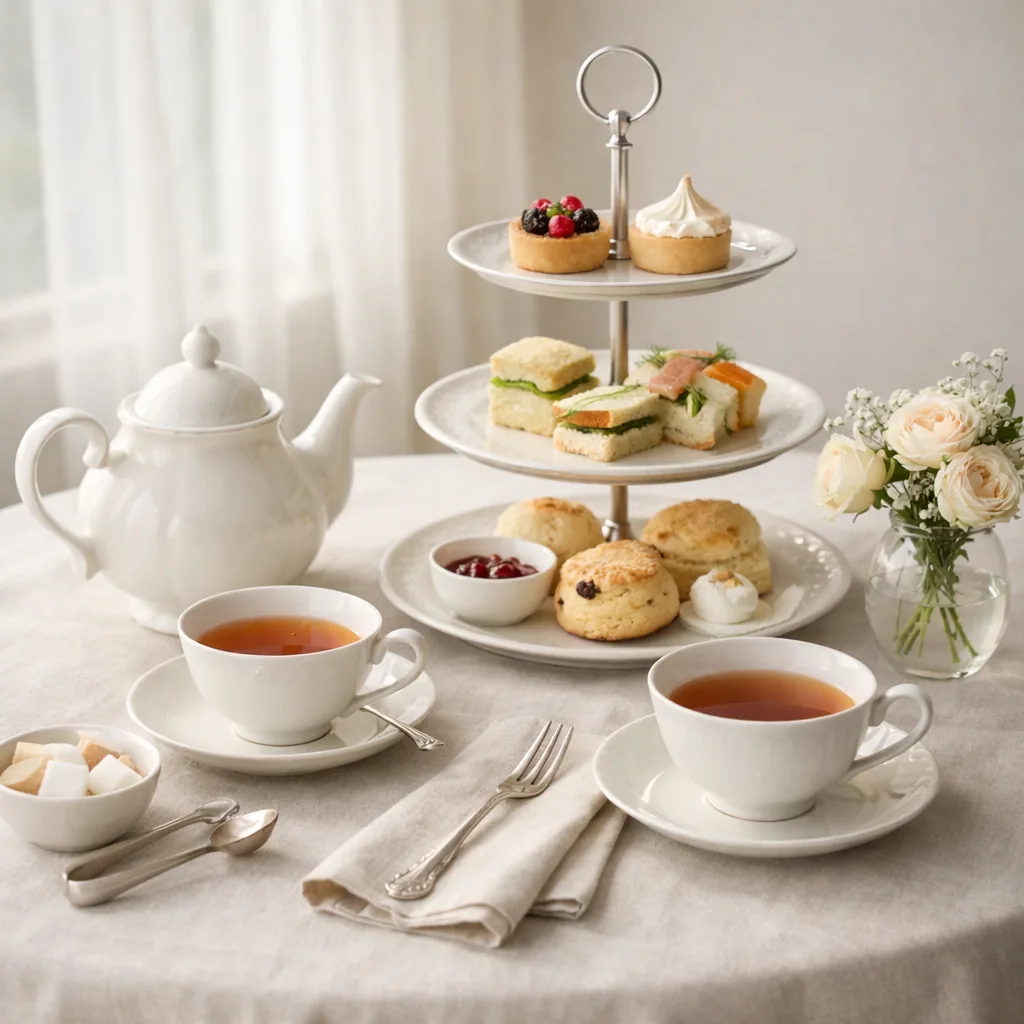
The beauty of afternoon tea lies in its discreet architecture. There is tea, of course — but there is also a progression of flavors and textures that sustains the experience without making it heavy. The classic arrangement usually balances small savory bites, a central element of soft baking, and a sweet finish, all in portions delicate enough to feel like ritual rather than banquet.
- 1Well-chosen tea: elegant black teas, citrus or perfumed blends, and, at more delicate tables, even a light Darjeeling can work beautifully.
- 2Small savory bites: fine sandwiches, tartlets, or light morsels that open the service without saturating the palate.
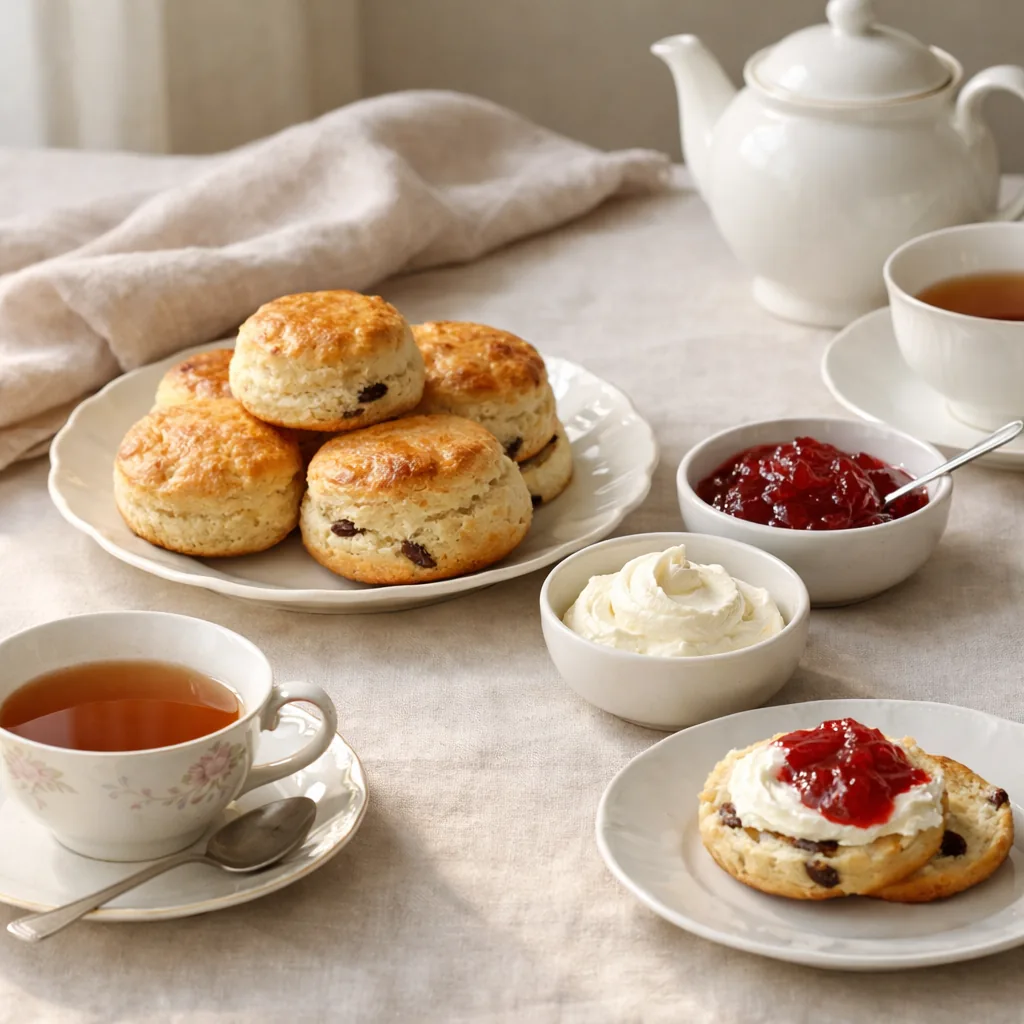
- 3Scones or an equivalent pastry: the emotional center of the table, served with jam, cream, or good butter.
- 4Delicate sweets: small cakes, thin slices, or light pâtisserie to finish with sweetness but without excess.
- 5A serene rhythm: the service matters just as much as the menu; hurry is what most impoverishes this kind of table.
The Table Tells the Story Too
Part of the fascination of afternoon tea has always lived in the materiality of the table. In Victorian culture, that meant porcelain, silver, linens, and a refined staging of taste. At home, there is no need to reproduce opulence in order to preserve the spirit. What matters is visual intention: pieces that speak to one another, a pleasing textile, space to breathe, and an arrangement that invites people to linger.
A good afternoon tea table does not need to look luxurious in the ostentatious sense. It needs to look cared for. There is a great difference between abundance and beauty. This ritual almost always becomes more elegant when it chooses fewer elements — but chooses them better.
How to Host with Lightness
Hosting afternoon tea does not require rigidity. It requires atmosphere. Ideally, the table is already partly prepared before guests arrive, the tea can be served without rush, and the food does not demand large last-minute maneuvers. The tone of the gathering should be one of calm conversation, not social performance.
- 1Choose one main tea and, at most, a second option so the service does not become scattered.
- 2Set a light table, with varying heights, but without overloading it.
- 3Prefer small, beautiful portions over heavy platters and excess.
- 4Keep the accompaniments easy to serve and easy to eat, without requiring complex assembly in front of the guest.
- 5Think of afternoon tea as a gesture of presence: less rigid formality, more carefully edited welcome.
A Ritual That Fits at Home
Perhaps the most beautiful thing about afternoon tea is that it does not depend on a historic hotel, antique silver, or inherited tradition. It can fit perfectly into a contemporary home, onto a small veranda, at a pale wooden table, or in a quiet kitchen at the end of the day. What it asks for, above all, is intention.
True afternoon tea is not an exhibition of luxury — it is a pause treated with beauty.
At Nature Chá, afternoon tea does not appear as decorative nostalgia, but as a contemporary form of hospitality. It reminds us that a beautiful table, a gentle service, and a good cup can still reorganize the day. And sometimes, that is already a great deal.