When people talk about African tea, many imagine only strength. But the story is richer than that. Africa is not a single sensory block: it is a mosaic of altitudes, soils, rainfall patterns, and industrial traditions that turned the continent into one of the most important forces in contemporary black tea. In many cups around the world, especially in fuller-bodied breakfast blends, the heart of the drink beats on African soil.
Golden rule: to understand African tea, think less about ethereal delicacy and more about brightness, structure, color, and infusion energy. That profile is exactly what makes many African lots work so well in robust blends and in milk service.
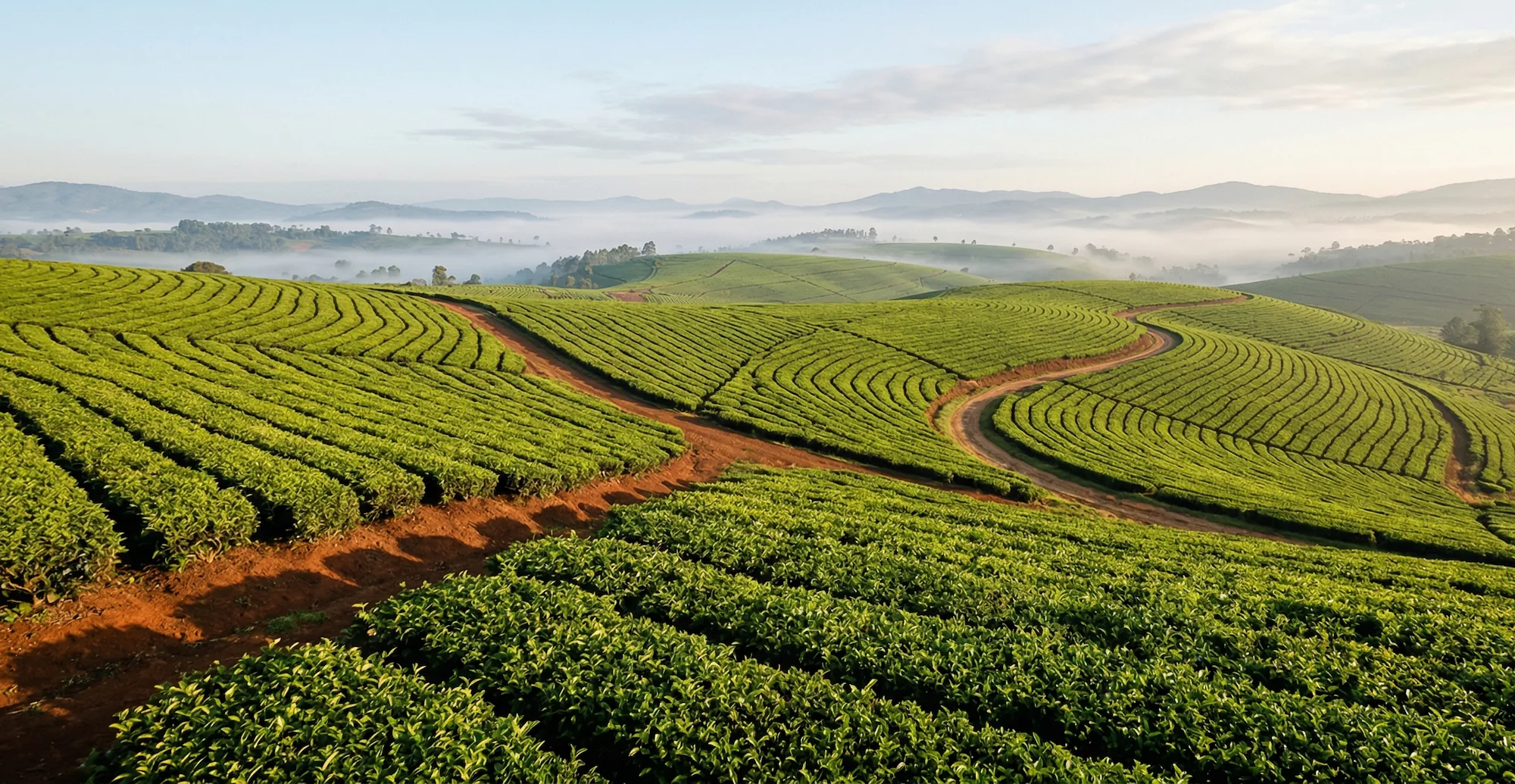
The Continent That Gave Modern Black Tea Its Momentum
Much of African tea’s identity is tied to the world of industrially efficient and sensorially assertive black tea. In East Africa in particular, regional trade is organized around the Mombasa auction, now one of the most important centers in the world for CTC black tea. That helps explain why the continent became so decisive for strong, consistent, and quick-brewing blends.
The CTC method — Crush, Tear, Curl — creates smaller, more uniform particles designed for fast extraction, intense color, and a firm grip on the palate. That does not mean Africa produces only CTC or only tea for tea bags, but it does mean that this profile played a major role in building the continent’s reputation in the global market.

CTC: Color, Speed, and Structure
CTC deserves attention because it changes not only the look of the leaf, but also the experience in the cup. Because the process cuts, tears, and curls the leaf into small particles, extraction tends to be faster and the liquor often develops deep color, firm body, and a bitterness or astringency that requires careful control of steeping time.
In home brewing, CTC teas usually require closer attention to the clock than whole orthodox leaves. For drinking them plain, starting with a shorter infusion and adjusting afterward is often a safer approach than assuming long steeping times from the start.
That very structure is what makes so many African lots so useful for breakfast tea, commercial blends, and milk service. They do not disappear easily in the cup and keep their presence even when the drink gains sweetness or creaminess.
The Mosaic of Flavors: Major African Origins
Even within this more robust universe, each African origin speaks in its own way. Rather than treating the continent as a uniform mass, it is worth understanding its major axes.
- 1Kenya: the leading figure in African black tea and one of the industry’s greatest export powers. Its teas are often described as bright, brisk, and coppery-red in tone, and they are central to many international blends.
- 2Rwanda: a high-altitude origin, with climate and soils favorable to high-quality tea. Within the Mombasa circuit, the country built a reputation for strong prices and consistency.
- 3Malawi: a pioneer of commercial tea cultivation in Africa, with a historic production tradition linked to Mulanje since the 1880s. Its teas are important for their brightness and structural contribution in blends.
- 4Tanzania: part of the regional mosaic with black teas of vivid color and a briskness appreciated in blends.

Kenya: The Great Pulse of African Tea
Among all African origins, Kenya holds an especially emblematic place. Its production scale, its presence in international trade, and its association with vivid, bright black teas have made the country a kind of benchmark in the global imagination of African tea. It is no coincidence that so many classic blends depend on its color energy and firmness in the cup.
But reducing Kenya to “strong tea” would still fall short. Today the country also works to expand value and diversify profiles, including with greater attention to orthodox teas and specialties. Even so, its historic signature remains strongly tied to impactful CTC black tea with quick expression and notable presence.
Rwanda and Malawi: High-Altitude Quality and Historical Depth
If Kenya represents scale and projection, Rwanda and Malawi help tell two other essential stories. Rwanda shows how altitude, climate, and quality policy can elevate an origin’s reputation in the market. Malawi, in turn, reminds us that Africa’s tea history did not begin yesterday: it was the first country on the continent to develop commercial cultivation, and it remains important in the sensory architecture of many blends.
Together, they broaden the reading of the continent. Tea Africa is not only about large-volume production: it is also about pioneering spirit, altitude, quality, and continuity.
How to Drink and How to Read These Teas
In practice, African teas of a more classic profile usually perform very well in three contexts: plain and short for those who enjoy firm cups; with milk for those who want softness without losing presence; and in blends, where they shine by providing color, backbone, and energy. Honey, milk, and savory breakfast foods tend to pair especially well with them.
Perhaps that is the best way to understand tea from Africa: not as a footnote to the global market, but as one of its most decisive engines. In many mornings around the world, it is this continent that gives the cup its color, its drive, and its backbone.